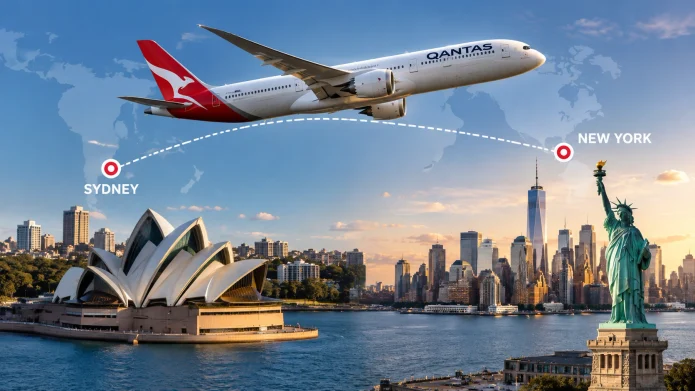
Qantas will launch nonstop Sydney–New York flights in mid-2028, giving travelers a direct journey of about 18 hours and removing the need to stop in Auckland or another connecting airport.
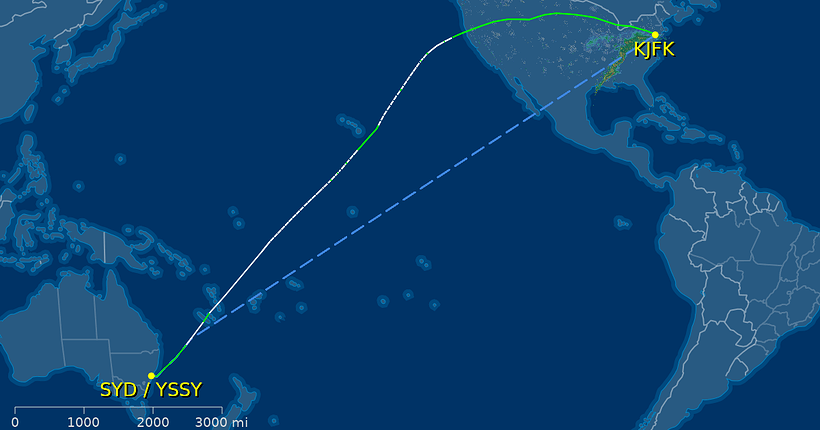
The new route is expected to cut approximately three hours from the fastest current travel time and up to four hours compared with some one-stop itineraries. Tickets are expected to go on sale in August 2027, although the final flight schedule and fares have not yet been released.
The service forms part of Qantas’ long-running Project Sunrise, a program designed to connect Australia’s east coast with major overseas cities without a traditional stopover.
When will direct Sydney–New York flights start?
Qantas Sydney–New York nonstop flights are scheduled to begin in mid-2028.
The airline will introduce Sydney–London flights first, with that service planned for October 2027. Sydney–New York will follow in 2028 after additional aircraft are delivered, tested and approved for commercial operations.
The current timeline is:
| Milestone | Expected timing |
|---|---|
| First Project Sunrise aircraft delivery | April 2027 |
| Sydney–London nonstop flights | October 2027 |
| Sydney–New York tickets released | August 2027 |
| Sydney–New York nonstop flights | Mid-2028 |
| Approximate flight time | 18 hours |
Travelers should treat the mid-2028 launch as the confirmed target rather than a guaranteed first-flight date. Ultra-long-haul services require aircraft testing, crew training, regulatory approval and schedule planning before bookings can open.
Earlier reports placed the New York service closer to the London launch. The latest route update places Sydney–New York in 2028, so travelers planning major events should avoid booking connecting flights around an unconfirmed inaugural date.
How much time will the direct flight save?
The nonstop flight will save around three hours against the fastest current option and up to four hours against some connecting journeys.
Qantas currently serves the Sydney–New York market with a stop, including itineraries through Auckland. The Auckland–New York sector alone can take more than 16 hours, before adding the Sydney–Auckland flight, airport transfer time, boarding, security checks and the risk of a delayed connection.
A connection can easily add several hours even when the aircraft spends less time in the air. A traveler flying for a Monday morning meeting, for example, may lose an entire afternoon moving between terminals, waiting at a gate and managing baggage or immigration procedures.
The nonstop option removes that interruption:
- No second boarding process
- No airport transfer during the journey
- No connection to miss
- No waiting for checked bags before the next flight
- More predictable arrival planning
- A better chance to sleep through one continuous flight
The saving will not be identical for every passenger. A well-timed one-stop ticket may be cheaper or easier to find, while a poorly timed connection can make the total journey much longer than the headline flight time suggests.
How long will Sydney–New York nonstop flights take?
The Qantas flight is expected to take about 18 hours from Sydney to New York.
That duration will make the route one of the longest scheduled passenger flights in the world. It will also create a very different travel experience from a normal long-haul flight.
Passengers will spend almost an entire day inside one aircraft. There will be no chance to walk through a connecting airport, take a shower in a lounge or reset during a stop. That makes seat selection, sleep planning and movement more important than usual.
The aircraft will be configured with a lower passenger count than many large long-haul jets. Qantas plans to operate Project Sunrise flights with 238 seats:
| Cabin | Seats |
|---|---|
| First Class | 6 suites |
| Business Class | 52 suites |
| Premium Economy | 40 seats |
| Economy, including Economy Plus | 140 seats |
| Total | 238 seats |
The relatively small cabin is designed around comfort and range rather than carrying the maximum possible number of passengers.
Also read – Routes World Awards 2026 Shortlist Announced Following …
What aircraft will fly the route?
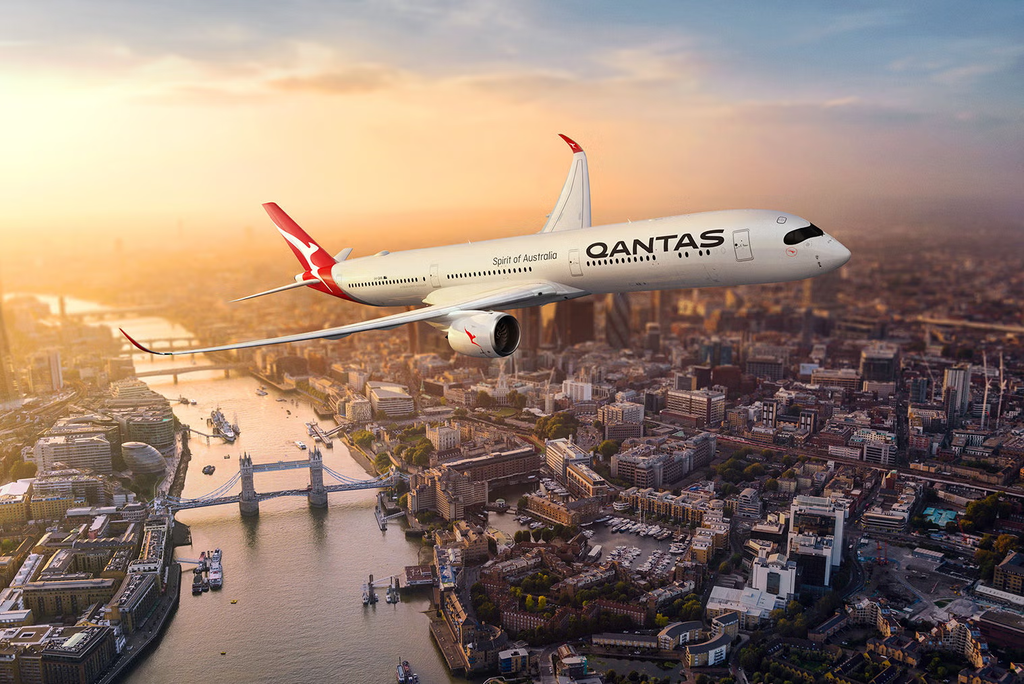
The Sydney–New York route will use a specially modified Airbus A350-1000ULR.
The aircraft includes additional fuel capacity and changes intended to support flights lasting more than 20 hours. Qantas ordered 12 Airbus A350-1000 aircraft for Project Sunrise, creating a dedicated fleet for the London and New York routes.
The aircraft is not simply a standard A350 with extra fuel. Qantas has worked on cabin design, sleep routines, lighting, meals and movement to make ultra-long-haul travel more manageable.
The cabin is expected to include:
- First Class suites with a separate seat and bed
- Private Business Class suites
- Premium Economy seating
- Economy Plus options
- High-speed Wi-Fi
- Bluetooth connectivity
- Updated entertainment features
- A passenger journey planner
- A shared “Wellbeing Zone”
What is the Project Sunrise Wellbeing Zone?
The Wellbeing Zone will give passengers a place to stand, stretch and move during the flight.
The area will include a hydration station, movement guidance and space for short exercises. It will be available to passengers beyond the premium cabins, making it one of the more important features for Economy and Premium Economy travelers.
A small movement routine can make a noticeable difference on an 18-hour journey. Passengers who remain seated for most of the flight may arrive feeling stiff, dehydrated and disoriented. The practical approach is to stand up regularly, walk briefly when safe and avoid treating the flight as one uninterrupted block of sitting.
A useful onboard routine could look like this:
- Drink water after boarding rather than waiting until thirst begins.
- Set a quiet reminder to move every few hours.
- Keep medication, glasses and essential items in an easy-to-reach pouch.
- Use the Wellbeing Zone during suitable periods of the flight.
- Avoid relying on alcohol to fall asleep.
- Wear loose clothing and comfortable shoes.
Passengers with medical conditions should follow advice from a qualified health professional before taking an 18-hour flight. The Australian Government health guidance for air travel provides practical information about staying well during long journeys.
Will the flight reduce jet lag?
The nonstop service will remove a connection, but it will not eliminate jet lag.
Qantas has worked with researchers from the University of Sydney’s Charles Perkins Centre on sleep, light exposure, meal timing, cabin lighting and passenger movement.
The planned experience is intended to help passengers adjust more smoothly by coordinating lighting, meals and rest periods with the destination time zone. That may make the journey feel more organized, but passengers will still cross multiple time zones in one trip.
Travelers arriving in New York should avoid scheduling their most important meeting immediately after landing if possible. A better plan is to allow time for hotel check-in, a shower, a meal and several hours of sleep before demanding work.
Passengers should also check the latest arrival and entry requirements through the official U.S. Customs and Border Protection travel information before departure. Requirements can change independently of the airline schedule.
Is a nonstop flight better than a one-stop journey?
A nonstop flight is better for travelers who value time and predictability; a connection may suit passengers who need a break.
| Traveler type | Better option | Main reason |
|---|---|---|
| Business traveler with a fixed meeting | Nonstop | Fewer delays and no missed connection |
| Passenger traveling with young children | Nonstop | One boarding process and no airport transfer |
| Traveler who dislikes very long flights | One stop | A chance to walk, shower and reset |
| Budget-focused traveler | Compare both | Connecting fares may be lower |
| Passenger using frequent-flyer points | Compare both | Award availability may differ |
| Traveler with a tight event schedule | Nonstop | More predictable total journey time |
A connection is not automatically worse. Some travelers genuinely prefer leaving the aircraft after 10 or 12 hours. A lounge visit can provide food, a shower and a mental break that an 18-hour nonstop cannot.
The key question is practical: Would saving several hours matter more than breaking the journey into two flights?
When can travelers book the Sydney–New York flight?
Tickets are expected to go on sale in August 2027.
Qantas has not yet published the final Sydney–New York departure times, fares, frequent-flyer award prices or exact inaugural flight date. Travelers should be cautious with websites that list firm prices or precise launch claims before the airline releases official inventory.
When bookings open, compare more than the headline fare:
- Change and cancellation rules
- Checked baggage allowance
- Seat selection costs
- Wi-Fi availability
- Frequent-flyer points
- Upgrade conditions
- Arrival time in New York
- Return-flight departure time
- Aircraft type shown on the booking
The aircraft assignment also matters. A ticket may initially show an A350 route but later be affected by operational changes. Checking the aircraft type again before departure is a sensible final step.
For Sydney departures, passengers should use the official Sydney Airport travel information to check terminal details, transport options and security guidance. For New York arrivals, the Port Authority’s official airport information can help with onward transport from the city’s major airports.
What this route means for Australia–U.S. travel
The route will make Sydney easier to reach for travelers from New York and the wider U.S. East Coast.
Australia has traditionally required many travelers to accept a long connection before reaching the country’s largest gateway. Project Sunrise removes one of the biggest inconveniences: the need to interrupt the journey at another airport.
The commercial challenge will be maintaining comfort, reliable operations and reasonable fares on a flight lasting around 18 hours. Qantas is betting that business travelers, premium leisure passengers and time-sensitive visitors will pay for the convenience.
For passengers, the biggest benefit is simple: board in Sydney, sleep or work on one aircraft, and arrive in New York without stopping once. By 2028, that could turn one of the world’s most demanding travel routes into a much more manageable trip.

