
Key Highlights
- Qatar Airways is operating limited flights from Muscat to several European destinations.
- The move comes amid regional airspace disruptions linked to tensions involving Iran, Israel, and the United States.
- Flights are temporarily shifting away from the airline’s usual hub in Doha.
- Travelers may face rerouting, schedule changes, and limited seat availability.
Qatar Airways Adjusts Network as Regional Airspace Disruptions Intensify
Middle East aviation routes are experiencing significant adjustments as geopolitical tensions affect regional airspace availability. In response, Qatar Airways has introduced limited flights from Muscat in Oman to selected destinations in Europe, offering passengers an alternative travel corridor.
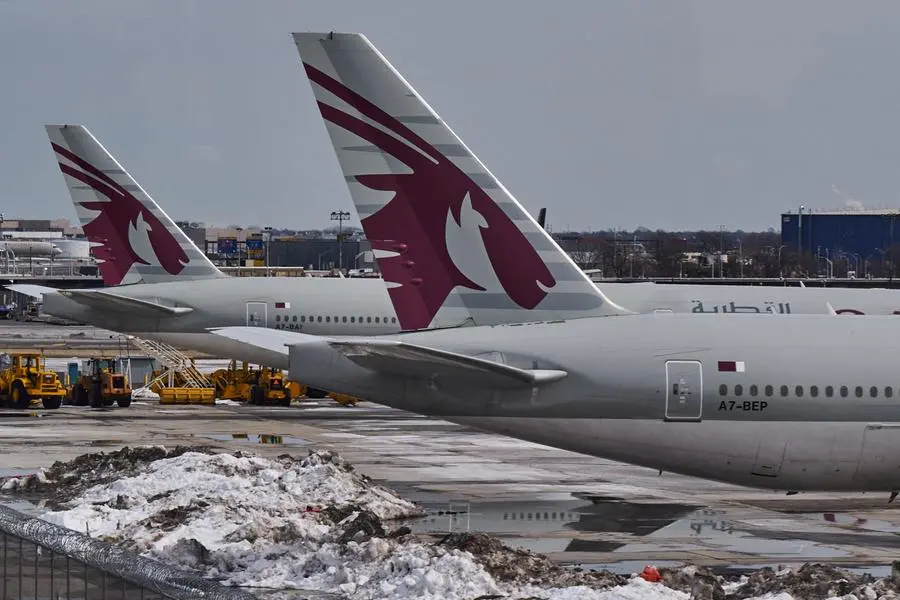
The decision reflects a broader strategy by global airlines to maintain connectivity while avoiding restricted airspace. By operating select services from Muscat International Airport, Qatar Airways aims to provide continuity for passengers traveling between the Middle East and Europe during the disruption period.
This operational shift highlights how airlines are adapting quickly to rapidly changing airspace conditions while maintaining safety and regulatory compliance.

What Happened: Why Qatar Airways Is Operating Flights From Muscat
Qatar Airways launched limited flights from Muscat to Europe to maintain international connectivity after regional airspace disruptions affected normal routes.
Airlines rely heavily on predictable air corridors to operate efficient long-haul routes. When airspace restrictions emerge due to geopolitical developments, carriers must redesign flight paths, relocate operations, or temporarily suspend certain routes.
The current disruption stems from tensions involving Iran, Israel, and the United States, which have triggered aviation authorities to limit or monitor certain flight corridors.
In response, Qatar Airways has begun operating select flights from Muscat to maintain service continuity for travelers needing to reach Europe.
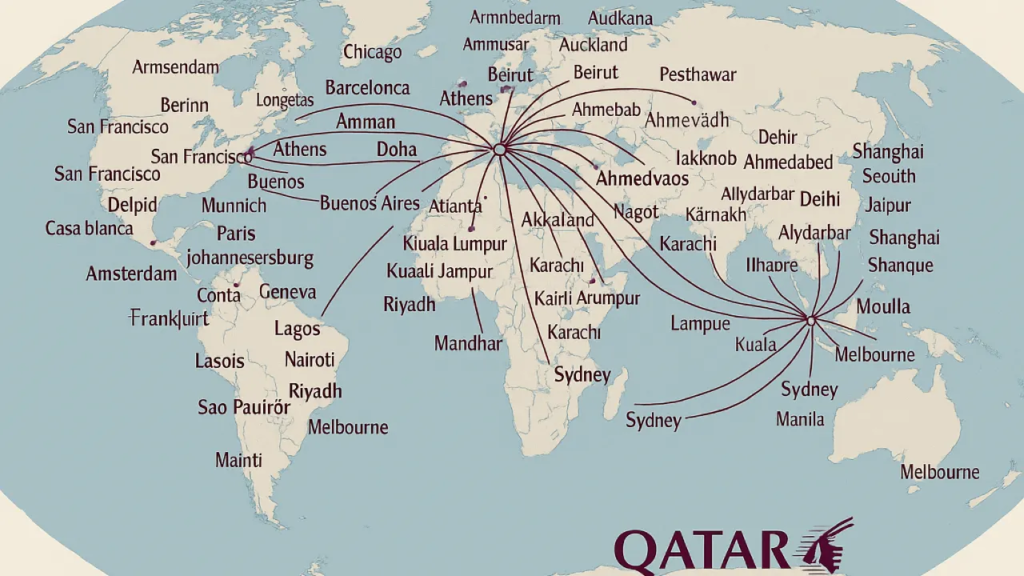
Why Muscat Was Chosen as the Temporary Operational Base
Muscat’s strategic location makes it an ideal alternative departure point during airspace disruptions.
Key reasons include:
- Proximity to major Gulf aviation hubs
- Access to open international air corridors
- Modern airport infrastructure
- Strong aviation cooperation between Oman and regional airlines
Muscat International Airport has the capacity to handle additional international flights and support transit passengers during temporary operational shifts.
By utilizing Muscat, Qatar Airways can bypass affected airspace zones while maintaining connectivity to Europe.
Also read – Etihad Airways Suspends More Abu Dhabi Flights Amid Airspace Disruption
How This Impacts Travelers Flying Between the Middle East and Europe
Passengers traveling between the Middle East and Europe may experience route changes, limited flight availability, and temporary schedule adjustments.
Travelers should be aware of several operational changes:
| Travel Factor | Possible Impact |
|---|---|
| Departure Airports | Some flights may depart from Muscat instead of Doha |
| Seat Availability | Reduced capacity due to limited operations |
| Flight Duration | Possible longer routes due to rerouting |
| Scheduling | Dynamic timetable updates |
Passengers who already hold tickets should monitor airline communications closely.
Travel agents and airline support teams are helping travelers adjust itineraries where necessary.
Safety First: Why Airlines Change Routes During Airspace Conflicts
Airlines modify routes or suspend operations when geopolitical tensions affect airspace safety or operational feasibility.
Modern aviation operates under strict international safety protocols. If authorities determine that certain airspace regions pose operational risk, airlines must:
- Reroute flights around restricted zones
- Reduce flight frequency
- Temporarily suspend affected routes
- Coordinate with global aviation regulators
Safety considerations always override operational convenience.
This is why airlines frequently adjust routes during periods of regional tension.
How Airlines Manage Airspace Disruptions in 2026
The aviation industry has developed advanced tools to manage dynamic airspace conditions.
Airlines now use:
- Real-time satellite tracking systems
- AI-driven route optimization
- Predictive conflict monitoring tools
- Integrated global air traffic coordination platforms
These technologies allow carriers to quickly redesign routes while minimizing passenger disruption.
In many cases, flights can still operate safely by adjusting altitude levels, flight corridors, or departure points.
Oman’s Growing Role as a Strategic Aviation Gateway
Oman has increasingly positioned itself as a reliable aviation hub during regional disruptions.
Muscat International Airport has invested heavily in:
- Expanded passenger terminals
- Enhanced air traffic management systems
- Improved ground handling capabilities
- Expanded runway infrastructure
These upgrades allow the airport to accommodate additional international traffic when needed.
During regional disruptions, such alternative hubs help maintain global travel connectivity.
What Passengers Should Do Before Traveling
Travelers planning flights between the Middle East and Europe should take several precautionary steps.
- Check flight status regularly through official airline websites.
- Confirm departure airports before heading to the airport.
- Allow extra time for travel planning due to rerouting.
- Monitor travel advisories and airline updates.
Travel insurance policies that cover disruption events may also provide additional protection for passengers.
Bigger Picture: Aviation’s Flexibility During Geopolitical Events
The aviation industry has always operated within a complex geopolitical environment. From airspace closures to weather disruptions, airlines continuously adapt to ensure global travel remains possible.
The current situation highlights three key aviation trends:
- Flexible network planning
- Multi-hub operational strategies
- Rapid response to airspace changes
These strategies allow airlines to maintain essential connectivity even during uncertain conditions.
Timeline of Events
- Rising tensions impact Middle East airspace monitoring
- Aviation authorities issue routing advisories
- Airlines begin rerouting flights
- Qatar Airways launches limited flights from Muscat to Europe
- Ongoing monitoring of regional airspace conditions
FAQs: Qatar Airways Flights From Muscat to Europe
Why is Qatar Airways operating flights from Muscat instead of Doha?
Qatar Airways introduced flights from Muscat to avoid airspace disruptions affecting normal routes through parts of the Middle East. The temporary shift helps maintain travel connectivity between the Gulf region and Europe.
Which European destinations are included in the Muscat flights?
The airline has announced limited services to selected European cities. Specific destinations may change depending on operational conditions and airspace availability.
Are flights from Doha canceled completely?
No. Qatar Airways continues operating many flights from Doha. Only certain routes have been adjusted or temporarily relocated due to airspace restrictions.

