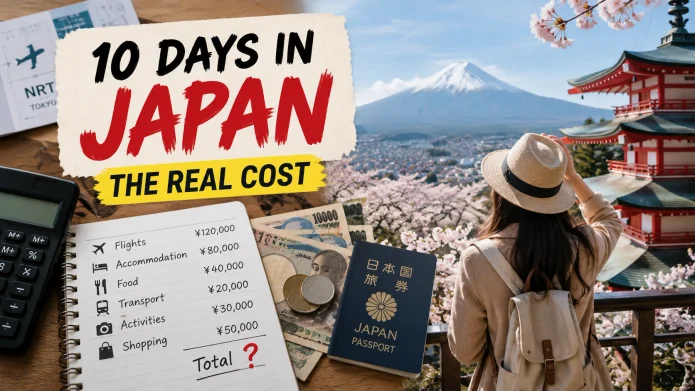
A standard 10-day trip to Japan costs a solo traveler exactly $1,800 to $2,500 USD, completely excluding international airfare. I just finished auditing my own receipts from a recent route through Tokyo, Kyoto, and Osaka, and the financial reality is much different than what older guidebooks tell you. Knowing your exact Japan trip cost depends heavily on navigating recent railway inflation and taking advantage of the currently weak Japanese Yen. Prices have shifted drastically since 2023, making old budget travel advice completely useless today.
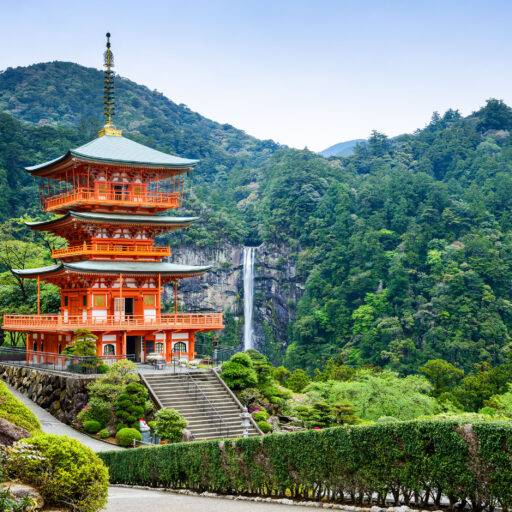
The Final Japan Trip Cost: What 10 Days Actually Set Me Back
You will spend roughly $2,120 USD for a safe, highly comfortable mid-range vacation spanning ten days. I define this specific 10 days in Japan budget based on staying in private business hotels, sitting down for two proper restaurant meals daily, and buying individual bullet train tickets. Before I flew out, I checked the Japan National Tourism Organization (JNTO) Budget Guide which confirms that favorable exchange rates currently offset domestic price bumps for foreign visitors.
Here is my exact line-by-line breakdown to show you where the money actually goes.
10-Day Mid-Range Budget Estimate (Per Person, in USD):
| Expense Category | Daily Average | Total for 10 Days |
| Accommodation | $85 | $850 |
| Food & Drink | $50 | $500 |
| Local Transport | $15 | $150 |
| Intercity Trains | N/A | $220 |
| Attractions/Temples | $15 | $150 |
| Connectivity & Misc | $5 | $50 |
| Total (No Flights) | N/A | $2,120 |
Take my advice and always budget an extra $200 for unexpected expenses. You might need an emergency taxi in the rain, or you might find a handmade ceramic bowl in Kyoto that you simply have to take home. Backpackers sleeping in hostel dormitories can easily lower this total closer to $1,200 USD by relying heavily on convenience store meals. On the flip side, luxury travelers booking traditional inns and eating premium sushi will easily exceed $4,500 USD for the same duration.
Your flight prices will change your total financial commitment drastically based on the season. Flying during the famous spring Cherry Blossom season or the autumn foliage peak often doubles the cost of your airfare. If you want the absolute lowest rates, book your trip for late January or mid-February. The weather is cold, but the crowds are thin and the hotels drop their prices significantly.
Visa Fees and Airport Customs: Start Your Japan Trip Cost Right
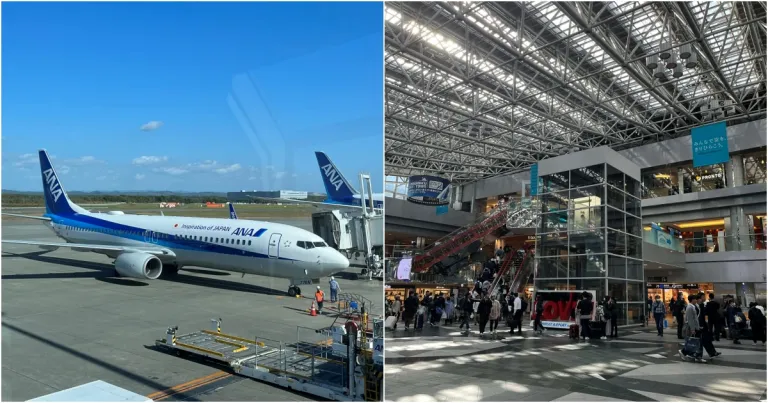
You pay exactly zero dollars for a tourist visa if you carry a passport from the US, UK, Australia, or Canada. The Ministry of Foreign Affairs of Japan grants an automatic 90-day visa waiver upon arrival for over 70 nationalities. You simply walk off the plane and proceed directly to the immigration line without filling out any prior embassy paperwork. Your passport just needs to remain valid for the entire duration of your stay.
I highly suggest you register your entry details online before you fly to avoid massive airport delays. The Digital Agency of Japan operates a fast, free portal called Visit Japan Web. You submit your passport details, flight number, and hotel address on this site to generate an official QR code. You scan this code at the electronic gates overseen by Japan Customs at major hubs like Narita or Haneda Airport.
Never pay a third-party website to get this QR code. The official process is entirely free and takes roughly 15 minutes to complete on your phone. My personal tip is to take a screenshot of the QR code before you board your flight. Airport Wi-Fi always gets bogged down when 300 people get off a wide-body jet at once, and having the screenshot saved on your lock screen lets you bypass the entire crowd.
The JR Pass Trap: How I Cut Tokyo Kyoto Travel Expenses
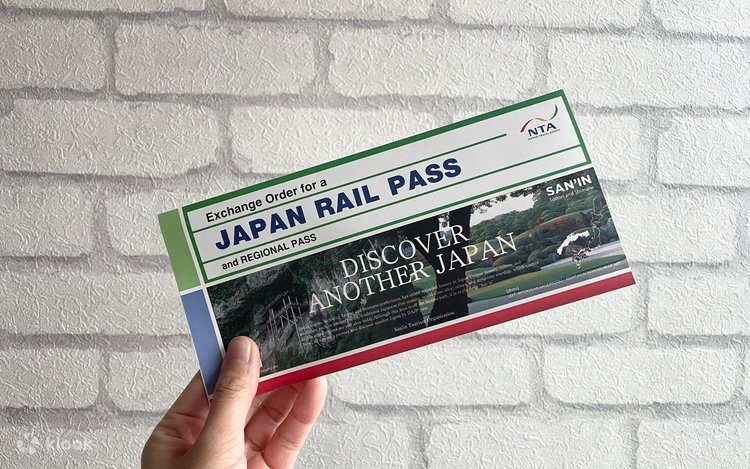
Buying individual Shinkansen (bullet train) tickets saves you massive amounts of money compared to a nationwide rail pass for standard itineraries. The recent JR Pass price hike pushed the cost of a 7-day unlimited ticket to a steep 50,000 JPY (about $335 USD), with rumors of another slight hike coming in October 2026. This price jump means the pass only pays off if you spend hours on long-distance trains every single day, which ruins a relaxed vacation pace.
My primary Tokyo Kyoto travel expenses came down to individual tickets I bought through the official SmartEX App. This platform allows you to link your foreign credit card and buy train tickets up to 30 days in advance.
Real Train Pricing (One-Way):
- Tokyo to Kyoto Shinkansen: 14,170 JPY ($95)
- Kyoto to Osaka Local Train: 580 JPY ($4)
- Osaka to Tokyo Shinkansen: 14,720 JPY ($99)
- Total Point-to-Point Cost: $198 USD.
This $198 total is drastically cheaper than dropping $335 on a JR Pass. Buying individual tickets also allows you to ride the Nozomi train. The Nozomi is the fastest class of bullet train on the tracks, completing the Tokyo to Kyoto run in exactly 2 hours and 15 minutes. The standard JR Pass strictly restricts access to the Nozomi, forcing pass holders to ride slower trains that make more stops.
Also read – Japan’s 2026 Tourist Tax Has a Hidden $45 Catch Nobody …
When you book your tickets online, you just scan a digital QR code at the Shinkansen gates. Be aware that oversized luggage requires a special seat reservation. If your suitcase exceeds 160cm in total dimensions, you must book a seat in the last row of the train car. Here is a personal tip: book Seat E on the right side of the train going from Tokyo to Kyoto. If the weather is clear, this specific seat gives you a perfect, unobstructed view of Mount Fuji.
Mastering City Transit: Your Essential Suica Card Japan Guide
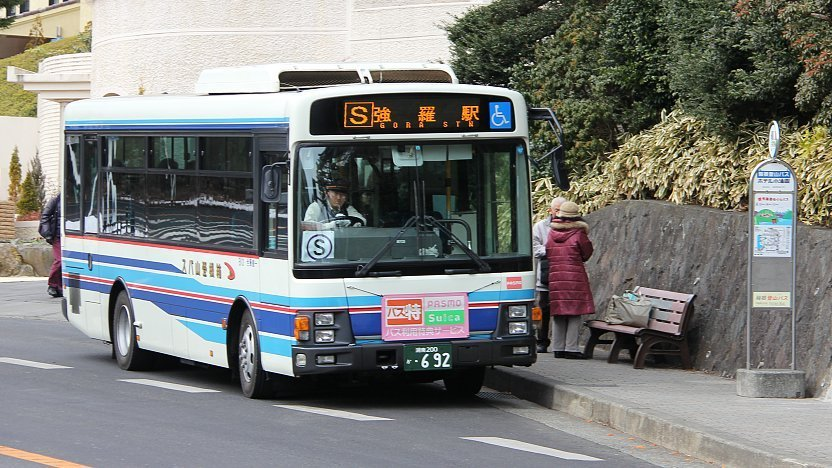
You absolutely need a digital transit card loaded on your phone to ride local subways quickly and avoid ticket machines. The Suica card Japan system acts as a prepaid digital wallet. Because physical microchip shortages are still a problem, railway operators severely limit the sale of physical plastic cards. I bypassed this completely by adding a digital Suica directly to my Apple Wallet before I even left home.
You just tap your smartphone at the turnstiles of the Tokyo Metro or Kyoto City Subway to pay your fare instantly. A standard subway ride costs between 180 and 250 JPY ($1.20 to $1.70). The exact same digital Suica card works perfectly across Osaka, Hiroshima, and Hokkaido. You can reload the digital card instantly using your foreign credit card via Apple Pay. You can also use this digital card to buy drinks from vending machines or pay for snacks at convenience stores.
If your itinerary requires heavy travel within central Tokyo, you might consider a specialized subway pass. The Tokyo Metro 72-Hour Pass costs 1,500 JPY ($10) and offers unlimited rides on all Metro and Toei subway lines. This pays for itself if you take more than three subway rides per day. However, it does not work on above-ground JR lines, where you will still need your Suica card Japan balance to get around.
Hotel Prices: Finding Deals on a 10 Days in Japan Budget
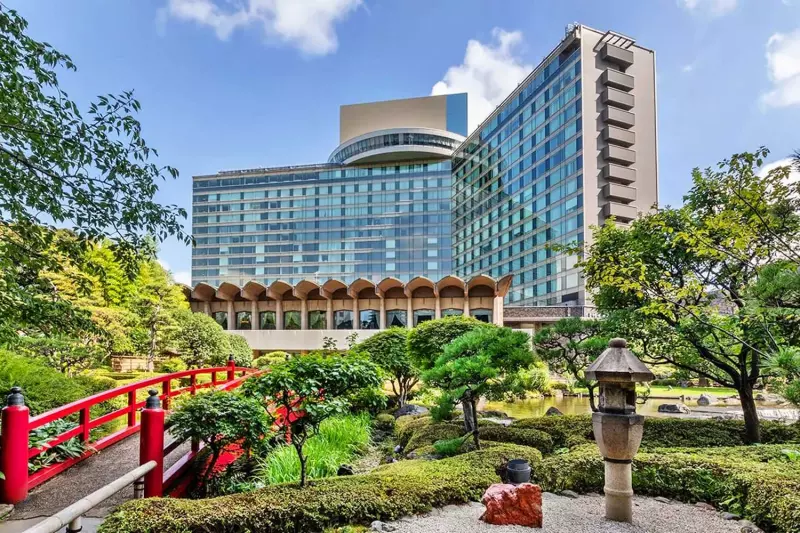
Clean, private business hotel rooms cost between $60 and $90 USD per night, offering the absolute best value for your overall Japan trip cost. Brands like APA Hotel, Sotetsu Fresa Inn, and Toyoko Inn are my go-to spots. They provide safe, incredibly clean environments in prime city center locations.
The catch is the size. These rooms are tiny, averaging just 12 to 14 square meters. You will barely have room to open a large suitcase on the floor. However, they maximize every inch of space by providing high-tech heated toilets, fast Wi-Fi, free comfortable pajamas, and fresh towels daily. It feels remarkably cozy once you get used to the layout.
You will pay municipal tourist taxes directly at your hotel front desk upon check-in. The Tokyo Metropolitan Government Bureau of Taxation mandates a 100 to 200 JPY daily fee for hotel stays. Kyoto enforces a similar accommodation tax ranging from 200 to 1,000 JPY per night depending on your room rate. I always keep a small coin purse handy to cover these minor cash fees.
If you want a traditional cultural experience, look into booking a Ryokan in rural areas like Hakone. Expect to pay $250 to $500 per night. This premium price almost always includes access to natural hot springs and an elaborate multi-course dinner called Kaiseki. Booking just one night in a Ryokan gives you a memorable cultural experience without destroying your 10 days in Japan budget.
Daily Food Budget: Eating Like Royalty on a Standard Japan Trip Cost
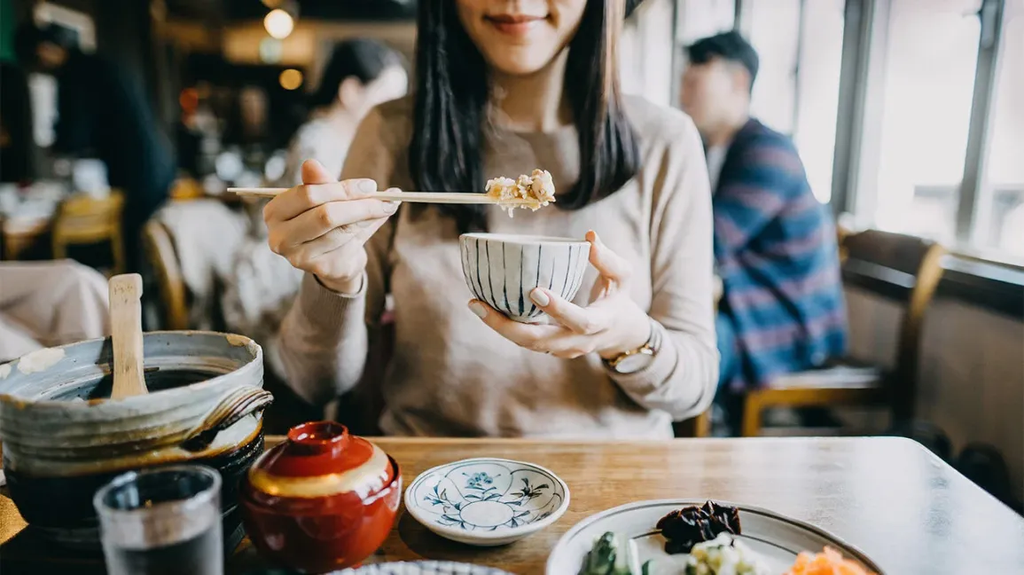
You should set aside $40 to $50 USD per day to eat incredibly well without stressing over restaurant prices. Your cheapest, most reliable meals will come from local convenience stores, known as konbini. Shops like 7-Eleven, Lawson, and FamilyMart restock fresh, high-quality food multiple times a day and offer incredible value.
My daily breakfast routine involves grabbing a famous egg salad sandwich, a salmon rice ball, and hot coffee for under 600 JPY ($4). For lunch, local noodle shops charge just 800 to 1,200 JPY ($5 to $8) for massive bowls of ramen or udon. Mid-range dinners at Izakayas (Japanese pubs) cost 3,000 to 5,000 JPY ($20 to $35) for shared plates of fried chicken, grilled skewers, and draft beers.
Tipping is strictly prohibited in Japan. The price you see on the menu is exactly what you pay. I once left a few hundred yen in loose change on a table, and the waiter literally chased me down the street to hand it back. It makes budgeting so much easier when you do not have to calculate a 20 percent tip after every meal.
I also highly recommend checking out department store food halls (Depachika) located in the basements of large malls. They sell high-end prepared meals. If you visit after 7:30 PM, the vendors place heavy discount stickers on all their fresh sushi and bento boxes to clear out inventory before closing. You can buy premium tuna sashimi for half the regular price, which is my absolute favorite budget hack in the country.
Luggage Shipping and Wi-Fi: Hidden Tokyo Kyoto Travel Expenses
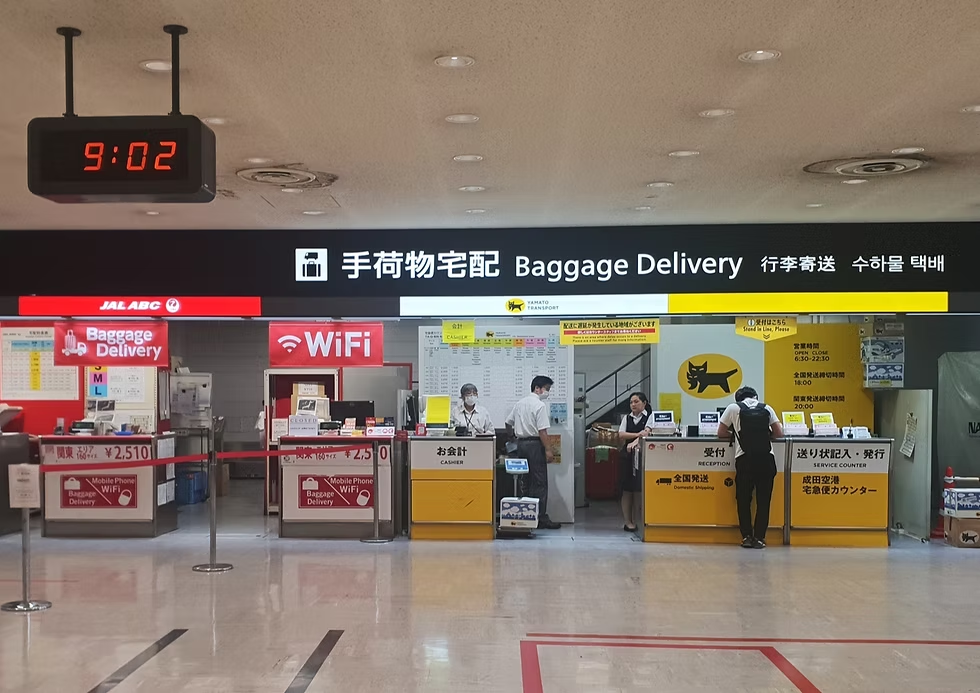
Shipping a large suitcase between cities costs roughly $15 USD and completely removes the physical stress from your Tokyo Kyoto travel expenses. The official delivery company is Yamato Transport, easily recognized everywhere by their black cat logo. You simply fill out a quick form at your hotel reception desk, and they deliver your heavy suitcase to your next hotel by the following afternoon. I pack a small backpack for my first night in the new city, allowing me to ride the crowded bullet trains entirely hands-free.
If you choose to carry your bags, utilize the electronic coin lockers located at every major train station. Large transit hubs like Shinjuku and Kyoto Station feature hundreds of these lockers. A large locker costs roughly 700 JPY ($5) per day. You lock your bag, pay directly with your phone, and explore the city comfortably until you are ready to check into your room.
You absolutely need a constant internet connection for live translation apps and train routing. Do not rely on free public Wi-Fi networks. They disconnect constantly and require annoying email verifications every time you move locations. An electronic SIM card (eSIM) from providers like Ubigi or Airalo costs $15 for 10GB of data. You install this profile on your phone before leaving home and instantly connect to local cell towers the moment your plane lands. Relying on an eSIM keeps your navigation perfectly seamless and ensures your 10 days in Japan budget stays securely on track.

