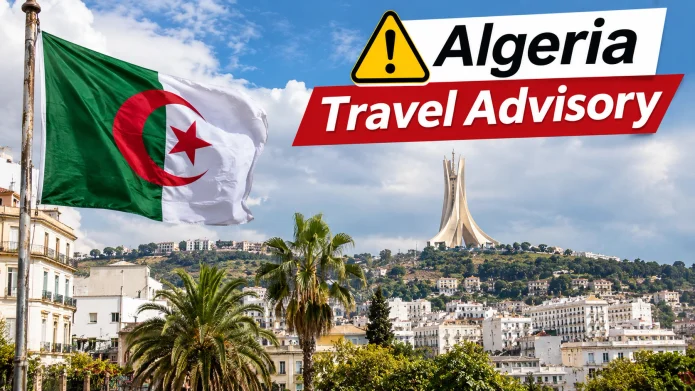
The United States Department of State updated its official travel advisory for Algeria, explicitly urging American citizens to exercise increased caution due to ongoing terrorism and kidnapping risks. Federal officials maintain a nationwide Level 2 alert for the country but enforce a strict Level 4 “Do Not Travel” mandate for the remote eastern and southern desert borders. Tourists planning a North African vacation must remain inside major metropolitan centers like Algiers and completely avoid unguided overland journeys into the deep Sahara.
Why Did the US State Department Issue a Level 4 Border Warning?
The US government issued this severe border warning because international terrorist groups continue to operate across the remote frontiers shared with Mali, Niger, and Libya. Criminal syndicates frequently use these vast, unpatrolled desert regions to conduct kidnapping for ransom operations targeting Western foreigners. The U.S. Department of State notes that terrorist cells can attack with zero advance notice, heavily targeting rural security outposts and isolated civilian camps.
Because the Algerian government restricts the movement of US government employees outside of Algiers, the embassy cannot guarantee emergency rescue services if you get stranded in the deep south. Consular officers cannot physically reach you in time if you face a medical or security crisis near the borders.
Which Specific Algerian Regions Are Banned for US Travelers?
You must completely avoid the deep southern and eastern border regions to protect yourself from immediate physical danger. The federal advisory legally classifies these exact municipalities and geographic zones as Level 4 danger zones where you should never travel for any reason.
| Restricted Algerian Region | Geographic Location | Primary Security Threat |
| Bordj Badji Mokhtar | Deep South (Mali border) | Extreme kidnapping risk |
| Illizi & In Salah | Deep South (Libya border) | Active terrorist cells |
| Tamanrasset | Deep South | Foreigner targeting |
| Tebessa Wilaya | Eastern Mountainous Zone | Unpredictable violence |
| Tindouf | Western Border | Cross-border militancy |
If your current itinerary includes any overland driving through these specific provinces, you must contact your tour operator immediately to cancel or reroute the trip. Do not attempt to rent a car and drive into the Sahara Desert without the strict supervision of an organized, state-approved tour group.
Also read – 7 Solid Reasons to Must Visit Capital of Algeria in 2026
Essential Security Fixes for Visiting Algiers and Major Cities
Major metropolitan centers like Algiers, Oran, and Constantine remain significantly safer than the rural frontiers. The Algerian government maintains a massive, highly visible police presence across these urban districts to deter violent crime and protect international business travelers. However, petty theft, such as purse snatching and aggressive pickpocketing, remains a constant threat on public transportation and near tourist attractions.
To ensure a safe urban visit, follow these strict security protocols:
- Enroll in STEP instantly: Register your passport and hotel dates in the Smart Traveler Enrollment Program (STEP) so the embassy can locate you during a sudden crisis.
- Never photograph the police: Algerian law strictly prohibits taking pictures of military installations, police officers, or government buildings, which often feature a flag above the door.
- Avoid all political rallies: Stay far away from street demonstrations, as participating in local political protests can result in your immediate arrest and deportation.
- Carry physical ID: Always keep your physical passport and local entry stamp on your person, as plainclothes police officers conduct random street checks.
What Are the Strict Visa and Currency Rules for Entering Algeria?
Travelers cannot simply buy a tourist visa at the airport upon arrival. You must apply for and secure an official Algerian visa through your local consulate weeks before your scheduled departure. The only exception applies to tourists flying directly into specific southern tourism zones via charter flights organized by state-sanctioned travel agencies.
When you arrive at the airport, customs officers enforce extremely strict financial laws.
- Declare all cash: You must officially declare any foreign currency exceeding 1,000 euros upon entry.
- Keep exchange receipts: You can only exchange your money at official banks or certified hotels, as street exchanges are illegal.
- Prepare for exit checks: Border guards will check your remaining cash when you leave to ensure you did not exchange money on the illegal black market.
How to Access US Consular Services During a Medical Emergency
The U.S. Embassy in Algiers remains fully operational and actively provides standard citizen services, including emergency passport replacement and medical provider lists. If you fall victim to a crime or lose your travel documents, you must contact the embassy immediately rather than trying to handle local police reports entirely on your own.
You should also secure comprehensive medical evacuation insurance before you board your flight. The Centers for Disease Control and Prevention (CDC) warns that rural Algerian clinics lack the advanced trauma equipment required for severe injuries, making an expensive airlift to Europe your only survival option. Furthermore, the Overseas Security Advisory Council (OSAC) advises corporate travelers to arrange secure, pre-vetted private transportation from the airport rather than hailing random taxis off the street.

