
When friends ask me if booking a dream safari to Kenya is safe right now, I tell them the truth: absolutely, but only if you know exactly where the invisible danger lines are drawn. The U.S. Department of State just renewed its travel advisory for Kenya, maintaining a baseline Level 2 warning but issuing severe Level 4 “Do Not Travel” alerts for specific pockets of the country.
If you are packing for Nairobi or the coastal beaches, you cannot afford to skim this update. Protestors have recently targeted tourist safari vehicles, and the government just added a rare “Other” risk indicator to their official alert system. Here is what you actually need to know before you board that flight.
Why Did the US Update the Kenya Travel Advisory?
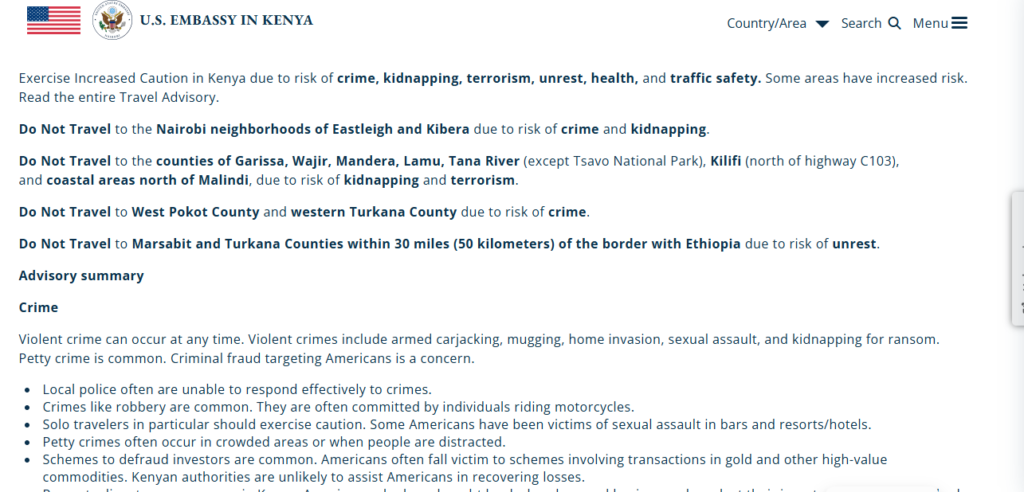
The baseline across Kenya remains Level 2 (Exercise Increased Caution), primarily due to petty crime, kidnapping, terrorism, and civil unrest. However, the update specifically highlights the escalation of violent street protests. Protesters frequently block major intersections, and alarming new reports indicate they have begun attacking vehicles carrying Americans, including motorcycle taxis (boda-bodas) and standard safari trucks.
Additionally, the advisory warns of a spike in sophisticated scams involving fake gold or property investments, where local authorities are highly unlikely to help you recover lost funds.
Also read – Are Luxury Safari Lodges in Africa Affordable on a Budget?

Which Specific Kenyan Counties and Cities Should You Avoid Completely?
Your itinerary dictates your safety. While popular reserves like the Masai Mara generally remain secure, stepping into the wrong county or even the wrong neighborhood in Nairobi changes your risk profile instantly.
Level 4 “Do Not Travel” Red Zones:
- Nairobi Slums: Never enter the Eastleigh or Kibera neighborhoods. Armed carjackings and kidnappings for ransom are highly concentrated here.
- Somalia Border Regions: Cancel any plans visiting Garissa, Wajir, Mandera, Lamu, and coastal areas north of Malindi. The terrorist group Al-Shabaab is highly active here.
- Ethiopian Border: Stay at least 30 miles (50 km) away from the Ethiopian borders in Marsabit and Turkana counties due to volatile armed cross-border conflicts.
- Bandit Territory: West Pokot and western Turkana counties face severe threats from local armed bandits where police presence is virtually nonexistent.
Is My Safari Destination Safe?
| Destination | Current Threat Level | Tourist Safety Status |
| Tsavo National Park | Level 2 (Caution) | Safe. Specifically exempted from the Tana River county travel ban. |
| Nairobi (Central/Westlands) | Level 2 (Caution) | Generally safe, but requires high vigilance against motorcycle drive-by thefts. |
| Lamu Island | Level 4 (Do Not Travel) | Highly dangerous due to kidnapping/terrorism risks. Do not go. |
| Malindi (South of Town) | Level 2 (Caution) | Permitted, but coastal areas immediately north are strictly off-limits. |
Also read – Ten Most Inaccessible Places to Travel on This Earth
Real Safety Tactics: How to Avoid Scams, Protests, and Accidents
Having navigated Nairobi’s chaotic streets, I can tell you that the biggest daily threat isn’t a headline-making event—it’s traffic and opportunistic theft.
- Beware the Motorcycle Snatch: Do not walk on the sidewalk while scrolling on your phone. Thieves on motorcycles frequently jump the curb, snatch devices, and disappear into traffic.
- Skip the Self-Drive: The US Embassy explicitly warns about the two-lane highways connecting Nairobi to Nakuru and Mombasa. Drivers take blind risks passing slower trucks, leading to fatal head-on collisions. Hire an experienced local driver or fly locally.
- Keep a Low Profile in Traffic: If you are caught in a traffic jam caused by a protest, keep your windows rolled up and doors locked. Do not take photos of the demonstrators.
What Are the Immediate Steps to Take Before Flying to Kenya?
Do not just print your itinerary and hope for the best. Take these mandatory steps to protect yourself:
- Enroll in STEP: Register your trip with the Smart Traveler Enrollment Program (STEP) so the embassy can geolocate and text you if a violent protest erupts near your hotel.
- Buy Medical Evacuation Insurance: This is non-negotiable. Medical facilities in rural Kenya lack basic supplies, and private hospitals in Nairobi will outright deny you emergency care if you cannot pay upfront. You need an insurance policy that covers emergency airlifts.
- Establish a Proof of Life Protocol: It sounds extreme, but the State Department advises setting up specific “secret questions and answers” with your family back home. If a kidnapping occurs, this proves to authorities you are still alive.

