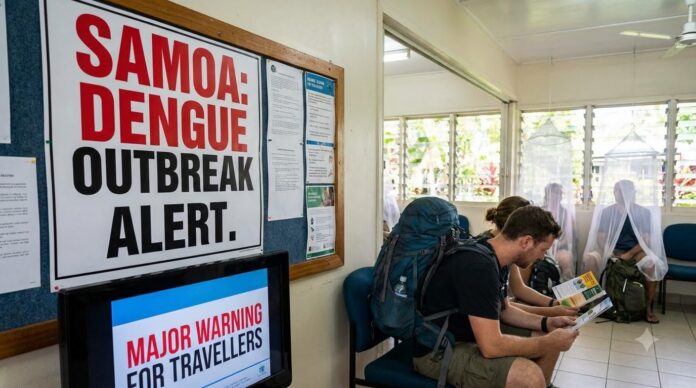
Samoa dengue fever outbreak remains active, and travellers should prevent mosquito bites throughout the day, recognise early symptoms and seek medical care quickly if they become unwell.
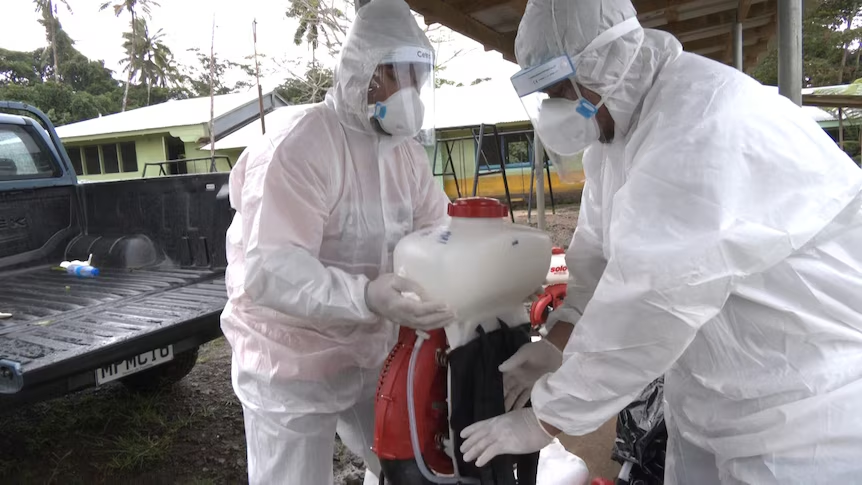
Australia’s Smartraveller advice for Samoa continues to recommend normal safety precautions, but its latest update confirms that the dengue outbreak ongoing since 2025 has not ended. The CDC’s Samoa traveller page also places dengue under its Level 1 global health notice and tells visitors to protect themselves from mosquito bites.
This is not a reason for every traveller to cancel. It is a reason to treat mosquito protection as an essential part of the trip—not an optional item packed beside the sunscreen.
Is There Still a Dengue Outbreak in Samoa in 2026?
Yes. Samoa’s dengue outbreak is still officially described as ongoing.
Samoa declared the outbreak on 17 April 2025. The Samoa Ministry of Health currently lists Situation Report No. 62, dated 22 June 2026, as its latest published dengue report. Smartraveller’s advice, updated on 5 August 2026, confirms that the outbreak remains active.
The latest Samoa Ministry of Health situation report covers 15–21 June 2026.
| Latest official Samoa dengue data | Reported figure |
|---|---|
| New cases during the week | 53 |
| New laboratory-confirmed cases | 7 |
| New hospital admissions | 3 |
| New intensive-care admissions | 0 |
| Deaths during the week | 0 |
| Clinically diagnosed cases since January 2025 | 19,817 |
| Laboratory-confirmed cases since January 2025 | 5,503 |
| Dengue-related deaths since January 2025 | 9 |
The weekly number of new cases had fallen by 65% compared with the previous week. However, a weekly decline does not mean the outbreak is over. Samoa’s Ministry of Health states that 28 consecutive days without a new laboratory-confirmed case are required before an outbreak can be declared over.
Also read – CDC Issues Fresh Ebola Travel Rules for Returning Travelers
Which Parts of Samoa Have Reported the Most Dengue Cases?
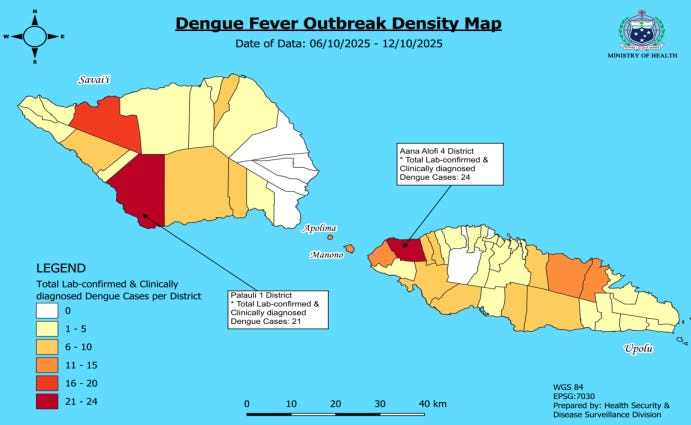
Upolu has carried most of Samoa’s recorded dengue burden.
The latest Ministry of Health report attributes:
- 92% of recorded cases to Upolu
- 7% to Savai‘i
- 1% to Manono and Apolima
This does not make one resort, village or island completely safe. Mosquito exposure can occur around homes, hotels, restaurants, gardens and urban areas—not only in forests or remote locations. The mosquitoes that transmit dengue commonly live around residential areas and breed in water held in buckets, flowerpots and other containers.
Are Children at Greater Risk During the Samoa Dengue Outbreak?
Children require particular attention because people younger than 15 represent most confirmed cases in Samoa’s latest cumulative data.
The Ministry of Health reports that 73% of Samoa’s laboratory-confirmed cases since January 2025 involved people under 15. That figure does not prove every visiting child will become seriously ill, but it makes consistent bite prevention especially important for families.
Travellers who have had dengue before should also be careful. A later infection involving a different dengue-virus type can increase the risk of severe illness. Samoa’s latest report identifies both DENV-1 and DENV-2 in circulation.
How Can Travellers Avoid Dengue in Samoa?
Use mosquito repellent every day, including during breakfast, sightseeing and short walks outside the hotel.
Dengue-carrying mosquitoes usually bite during the day. Waiting until evening to apply repellent leaves a major gap in protection.
Follow This Samoa Mosquito-Protection Routine
- Apply repellent before leaving your room. Check the active ingredient rather than relying on claims such as “natural protection.” CDC-listed options include DEET, picaridin, IR3535, oil of lemon eucalyptus or PMD, and 2-undecanone.
- Cover exposed skin where practical. Choose loose, light-coloured trousers and long-sleeved shirts, especially for village visits, garden walks and outdoor meals.
- Choose a screened or air-conditioned room. Check windows, bathroom vents and balcony doors after arrival.
- Use a mosquito net in open accommodation. A ceiling fan alone does not create a complete mosquito barrier.
- Remove nearby standing water. Check plant trays, buckets, outdoor containers and uncovered water vessels.
- Use the correct sunscreen order. Apply sunscreen first, allow it to dry and then apply insect repellent.
- Reapply products according to their labels. Swimming, heavy sweating and towel-drying can reduce protection.
A useful travel habit is to keep the repellent beside the room key or phone charger. This makes it harder to leave for an early breakfast or airport transfer without applying it.
What Are the Symptoms of Dengue After Samoa Travel?
Fever combined with headache, body pain, nausea or a rash requires medical attention during or after a Samoa trip.
Common dengue symptoms include:
- Sudden fever or chills
- Headache
- Pain behind the eyes
- Muscle, joint or bone pain
- Nausea or vomiting
- Rash
Symptoms usually begin four to seven days after an infected mosquito bite, although the possible range is approximately three to 14 days. Mild dengue can resemble other illnesses, so travellers should tell the healthcare professional that they have recently been in Samoa.
When Does Dengue Become a Medical Emergency?
The most dangerous warning signs can appear after the fever begins to fall.
Seek urgent medical care for:
- Severe stomach pain or tenderness
- Vomiting at least three times within 24 hours
- Blood in vomit or stools
- Bleeding from the nose or gums
- Rapid breathing
- Extreme tiredness
- Unusual restlessness or irritability
- Cold, pale or clammy skin
CDC guidance says warning signs commonly begin 24 to 48 hours after the fever has gone away. A traveller who feels briefly better should not ignore new stomach pain, repeated vomiting or bleeding. Severe dengue can worsen within hours.
What Should You Do If You Develop a Fever in Samoa?
Seek medical advice, drink fluids and do not self-treat with aspirin or ibuprofen while dengue remains possible.
Travellers who become unwell during the trip—or within the first three weeks after returning—should tell the healthcare professional where and when they travelled. SafeTravel New Zealand’s dengue advice recommends drinking plenty of fluids and using paracetamol for fever or pain.
Avoid aspirin, ibuprofen and similar anti-inflammatory medicines until a healthcare professional has ruled out dengue. These medicines can increase the risk of bleeding. There is no specific medicine that cures dengue; early monitoring, hydration and rapid hospital care for warning signs are critical.
For medical advice in Samoa, the Ministry of Health situation report lists +685 68100 and +685 66600. For an immediate medical emergency, Samoa’s emergency number is 911.
Is It Safe to Travel to Samoa During the Dengue Outbreak?
Travel is continuing, and official advice remains at the normal-precautions level, but dengue protection is necessary.
The practical decision is not simply whether Samoa is open. Travellers should ask whether they are prepared to:
- Use repellent every day
- Protect children consistently
- Recognise severe dengue warning signs
- Seek care rather than waiting for symptoms to pass
- Monitor their health after returning home
Samoa remains a functioning travel destination, but the active outbreak should not be treated as background information. Pack effective repellent, inspect the room on arrival and take any fever seriously.

