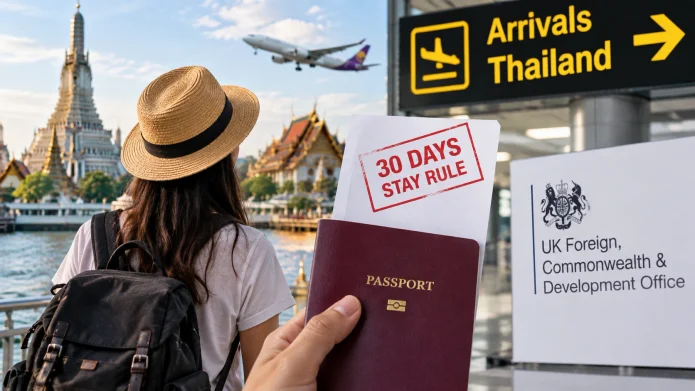
UK travellers visiting Thailand under the visa exemption scheme can stay for up to 30 days for tourism, but they must meet entry conditions before arrival. The UK Foreign, Commonwealth and Development Office (FCDO) has updated its Thailand entry guidance, reminding travellers that the permitted stay period, passport rules, onward travel proof and digital arrival requirements can affect whether they are allowed into the country.

The update matters because many visitors plan Thailand holidays around popular destinations such as Bangkok, Phuket, Krabi and Chiang Mai without checking the exact immigration conditions. A mistake as simple as booking a 35-day trip without the correct visa can create problems at the airport.
Also read – Thailand Launches THIM Immigration App to Woo Tourists
What Is Thailand’s 30-Day Stay Rule for UK Travellers?
British citizens entering Thailand under the visa exemption scheme can stay for up to 30 days for tourism purposes from 15 September 2026. The rule applies to eligible travellers who meet Thailand’s immigration requirements.
The 30-day allowance is designed for short holidays, family visits and tourism-related travel. It is not permission to live, work or study in Thailand.
| Traveller purpose | Is 30-day visa exemption suitable? |
|---|---|
| Two-week holiday in Bangkok and Phuket | Yes |
| Three-week island trip | Yes |
| Backpacking trip under 30 days | Yes |
| Remote work stay beyond permitted period | No, check appropriate visa options |
| Retirement or long-term stay | No, requires another visa category |
| Study in Thailand | No, requires relevant visa |
The most common mistake travellers make is treating the 30-day period as flexible. Immigration officers calculate the permitted stay from the arrival date recorded at entry, so visitors should check the stamp or electronic record before leaving the immigration area.
Why Has the UK Issued a Thailand Travel Warning?
The FCDO update is mainly a reminder about entry requirements, not a general warning against visiting Thailand. However, the UK government continues to advise against all but essential travel to specific areas near the Thailand-Malaysia border because of security concerns.
For most holiday destinations, travellers should focus on preparation:
- Check visa requirements before booking flights.
- Keep passport documents ready.
- Purchase suitable travel insurance.
- Avoid travelling to areas covered by FCDO restrictions.
A common travel planning error is checking only flight prices and hotel reviews while ignoring immigration rules. Entry problems usually happen before the holiday even begins.
Thailand Entry Requirements UK Travellers Need to Know
A valid passport, proof of onward travel and evidence that you can support your stay may be requested when entering Thailand.
Before travelling, UK visitors should confirm these key requirements:
1. Passport validity
Your passport must:
- Be valid for at least six months after arrival.
- Have at least one blank page available.
- Not be reported lost or stolen.
A passport that looks fine to a traveller may still fail immigration checks if it does not meet Thailand’s validity rules.
Also read – Thailand Visa Exemption Program Rule Change for US Citizens
2. Proof of onward or return travel
Thailand immigration may ask for evidence showing that you plan to leave before your permitted stay ends.
Examples include:
- Return flight ticket.
- Confirmed onward flight.
- Travel booking showing your next destination.
This is particularly important for open-ended backpacking trips where travellers arrive without a clear departure plan.
3. Proof of sufficient funds
Travellers may be asked to show they have enough money for their visit. The FCDO notes that Thailand authorities may request evidence including at least 10,000 Thai baht per person or 20,000 Thai baht per family.
Do UK Travellers Need a Visa for Thailand in 2026?
Many UK tourists do not need a visa for short visits of up to 30 days, but longer stays require proper planning.
Travellers staying beyond the permitted period should arrange the correct visa before travelling or explore extension options through Thai immigration authorities if eligible.
The biggest risk is assuming that leaving Thailand briefly and returning automatically resets every travel situation. Immigration decisions depend on current rules, travel history and the purpose of the visit.
Thailand Digital Arrival Card: What UK Visitors Must Complete Before Arrival
All foreign travellers entering Thailand must complete the Thailand Digital Arrival Card (TDAC) before arrival. The requirement applies to arrivals by air, land and sea.
The digital arrival card:
- Must be submitted online.
- Should be completed within three days before arrival.
- Is required regardless of whether someone enters with a visa or under visa exemption.
- Is not a visa replacement.
Travellers should only complete the TDAC through official Thai government channels because unofficial websites may charge unnecessary fees.
Also read – Thailand Cuts Visa-Free Stay to 30 Days for 59+ Countries
What Happens If You Overstay Thailand’s 30-Day Limit?
Overstaying your permitted stay can lead to fines, detention, deportation or future entry restrictions.
Thailand’s immigration system treats overstays seriously.
Travellers who overstay may face:
- Daily fines.
- Problems when leaving the country.
- Immigration records affecting future visits.
- Possible bans for serious violations.
A simple calendar mistake can become expensive. A useful travel habit is setting a reminder three or four days before your permitted departure date rather than waiting until the final day.
Thailand 30-Day Rule: Practical Tips Before Your Flight
The easiest way to avoid Thailand entry problems is preparing documents before reaching the airport.
A smart checklist:
- Save a digital copy of your passport.
- Keep your return flight confirmation available.
- Complete the Thailand Digital Arrival Card before departure.
- Confirm your stay length matches the permitted period.
- Keep hotel or accommodation details accessible.
- Check the latest FCDO Thailand advice before travelling.
For travellers planning a longer Thailand experience, such as spending several months exploring Southeast Asia, the correct visa route should be researched before booking flights.
Thailand Travel Rules Explained: What Visitors Often Get Wrong
The 30-day rule does not mean every visitor can automatically stay for 30 days without conditions.
Common misunderstandings include:
| Misunderstanding | Reality |
|---|---|
| “I can stay exactly 30 days without checking anything” | Entry conditions still apply |
| “The digital arrival card replaces a visa” | It is only an immigration form |
| “My passport expiring soon is acceptable” | Thailand requires sufficient validity |
| “I can work remotely indefinitely as a tourist” | Work and long stays need appropriate permission |
Reliable information should always come from official sources such as the UK FCDO Thailand travel advice, the Thai Embassy visa guidance, and Thailand immigration resources rather than outdated travel posts.
Final Advice for UK Visitors Heading to Thailand
Thailand remains a popular holiday destination, but travellers should treat immigration rules as carefully as flight bookings and hotel arrangements.
The key points are simple:
- UK tourists using visa exemption can stay up to 30 days.
- Passport rules must be followed.
- Digital Arrival Card completion is mandatory.
- Longer stays require the correct visa planning.
- Overstaying can create serious consequences.
A smooth Thailand trip usually depends on preparation before departure. Checking official rules before packing can prevent avoidable problems after landing.

