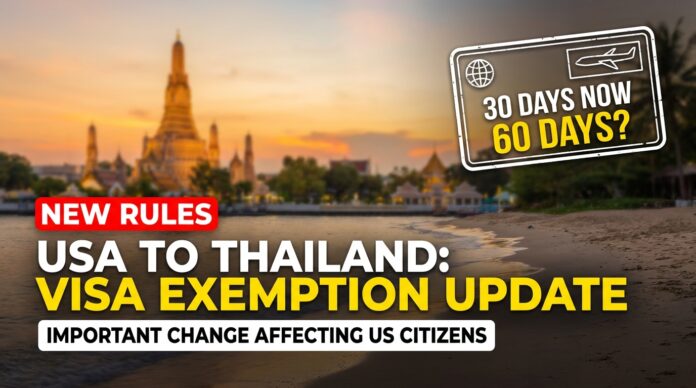
US citizens can currently enter Thailand without a tourist visa for stays under 60 days, but travelers should watch the 2026 rule change closely. Thailand’s Cabinet approved a revision on May 19, 2026 that would revoke the 60-day visa exemption scheme and move many travelers back to a 30-day exemption, but official guidance says the revised measures take effect 15 days after publication in the Royal Gazette. Until then, current entry conditions remain in place.
For American travelers, the practical rule is simple: check your arrival date, complete the Thailand Digital Arrival Card, carry proof of onward travel, and do not overstay. Thailand is easy to visit, but immigration rules are being tightened, and small mistakes can become expensive at the airport or immigration office.
Do US Citizens Need a Visa for Thailand in 2026?
US citizens do not need a tourist visa for Thailand if the stay is currently fewer than 60 days. The U.S. Department of State lists Thailand’s tourist visa requirement as “No” for stays under 60 days, while also noting that pre-arrival online registration is required.
This visa-free entry is commonly called the Thailand visa exemption program. It is not the same as a visa on arrival. Americans normally use visa exemption, not visa on arrival.
| Traveler question | Clear answer for US citizens |
|---|---|
| Do Americans need a visa for Thailand vacation? | No, for stays currently under 60 days |
| Is Thailand visa exemption the same as visa on arrival? | No. US citizens use visa exemption |
| Is TDAC a visa? | No. It is an arrival card requirement |
| Can Americans extend the stay? | Yes, extension may be possible, but approval is discretionary |
| Is the 60-day rule changing? | Yes, approved by Cabinet, pending Royal Gazette process |

How Long Can Americans Stay in Thailand Without a Visa?
US citizens can currently stay up to 60 days under Thailand’s visa exemption scheme. The Royal Thai Consulate-General in Los Angeles states that nationals covered by the new tourist visa exemption scheme are entitled to visa exemption for tourism, business engagements, urgent work, or ad-hoc work for up to 60 days, with a possible extension for another period not exceeding 30 days.
In real travel terms, this matters for trips like:
- A two-week Bangkok and Phuket vacation
- A 45-day island-hopping trip
- A remote-friendly stay where you are not working for a Thai employer
- A short business meeting or conference visit
The safer approach is to keep your purpose clear. If your plan involves employment, teaching, paid work in Thailand, retirement, study, or a long stay, you should not rely casually on visa exemption. The U.S. Department of State specifically advises business travelers, government employees, teachers, retirees, and people planning to stay longer than 60 days to check Thai visa requirements.
Also read – Phuket vs. Krabi in January: Which Is Better for Couples?
Thailand 60-Day Visa Exemption Change: What US Travelers Should Know
Thailand has approved a rollback of the 60-day visa exemption scheme, but travelers need to follow the effective date carefully. On May 19, 2026, Thailand’s Cabinet approved revised visa exemption and visa-on-arrival measures, including revoking the 60-day exemption for all 93 countries and territories, revising the 30-day tourism exemption list, and reducing visa-on-arrival eligibility.
The key detail is this: the change takes effect 15 days after publication in the Royal Gazette. TAT also says travelers already in Thailand, or entering before the revised measures take effect, may remain for the duration of their existing permitted stay.
For a US traveler booking now, the smartest move is:
- Check official Thai Embassy or Consulate updates before departure.
- If your trip is over 30 days, prepare a backup plan.
- If your trip is 31 to 60 days, consider whether a tourist visa gives more peace of mind.
- Do not assume airline staff will interpret the rule the same way you do.
A real airport example: if your return ticket is 48 days after arrival and the new 30-day rule has taken effect, an airline check-in agent may question your eligibility before you even board. That is why travelers should save official rule pages, TDAC confirmation, hotel details, and onward ticket proof in one phone folder.
Thailand Digital Arrival Card for US Citizens
All non-Thai nationals entering Thailand must complete the Thailand Digital Arrival Card, known as TDAC. TDAC replaced the paper arrival card and applies to travelers entering by air, land, or sea. The official TDAC FAQ says it should be submitted within 3 days before arrival, including the arrival date.
TDAC is important because it is not optional just because Americans are visa-exempt.
You will need:
- Passport details
- Flight number or arrival details
- Address in Thailand
- Travel purpose
- Health declaration information
- Email address for the TDAC confirmation
Children also need TDAC. The official FAQ says all travelers, including infants and children, are required to have one. TDAC is also valid for one entry only, so you need a new submission every time you enter Thailand.
Also read – Tripadvisor’s Most Popular Summer Destinations for 2026
Passport Rules for Americans Entering Thailand
Your US passport should be valid for at least six months from the date of entry into Thailand. The U.S. Department of State lists six months of passport validity from entry as required and says one blank passport page is needed for the entry stamp.
Do this before you fly:
- Check your passport expiry date.
- Make sure you have at least one blank visa/stamp page.
- Carry a digital and physical copy of your passport ID page.
- Keep your current Thai entry stamp or visa details easy to access.
This sounds basic, but it is one of the most common stress points at check-in. A passport expiring in five months may still feel “valid” to the traveler, but immigration and airline staff can treat it differently.

Can US Citizens Extend Thailand Visa Exemption?
US citizens may be able to extend a visa-exempt stay, but approval is not automatic. The Royal Thai Consulate-General in Los Angeles says the 60-day exemption can be extended for another period not exceeding 30 days, and that extension is at the discretion of the immigration officer.
A practical rule: do not wait until the final day. Visit immigration with enough time to fix missing documents, photo issues, address questions, or local office delays.
Bring the basics:
- Passport
- Entry stamp details
- Hotel or address information
- Proof of onward travel
- Copies or photos if requested locally
- Payment method accepted by that immigration office
If your trip is planned for 70, 80, or 90 days, do not treat extension as a casual backup. A tourist visa before travel may be the cleaner option.
Thailand Visa Exemption vs Tourist Visa for Americans
Visa exemption is best for simple short trips, while a tourist visa is better for longer or less flexible plans. The Los Angeles Thai Consulate says a single-entry tourist visa is valid for 90 days from issuance, travelers must enter within that three-month period, and the permitted stay is up to 60 days from entry, with a possible 30-day extension.
| Option | Best for | Stay length | Main risk |
|---|---|---|---|
| Visa exemption | Short vacation or short business visit | Currently up to 60 days | Rule change may reduce future stay |
| Tourist visa | Longer planned trip | Up to 60 days, extension possible | Must apply before travel |
| Extension in Thailand | Travelers already inside Thailand | Extra stay may be granted | Officer discretion |
| Wrong visa choice | Work, study, retirement, long stay | Not recommended | Denial, overstay, or legal trouble |
The Consulate also advises applying for a visa around one month before departure and not more than three months early, because most visas are valid for 90 days from the issue date.

What US Travelers Should Not Do in Thailand
Do not overstay in Thailand. The U.S. Department of State warns that overstaying can lead to fines and, depending on the length of overstay, arrest, detention, deportation at your expense, and a ban from re-entering Thailand.
Avoid these mistakes:
- Do not book a 65-day trip assuming “it will be fine.”
- Do not ignore the TDAC requirement.
- Do not confuse visa exemption with visa on arrival.
- Do not work in Thailand without the correct permission.
- Do not leave extension until the last day.
- Do not rely only on social media visa advice.
A useful habit is to set two phone reminders: one for TDAC submission 72 hours before arrival and one for visa/entry-stamp expiry 10 days before the deadline.
Also read – 25 Best Cultural Travel Experiences Around the World
What Happens at Thai Immigration for US Citizens?
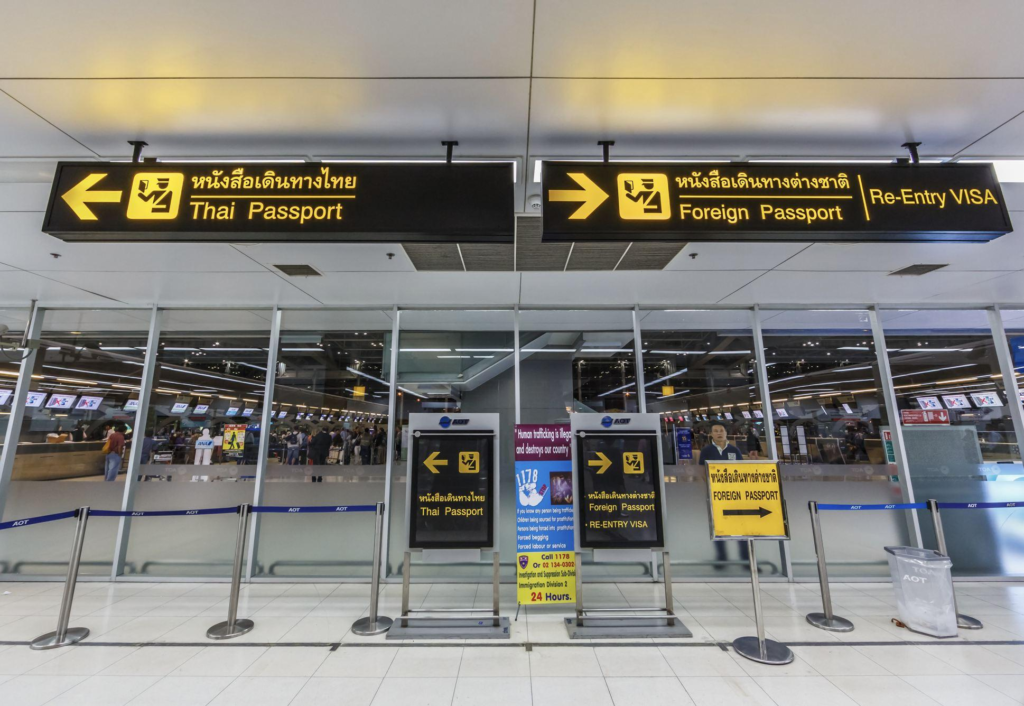
Thai immigration may ask for proof of onward travel or proof that you can financially support your stay. The U.S. Department of State notes that immigration officials or airline staff may ask for onward or return tickets and financial ability to remain in Thailand.
You may never be asked, but you should be ready. Keep these easy to show:
- Return or onward flight
- First hotel booking
- Travel insurance details
- Bank card or reasonable proof of funds
- TDAC confirmation
- Passport with six months validity
This is especially useful for travelers with flexible plans, one-way tickets, frequent Thailand visits, or long stays close to the maximum allowed period.
Quick FAQ: Thailand Visa Exemption for US Citizens
Do US citizens need TDAC for Thailand?
Yes. US citizens need TDAC before entering Thailand. TDAC applies to all non-Thai nationals entering by air, land, or sea, unless they are transiting without passing through immigration.
Is Thailand visa-free for Americans?
Yes, Thailand is currently visa-free for Americans for stays under 60 days, but a 30-day rollback has been approved and is pending implementation.
Can Americans stay 90 days in Thailand without a visa?
Americans cannot simply assume 90 days visa-free. Under the current 60-day exemption, a 30-day extension may be possible, but it is discretionary.
Is visa on arrival available for US citizens in Thailand?
US citizens normally use visa exemption, not visa on arrival. Thailand’s visa-on-arrival category is separate from the visa exemption program.
What is the safest plan for a 31 to 60 day Thailand trip?
The safest plan is to check the latest Royal Gazette and Thai Embassy updates before booking. If the rollback is active by your travel date, consider applying for a tourist visa before departure.
Final Takeaway for US Travelers
Thailand remains easy for US citizens to visit, but 2026 is not the year to travel on old visa advice. For now, Americans can still use the 60-day visa exemption, complete TDAC before arrival, and carry normal entry documents. But Thailand has already approved a major shift back toward shorter visa-free stays, and the final effective date depends on official publication.
The smartest traveler is not the one who knows the most rules. It is the one who checks the rule that applies on the exact day they enter Thailand.

