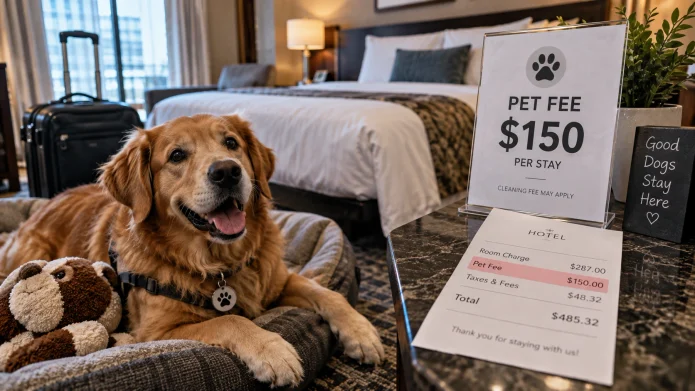
The hospitality industry’s aggressive push toward “dog-friendly” accommodations has escalated out of control, trapping travelers in a web of hidden canine taxes, severe property restrictions, and mounting guest conflicts. Hotels globally recognized the massive revenue potential during the pandemic pet boom, converting standard rooms into pet-friendly units overnight to capitalize on the trend. However, this shift often lacks genuine hospitality, offering travelers nothing more than a steep nightly surcharge for the privilege of bringing an animal indoors.

The Difference Between Pet-Friendly and Dog-Tolerant
True dog-friendly hotels provide designated amenities like orthopedic beds, water bowls, and safe outdoor exercise areas for their canine guests. In contrast, “pet-tolerant” hotels simply charge a non-refundable fee while banning the animal from all public indoor and outdoor spaces.
Many upscale resorts advertise their properties as pet havens but immediately hand guests a strict list of forbidden zones upon check-in. Dogs are routinely barred from the main lobby, the bar terrace, and the manicured gardens, forcing owners to sneak their pets through back exits.
Travelers often pay hundreds of dollars in extra fees only to discover their dog must remain crated in the room. This bait-and-switch marketing leaves pet owners feeling extorted for a service they never actually received.
Also read – Pet Passport Guide: What It Is, Who Needs One and What It Costs
Breaking Down the Hidden Hotel Canine Tax
Hotels implement various pet-related surcharges that significantly inflate the final checkout bill, often masking them as necessary sanitation expenses. The Federal Trade Commission (FTC) actively monitors these deceptive “junk fees,” requiring hospitality businesses to disclose all mandatory charges upfront rather than burying them in the fine print.
Guests frequently confuse a refundable damage deposit with a non-refundable nightly pet fee, leading to aggressive disputes at the reception desk. A traveler booking a $150 room might find their daily rate doubled once the mandatory pet surcharges are applied to the final folio.
| Fee Type | What It Actually Covers | Average Cost | Refundable? |
| Nightly Pet Fee | The basic permission to bring a dog onto the property. | $30 – $75 per night | No |
| Cleaning Fee | Additional room sanitization, vacuuming dander, and odor removal. | $50 – $150 per stay | No |
| Damage Deposit | A temporary hold in case the dog ruins upholstery or soils the carpet. | $100 – $300 hold | Yes (if no damage) |
The Growing Backlash from Non-Pet Owners
Guests without pets are increasingly demanding dog-free hotel chains due to hygiene concerns, relentless barking in the hallways, and severe allergic reactions. Standard hotel housekeeping protocols rarely involve washing thick duvet covers or deep-cleaning carpets between every single guest check-out.
This means pet dander and invisible bacteria linger in the textiles long after the dog leaves the property. A traveler paying premium rates for a luxury suite expects a pristine environment, not the lingering smell of wet fur or ruined upholstery from a previous canine occupant.
Also read – 7 Airlines Allowing Large Dogs in Cabin for International Flights …

Navigating Hotel Health Codes and Dining Restrictions
Local health ordinances strictly prohibit non-service animals from entering any hotel area where food is prepared, served, or stored. The Food and Drug Administration (FDA) Food Code sets these national safety standards to prevent cross-contamination and public health hazards in commercial kitchens.
Hotel staff face severe municipal fines and potential closure if they allow a guest’s dog into the breakfast buffet or indoor restaurant. Frustrated pet owners often blame the hotel management for these strict dining bans, completely unaware that the property is simply complying with federal sanitation laws.
Service Animals vs. Standard Pets Under the Law
Service animals are legally exempt from all standard hotel pet fees, weight limits, and property access restrictions across the United States. Under the Americans with Disabilities Act (ADA), a service dog must be allowed anywhere the general public can go, including indoor dining rooms and swimming pool decks.
Hotel staff cannot legally charge a non-refundable cleaning fee for a service dog, nor can they ask for medical documentation or training certificates. However, emotional support animals (ESAs) do not carry this same federal protection and are subject to every standard pet fee and restriction the hotel imposes.
How to Verify Pet Policies Before You Book
Travelers must independently verify a hotel’s pet policy by calling the front desk directly before locking in a non-refundable booking online. Third-party booking sites frequently display outdated or false information, prioritizing booking commissions over the accuracy of specific property rules.
An aggregator website might label a property as “pet-friendly,” only for the traveler to arrive and face a strict 15-pound canine weight limit. Calling ahead guarantees absolute clarity on breed restrictions, maximum pet allowances, and whether the dog can be left unattended in the room.
Follow these exact steps before securing a non-refundable reservation:
- Confirm specific weight limits: Ask the front desk if they accept large breeds, as many urban boutique hotels cap dogs at 25 pounds.
- Check room leaving policies: Verify if the dog can remain unattended in the room while the owners go out to dinner or attend meetings.
- Locate outdoor relief areas: Use mapping software to ensure there is actual green space nearby for safe late-night bathroom breaks.
- Review vaccination requirements: Ensure the dog’s rabies tags are current, following the Centers for Disease Control and Prevention (CDC) guidelines for traveling animals.
The Physical Toll on Housekeeping Departments
Hotel housekeeping departments bear the physical brunt of the pet-friendly travel trend, requiring specialized training to safely sanitize rooms occupied by animals. Heavy shedding, muddy paws on premium linens, and accidents on the carpet demand industrial-grade enzyme cleaners to neutralize biological odors.
When a dog checks out, the room requires a much longer turnaround time to ensure the next guest does not suffer an allergic reaction. If a dog causes severe damage, the hotel will immediately freeze the guest’s credit card on file to cover expensive furniture replacement costs.
International Travel and Pet Passports
Crossing international borders with a dog to stay at a foreign hotel requires navigating a complex maze of agricultural import laws and mandatory quarantines. The U.S. Department of Agriculture (USDA) Animal and Plant Health Inspection Service outlines exactly which blood tests, microchips, and health certificates are required for specific destination countries.
Showing up at a Parisian boutique hotel is impossible if customs agents seize the dog at the airport due to missing tapeworm treatment paperwork. International travelers must budget hundreds of dollars for these mandatory veterinary export certificates long before they ever pay a single hotel pet fee.

