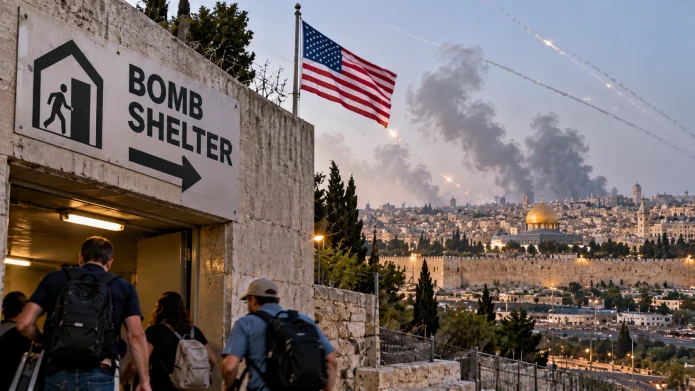
The U.S. Embassy in Jerusalem issued an urgent security alert, officially directing all American citizens in Israel to immediately identify their nearest hardened bomb shelter. Officials triggered this severe warning due to a rapidly escalating security environment involving regional missile threats and armed drone intrusions. If you are currently visiting or living in the region, you must prepare a shelter plan today before a red alert siren sounds.
Why the U.S. Embassy Issued the Security Alert
Diplomatic security teams escalated their warnings this week because Iranian-supported Houthi forces continue to launch unprovoked attacks targeting civilian infrastructure across the Middle East. The U.S. Embassy in Jerusalem noted that regional tensions can spark violent conflict with absolutely zero advance notice.
Furthermore, Israeli authorities recently closed all West Bank settlements to Palestinian workers on October 25 and 26. This sudden restriction on regular entry signals heightened military activity and a severely elevated threat level for public unrest. Increased regional hostilities frequently cause major international airlines to cancel or severely limit commercial flights into Ben Gurion Airport. If the local airspace closes, travelers will find themselves completely stranded, making local shelter preparation absolutely vital.
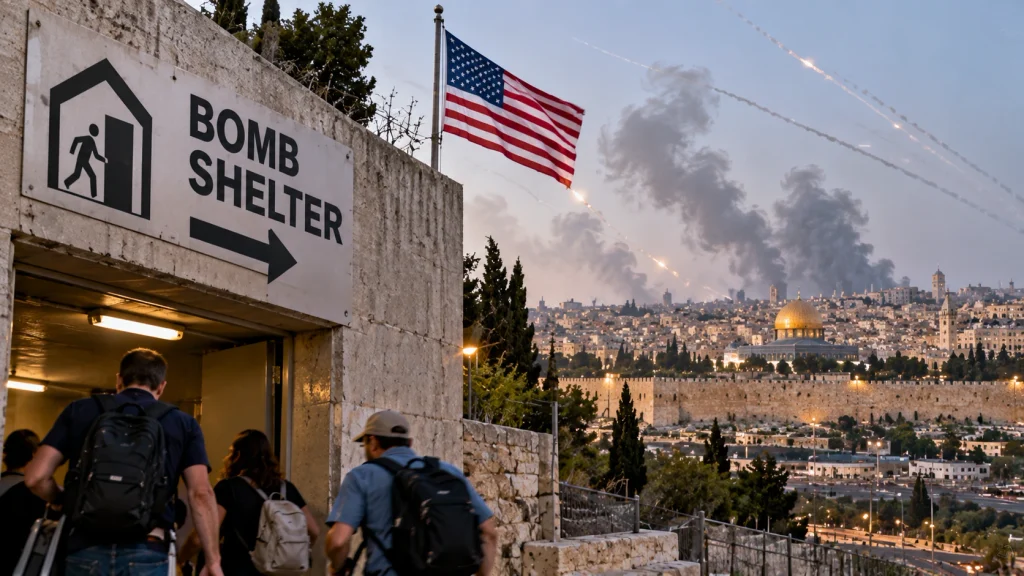
How to Identify Hardened Bomb Shelters in Israel
Your absolute best defense against incoming rocket fire is locating a “Mamad” (a reinforced security room inside modern Israeli apartments) or a designated public municipal shelter. If your current hotel or rental property does not have an internal reinforced room, you must ask the front desk exactly where the nearest public underground bunker is located.
You must also immediately download the official Israel Defense Forces (IDF) Home Front Command application on your mobile phone. This specific application overrides silent modes to deliver real-time GPS warnings for incoming missiles and hostile aircraft, giving you crucial seconds to run to safety.
When traveling through rural areas, you must exercise extreme caution regarding unexploded ordnance. Never touch or approach unfamiliar metallic objects on the ground, especially near the northern or southern borders, as these explosive weapons remain highly volatile.
Also read – El Al Israel Launches Nonstop Tel Aviv–San Francisco Flights
Essential Actions U.S. Citizens Must Take Immediately
Surviving a sudden security crisis requires you to follow strict protocols set by diplomatic security experts rather than relying on social media rumors. The U.S. Department of State strictly warns Americans that the U.S. government cannot guarantee a military evacuation if commercial airspace suddenly shuts down.
Follow these exact security fixes to protect your family while on the ground:
- Enroll in STEP: Register your passport and hotel address in the Smart Traveler Enrollment Program (STEP) so the embassy can send you instant SMS emergency updates.
- Avoid heavy police zones: Turn around immediately if you see large military or police cordons, as these areas frequently attract targeted violence.
- Skip all public gatherings: Cancel your plans to attend large political demonstrations, sporting events, or crowded holiday festivals.
- Carry physical documents: Keep your physical U.S. passport and emergency cash on your person at all times in case you must evacuate your hotel rapidly.
Current Travel Advisory Levels for Israel and the West Bank
The overarching travel advisory for Israel and the West Bank firmly remains at Level 3, which urges citizens to completely reconsider travel due to terrorism and unpredictable unrest. However, certain border zones carry a much stricter Level 4 red warning.
You must not travel to the following restricted zones under any circumstances:
| High-Risk Region | U.S. Advisory Level | Specific Threat Factor |
| Northern Border (Routes 85/90/87) | Level 4 (Do Not Travel) | Active armed conflict and heavy military presence. |
| Gaza Strip Border (Within 7 miles) | Level 4 (Do Not Travel) | Immediate combat zone and rocket fire risk. |
| Israel-Egypt Border (Within 1.5 miles) | Level 4 (Do Not Travel) | Active armed conflict, excluding the Taba crossing. |
Do not assume a calm morning means a safe afternoon. You must continuously monitor local news broadcasts and adhere strictly to all instructions issued by Israeli emergency response officials.

