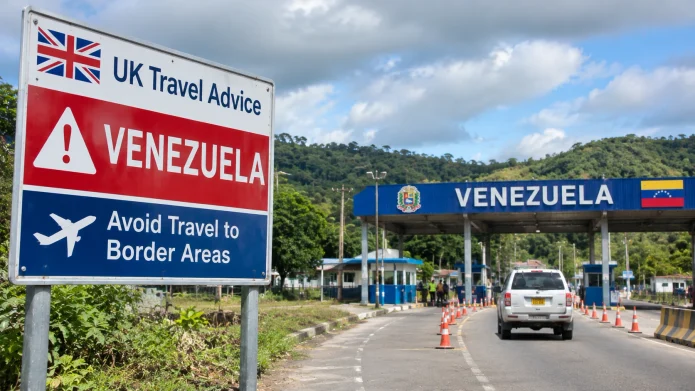
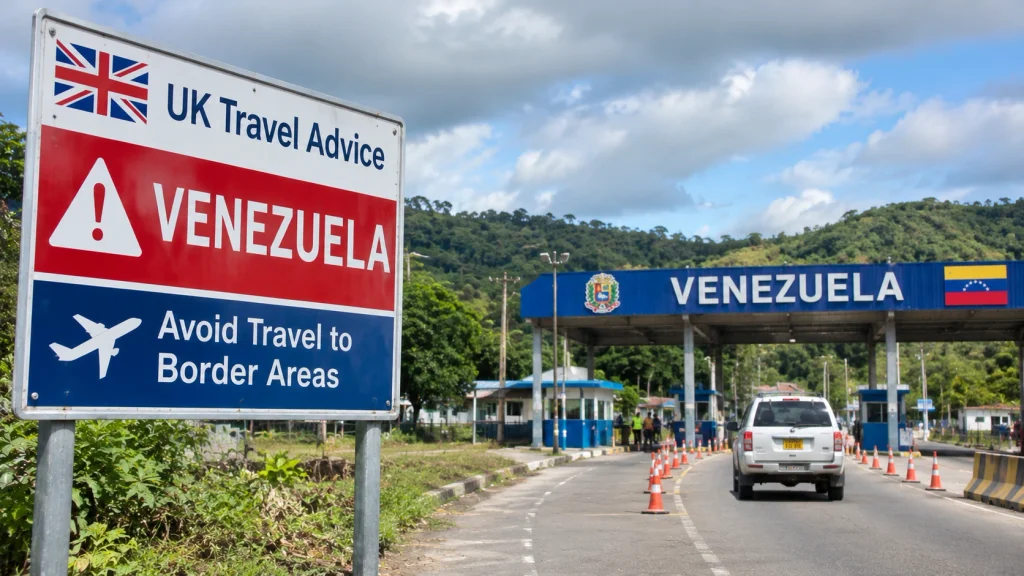
The UK government tells British travellers to avoid all travel to Amazonas state and to stay at least 40 kilometres away from Venezuela’s land borders with Colombia, Brazil and Guyana. Going against this Foreign, Commonwealth & Development Office advice will void most standard travel insurance and leaves the UK with very limited ability to help inside Venezuela.
These Venezuela border warnings are not general caution — they are specific no-go zones where armed groups, smuggling and sudden closures make help almost impossible to reach.
What Venezuela Areas Does The UK FCDO Tell British Travellers To Avoid Completely?
British travellers are told to avoid all travel to Amazonas state and to avoid all travel within 40km of Venezuela’s borders with Colombia, Brazil and Guyana.
The Foreign, Commonwealth & Development Office sets these limits because control is fragmented near the borders. Army and police checkpoints stop traffic without warning, roads are often unpaved or closed after rain, and mobile signal disappears for long stretches.
There is no British Embassy inside Venezuela. The UK’s ability to provide consular help is extremely limited, and in these 40km border zones it is even more restricted.
Travellers who ignore an “advise against all travel” warning often discover too late that insurers refuse medical or evacuation claims. The UK government is explicit that insurance is invalidated when FCDO advice is disregarded. (UK Foreign Travel Advice Venezuela)
Also read – Forget the Cotswolds: 7 Secret UK Villages With Zero
Why Are Venezuela’s Borders With Colombia, Brazil And Guyana So Risky For British Travellers?
Venezuela’s 40km border strips are risky because crime, armed groups and military operations overlap in areas with little state presence.
British travellers planning overland routes face a different reality than the main cities or coastal resorts. The danger is localised but severe — kidnapping, armed robbery, extortion at illegal checkpoints, and landmines near informal crossings have been reported near the Colombian and Brazilian frontiers.
What drives the UK border warning for Venezuela:
- Colombia border (Zulia, Táchira, Apure): Drug trafficking and irregular armed groups operate on both sides. Official crossings open and shut with political tensions. Queues can last hours, and unofficial tracks are controlled by criminal groups.
- Brazil border (Bolívar, Amazonas): Remote jungle terrain, illegal mining zones, and very few sealed roads. Medical facilities are sparse and evacuation requires helicopter or military escort.
- Guyana border (Bolívar, Delta Amacuro, Essequibo region): The long-running territorial dispute over the Essequibo area raises the risk of military tension and sudden access restrictions.
Even experienced backpackers misjudge these zones. A bus ride that looks short on a map can involve overnight holds, multiple document checks, and areas where foreign-registered phones draw attention.
How Does Ignoring UK FCDO Venezuela Advice Void British Travel Insurance?
Ignoring FCDO Venezuela advice voids British travel insurance because almost all UK policies include a clause that excludes cover where the FCDO advises against travel.
The Foreign, Commonwealth & Development Office warns that British nationals who travel against its advice are effectively uninsured for that part of the trip.
What this means in practice for British travellers to Venezuela:
| Situation For British Travellers In Venezuela | Insurance Outcome If FCDO Advises Against Travel |
|---|---|
| Hospital treatment after road accident in 40km border zone | Claim likely refused; must pay privately and arrange own transfer |
| Emergency evacuation or repatriation | Insurer will not fund air ambulance; families must cover five-figure costs |
| Theft, loss, or cancelled flights linked to border closure | No compensation under standard policies |
| Consular support from UK | Extremely limited inside Venezuela; in-person help may not be possible |
The Financial Conduct Authority-regulated advice is simple — check the policy wording for “FCDO advice” and assume the exclusion applies. Specialist high-risk policies exist, but standard annual or single-trip cover does not protect border-zone travel.
The UK no longer has an embassy in Caracas. If you require urgent help inside Venezuela, contact the UK’s consular teams in neighbouring countries and register your presence before you go.
When Does The Venezuela Border Warning Apply — Is Transit Or A Day Trip Allowed?
The Venezuela border warning applies at all times, even for transit, short visits or day trips.
The FCDO does not set a minimum time limit. If the location is within 40km of the Colombia, Brazil or Guyana border, or inside Amazonas state, the advice is “against all travel” — whether for an hour or a week.
Flights that overfly these zones are not affected, but any plan that involves crossing by land is. This includes popular ideas like entering Venezuela from Roraima in Brazil to see Angel Falls via road, or cutting through Cúcuta to reach San Cristóbal.
Helpful tip for route planning: Use flights into Simón Bolívar International Airport near Caracas for any essential travel, then stay well outside the 40km strips. Check crossing status on the GOV.UK Foreign Travel Advice and with local authorities before booking buses.
How Can British Travellers Stay Safe And Legal Near Venezuela?
British travellers can stay safe near Venezuela by treating the 40km zones as closed and building insurance-compliant routes around them.
5 steps to avoid invalid insurance and getting stranded:
- Check the live FCDO map before booking. The Venezuela advice page updates without notice when crossings shut.
- Buy and test insurance first. Ask the insurer in writing if the specific towns or parks are covered. Keep the email. Standard comparison site checkboxes are not proof.
- Keep 40km clear on GPS. Offline maps often mislabel borders. Set a buffer so a hotel or petrol stop does not accidentally fall inside the exclusion.
- Carry documents and cash separately. Passport, visa, yellow fever certificate, and printed insurance must be accessible at every checkpoint. Keep copies in a second bag.
- Register and share location. Use the FCDO’s guidance on Get Help Abroad and leave a detailed itinerary with family. Roaming is unreliable near the Orinoco and Gran Sabana.
For health preparation, the National Travel Health Network and Centre and NHS Travel Health Advice recommend yellow fever vaccination for Venezuela and malaria precautions for jungle areas. Entry rules and health forms can change while in country, so verify through official channels.
If travel is essential, move only in daylight, use pre-booked transfers from reputable hotels, and avoid displaying valuables, UK-branded clothing, or large camera gear at border towns. Night buses along border highways see higher rates of armed stops.
What Should British Travellers Do If Already Near Venezuela’s 40km Border Zones?
Leave the restricted zone immediately by the safest daylight route if already near the border.
British nationals who entered a 40km border zone around Venezuela before checking advice should not wait for conditions to improve. Drive or fly out, keep fuel topped up, and avoid unofficial crossings where UK consular access is blocked UK Foreign Travel Advice Venezuela.
For delayed crossings into Colombia, Brazil or Guyana, contact the nearest UK embassy in Bogotá, Brasília or Georgetown for consular guidance. Inside Venezuela, consular assistance is severely constrained, and response times are long due to distance and access limits Foreign, Commonwealth & Development Office.
Keep emergency numbers saved offline: local police 171, plus the UK 24-hour consular helpline listed on GOV.UK Help for British Nationals Abroad.

