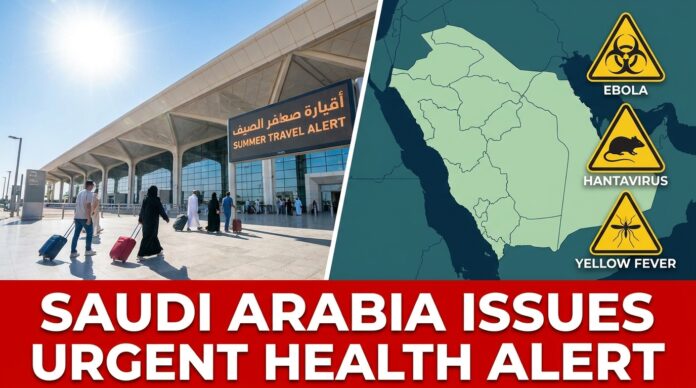
Saudi Arabia has issued a summer health advisory for people travelling abroad, warning them to check disease outbreaks, vaccination rules and local health guidance before departure. The notice covers Ebola, hantavirus, yellow fever and seasonal influenza, but it is not a blanket warning against international travel.
The most important clarification is this: the advisory does not announce that these diseases are spreading inside Saudi Arabia. It is directed at outbound travellers who could encounter different risks depending on their destination, accommodation and planned activities.
Saudi Arabia’s Public Health Authority, known as Weqaya, said it is monitoring global disease activity and urged travellers to rely on official information rather than social media rumours.
Saudi Arabia Summer Travel Health Alert: What Travellers Need to Know
| Traveller question | Direct answer |
|---|---|
| Who is the warning for? | People travelling abroad from Saudi Arabia |
| Does it ban travel? | No. It is a health-preparation advisory |
| Which diseases are highlighted? | Ebola, hantavirus, yellow fever and seasonal influenza |
| Is vaccination required everywhere? | No. Requirements depend on the destination and recent travel route |
| Which document may be checked at the border? | The International Certificate of Vaccination for yellow fever |
| What should returning travellers do if they become ill? | Seek medical care and immediately explain where they travelled |
The official Saudi Press Agency notice advises travellers to review the health status and entry conditions of their destination before leaving the Kingdom.
Also read – EU Parliament Approves Free Cabin Luggage & Delay Refund Rules …
Why Has Saudi Arabia Issued the Health Advisory Now?
The advisory responds to several separate disease events, not one worldwide outbreak. Each disease has a different transmission route, risk area and prevention method.
The timing is significant because millions of people travel during the summer, often moving between countries with very different vaccination requirements and public health conditions. Weqaya specifically recommends checking outbreak information, mandatory vaccines and destination guidance before departure.
A traveller flying from Riyadh to a European capital, for example, does not face the same risk as someone visiting a yellow-fever area in South America or working near an Ebola treatment centre in the Democratic Republic of the Congo.
Which Diseases Are Included in the Saudi Travel Health Warning?
| Disease | How exposure normally happens | Traveller most likely to face risk | Best preventive action |
| Ebola disease | Direct contact with infected blood, bodily fluids, contaminated objects or infected animals | Travellers entering active outbreak areas, healthcare workers and close contacts | Avoid outbreak zones unless travel is essential and follow local instructions |
| Hantavirus | Exposure to infected rodents, droppings, urine or contaminated spaces; some Andes virus transmission can occur between people | Campers, rural visitors and people entering rodent-infested cabins or buildings | Avoid rodents and never disturb or dry-sweep droppings |
| Yellow fever | Bites from infected mosquitoes | Unvaccinated visitors to affected parts of Africa and the Americas | Get the yellow fever vaccine when recommended and carry the certificate |
| Seasonal influenza | Respiratory droplets and close contact | Anyone using crowded airports, aircraft, cruise ships or public transport | Stay current with flu vaccination and avoid travelling while acutely ill |
These diseases should not be treated as interchangeable. A mosquito repellent helps reduce yellow fever exposure, but it does nothing to prevent Ebola. Handwashing helps limit many common infections, but it does not replace required vaccination.
Where Is the Current Ebola Risk?
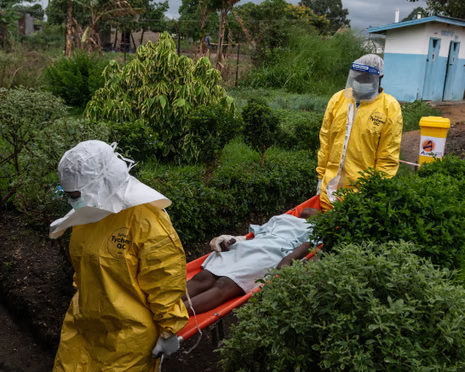
The main active Ebola concern is the Bundibugyo virus disease outbreak in the Democratic Republic of the Congo, with linked cases reported in Uganda and one imported case reported in France.
In its July 3, 2026 update, the World Health Organization’s Ebola outbreak report said transmission remained active in parts of the Democratic Republic of the Congo. WHO assessed the global risk as low, while the risk remained much higher in affected areas and neighbouring countries.
Ordinary airport contact is not the main Ebola risk. A person with Ebola becomes infectious after symptoms begin, and transmission requires direct contact with infected bodily fluids, contaminated materials or the body of someone who died from the disease.
Travellers should take extra care if they are:
- Visiting affected areas in the Democratic Republic of the Congo
- Crossing the DRC-Uganda border region
- Working in healthcare, humanitarian aid or funeral services
- Staying with or caring for a person who develops compatible symptoms
- Handling wild animals or bushmeat
WHO has not recommended general international travel or trade restrictions because of this outbreak.
Also read – India Tightens Travel Advisory Over Ebola Outbreak
Is Hantavirus a Risk for Normal Summer Travellers?
The cruise-linked hantavirus outbreak that attracted international attention has been contained and no longer poses a public health risk, according to WHO.
The outbreak involved passengers and crew who had travelled aboard the M/V Hondius. By July 2, WHO had recorded 13 cases, including three deaths. All identified contacts completed monitoring without additional secondary cases, allowing WHO to declare transmission interrupted.
That does not mean hantavirus has disappeared. The usual traveller risk comes from rodent-contaminated cabins, sheds, campsites and rural buildings.
A common mistake is entering a closed holiday cabin and immediately sweeping dusty floors. That can disturb dried rodent waste. The CDC’s rodent-cleaning guidance recommends wetting droppings thoroughly with disinfectant before wiping them up while wearing gloves.
Leave the property and contact the owner if you find:
- Large amounts of rodent droppings
- Nests inside bedding or cupboards
- Strong urine smells
- Dead rodents
- Food packaging damaged by teeth
Who Needs a Yellow Fever Vaccine Before Summer Travel?
Travellers visiting yellow-fever risk areas in Africa or Central and South America may need vaccination, and some countries require proof before allowing entry.
WHO reported continuing yellow fever transmission in parts of Africa and the Americas during 2026. Vaccination remains the most effective protection, particularly for people entering forested or rural transmission areas.
The detail many last-minute travellers miss is the timing. A yellow fever vaccination certificate normally becomes valid 10 days after the first dose. Turning up at the airport with a vaccine received two days earlier may not satisfy the destination’s entry requirement.
Before booking, check:
- Whether yellow fever occurs at the destination
- Whether vaccination is medically recommended
- Whether the destination requires proof from all arrivals
- Whether the rule applies because of a transit stop
- Whether your certificate is correctly signed and stamped
A valid certificate generally remains valid for the vaccinated person’s lifetime. However, travellers with certain health conditions should discuss vaccination risks and alternatives with an authorised travel clinic.
Why Is Seasonal Flu Included in a Serious Disease Warning?
Influenza is included because it spreads easily during close-contact travel and can cause severe illness in higher-risk passengers.
Airports, aircraft cabins, coaches and cruise ships place large numbers of people together for extended periods. WHO advises travellers to review routine vaccinations before international travel, including seasonal influenza when appropriate.
People at greater risk of complications include older adults, pregnant travellers, young children and people with chronic medical conditions.
Do not dismiss a high fever after travel as “just jet lag.” Influenza may be the cause, but fever can also be an early sign of malaria, yellow fever, Ebola or another infection. The travel history helps a doctor decide which tests are needed.
What Should Travellers Do Before Leaving Saudi Arabia?
Complete the following checks before heading to the airport:
Four to eight weeks before travel
- Review the destination on the WHO travel health portal.
- Book a travel-health appointment, especially for remote or tropical destinations.
- Check routine and destination-specific vaccinations.
- Confirm whether malaria tablets are advised.
- Purchase insurance that covers medical treatment and evacuation.
WHO recommends seeking pre-travel health advice four to eight weeks before departure, although a late appointment can still be useful.
Also read – CDC Issues Fresh Ebola Travel Rules for Returning Travelers
At least 10 days before travel
- Receive the yellow fever vaccine if required and medically suitable.
- Check that the vaccination certificate is complete.
- Review the rules for every country where the journey includes a long transit.
One or two days before departure
- Check for newly issued outbreak or entry notices.
- Pack prescription medication in original containers.
- Carry copies of insurance and vaccination records.
- Pack insect repellent and clothing that covers exposed skin.
- Save the address of a reliable clinic near the destination.
What Should You Do If You Become Sick After Returning?
Seek medical care promptly and state your complete travel history before describing anything else.
Tell the doctor:
- Every country and region visited
- Dates of travel
- Any contact with sick people
- Animal, rodent or insect exposure
- Hospitals or clinics entered
- Vaccinations and malaria medicine taken
- When symptoms began
Saudi health authorities advise travellers to seek care if symptoms develop during a trip or after returning, particularly following travel to an outbreak area or possible exposure to infected people, animals or high-risk environments.
The WHO post-travel guidance says returning travellers should obtain medical attention for symptoms such as fever, persistent diarrhoea, vomiting, jaundice or worsening of an existing condition.
Should Travellers Cancel Their Summer Holidays?
Most travellers do not need to cancel simply because Saudi Arabia issued this advisory. The correct response is to assess the specific destination and itinerary.
Reconsider or obtain specialist advice when:
- The destination includes an active Ebola outbreak area
- A required vaccine cannot be received safely or on time
- Accommodation has a known rodent problem
- Medical care is limited and evacuation insurance is unavailable
- A traveller has a condition that increases the risk of serious infection
- Local authorities advise against non-essential travel to a specific area
For an ordinary city break outside an outbreak area, routine preparation may be enough. For fieldwork in rural DRC, camping in rodent-prone regions or travel deep into a yellow-fever zone, a specialist plan is essential.
The Bottom Line
Saudi Arabia’s summer travel health alert is a preparation notice, not a reason to fear every international journey. Its central message is simple: check the destination, arrange vaccines early, avoid known exposure routes and report your travel history if illness develops.
The smartest action takes place before the suitcase is closed. A ten-minute health check can reveal that a vaccination certificate is missing, an outbreak has reached the planned region or the insurance policy excludes medical evacuation.
Those details are what separate a prepared traveller from someone trying to solve a serious health problem after landing.

