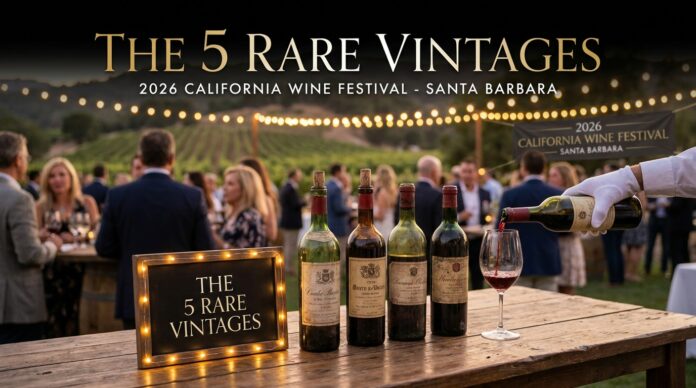
Five wines deserve immediate attention if they appear at the festival: the 2016 Cakebread Dancing Bear Cabernet Sauvignon, a 2018 Williams Selyem Pinot Noir, the 2019 Aperture Cabernet Sauvignon, the 2021 Alma Rosa El Jabali Pinot Noir and the 2022 Caymus 50th Anniversary Cabernet Sauvignon.
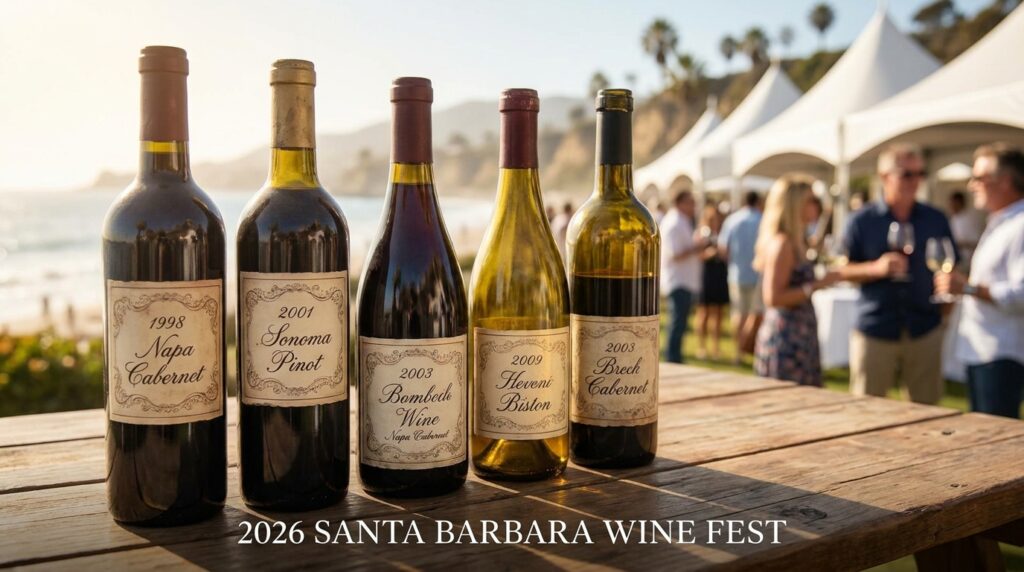
All five producers are included in the confirmed Santa Barbara winery lineup. However, organizers have not published a final bottle-by-bottle pour list. These are priority wines to ask about, not guaranteed pours. Older bottles may also be opened in small quantities and disappear early.
Which California Wine Festival event has the rarest wines?
The Friday Sunset Rare & Reserve Tasting is the event serious wine hunters should prioritize.
It takes place on Friday, July 17, 2026, from 6:30 to 9 p.m. at Plaza Del Sol at the Hilton Santa Barbara Beachfront Resort. The evening starts with sparkling wine before moving into limited-production and reserve-level wines from Napa Valley, Sonoma County, Paso Robles and Santa Barbara County.
Saturday’s Beachside Wine Festival is larger and more relaxed, with hundreds of wines, food samples, craft drinks, music and a barbecue competition at Chase Palm Park. It is the better option for variety, but Friday offers the strongest chance of finding an older or limited bottle.
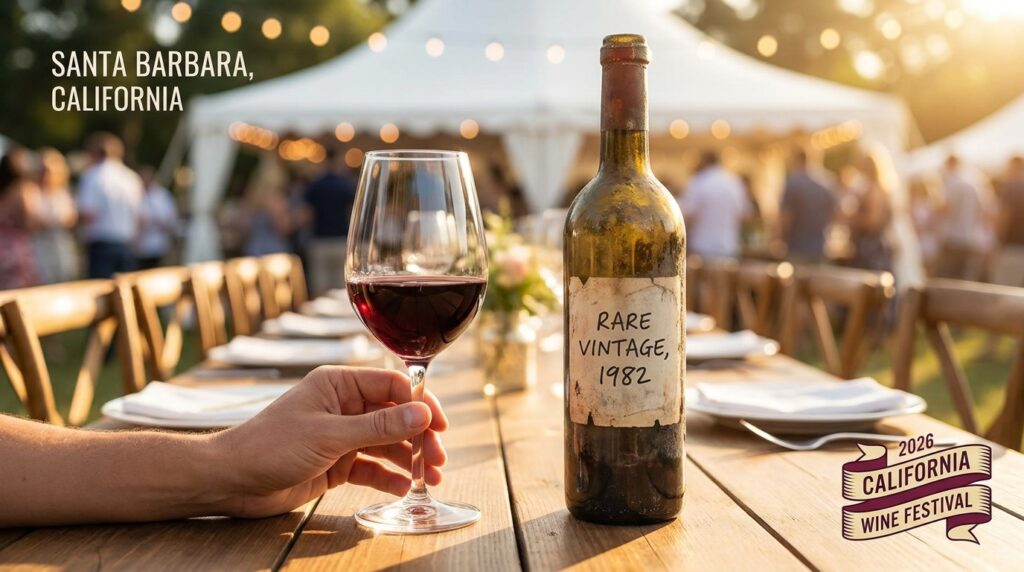
The five rare vintages to ask for first
| Priority wine | Confirmed winery | Why it deserves attention | What to ask at the table |
|---|---|---|---|
| 2016 Dancing Bear Cabernet Sauvignon | Cakebread Cellars | Mature Howell Mountain Cabernet with major critical recognition | “Did you bring the 2016 Dancing Bear or another library vintage?” |
| 2018 Pinot Noir | Williams Selyem | Excellent California vintage from a limited-allocation producer | “Is there a 2018 single-vineyard Pinot open?” |
| 2019 Cabernet Sauvignon or Nomad | Aperture Cellars | A balanced Sonoma vintage with intensity and freshness | “Did you bring a 2019 Cabernet or Bordeaux blend?” |
| 2021 El Jabali Pinot Noir | Alma Rosa Winery | Standout Sta. Rita Hills Pinot from an acclaimed California vintage | “Is the 2021 El Jabali Pinot available?” |
| 2022 50th Anniversary Cabernet Sauvignon | Caymus Vineyards | Milestone Napa bottling with a distinctive anniversary label | “Are you pouring the Napa 50th Anniversary release?” |
1. 2016 Cakebread Dancing Bear Cabernet Sauvignon
The 2016 Dancing Bear is the most important mature Cabernet to ask about.
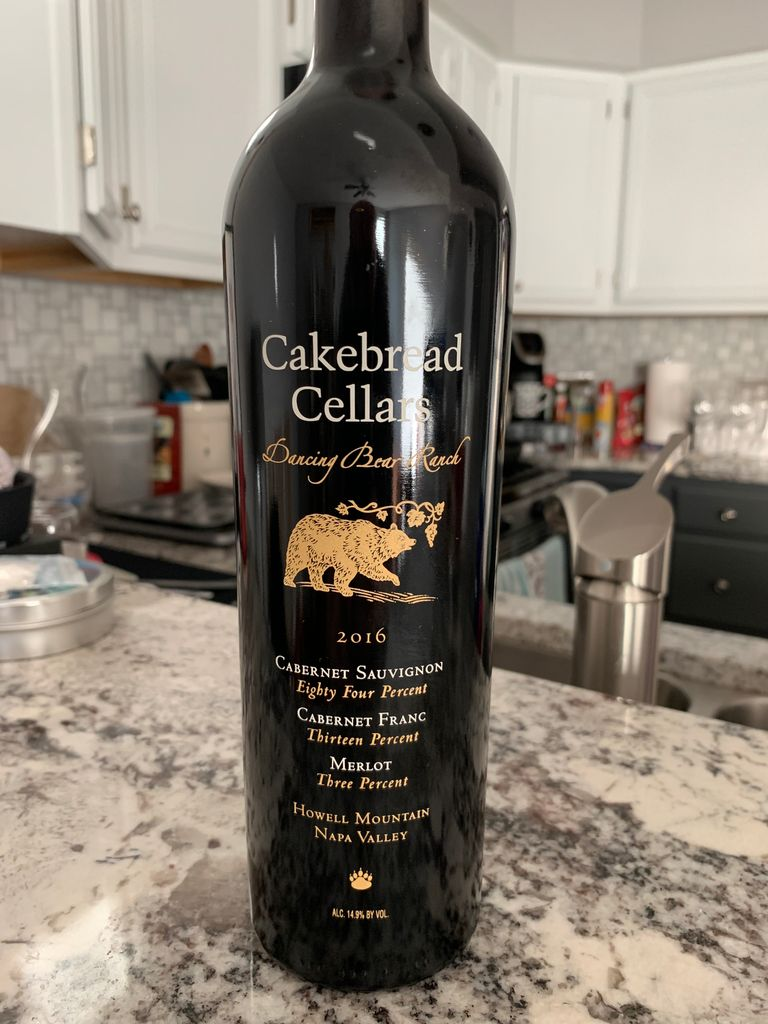
Dancing Bear comes from Cakebread’s high-elevation Howell Mountain property, where volcanic soils and small berries can produce concentrated, structured Cabernet Sauvignon. Cakebread’s own history records that the 2016 Dancing Bear vintage received 100 points from Wine Advocate, making it a genuine collector target rather than simply an expensive reserve label.
A bottle with ten years of age can also reveal more than a newly released Cabernet. Look for fruit that has softened into cedar, dried herbs, tobacco, dark chocolate and earthy notes.
Best food match: Try it after a bite of tri-tip, braised beef or aged cheese. Avoid tasting it immediately after chocolate, which can make the wine seem drier and more bitter.
Also read – 25 Best Cultural Travel Experiences Around the World
2. Williams Selyem for a 2018 single-vineyard Pinot Noir
A 2018 Williams Selyem Pinot Noir could be one of the hardest wines to taste outside the festival.
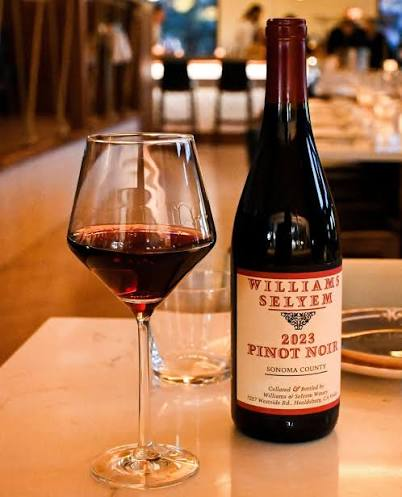
The 2018 California growing season featured moderate temperatures and slow, even ripening. The Wine Institute described the statewide harvest as exceptional, giving Pinot Noir producers time to develop flavor while retaining freshness.
Williams Selyem adds another layer of scarcity. The winery says its wines are made in limited quantities, released primarily through member allocations, and approximately 95 percent are sold directly to people on its list.
Do not ask only for “the Pinot.” Ask whether the team has opened a 2018 vineyard-designated bottle, particularly one that is not part of the standard front-row tasting selection.
What to notice: A good mature Pinot should feel light but not thin, with cherry, cranberry, dried flowers, forest-floor notes and a long finish.
3. 2019 Aperture Cabernet Sauvignon or Nomad blend
The 2019 Aperture wines offer one of the strongest combinations of vintage quality, age and current drinkability.
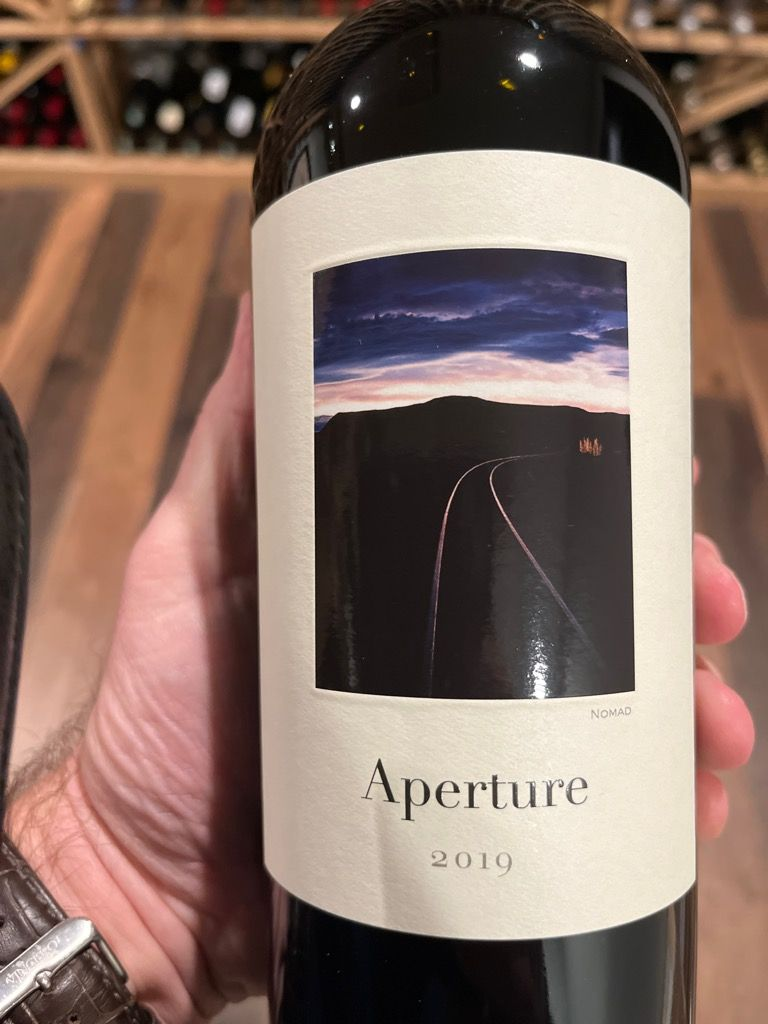
Aperture’s 2019 Cabernet Sauvignon was made primarily from Cabernet, with small amounts of Merlot and Malbec. The winery describes it as fresh and concentrated, with violet, cherry, blueberry and graphite characteristics.
The producer has also described 2019 as one of California’s greatest vintages of the decade in its notes for the Nomad blend. Some 2019 Aperture releases have sold out or are now available only in small quantities and larger bottle formats.
The useful question: “Did you bring a 2019 vineyard-designated Cabernet or Nomad?”
That wording signals that you are interested in a specific vintage, not simply the most expensive bottle on the table.
Also read – 2026 California Wine Festival Santa Barbara
4. 2021 Alma Rosa El Jabali Pinot Noir
The 2021 El Jabali Pinot Noir is the local bottle that should be near the top of your Santa Barbara list.
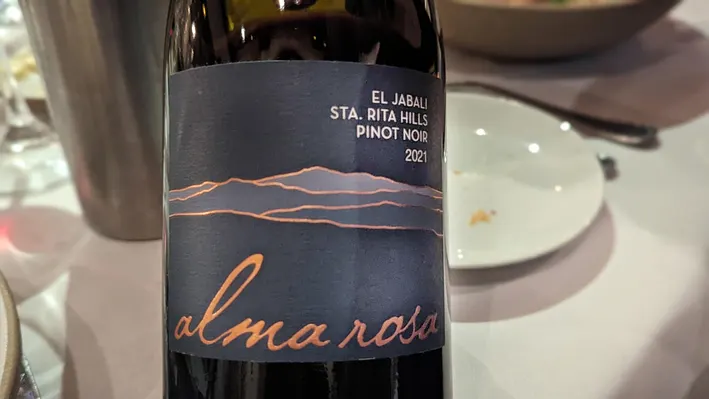
Alma Rosa’s El Jabali estate sits in the Sta. Rita Hills, one of Santa Barbara County’s key cool-climate wine areas. The winery lists strong critical recognition for its 2021 El Jabali Pinot Noir, including 96 points from Jeb Dunnuck and 95 points from James Suckling.
The broader 2021 California harvest was also widely viewed as exceptional. Wine Institute reported that winemakers expected it to be one of the best vintages in recent memory after a moderate, consistent growing season.
This bottle is younger than the 2016 and 2018 targets, but it can show how Sta. Rita Hills Pinot combines bright fruit, freshness and earthy depth.
Local tasting trick: Compare it with another 2021 Santa Barbara Pinot before moving to Napa Cabernet. The contrast will be clearer while your palate is still fresh.
5. 2022 Caymus 50th Anniversary Cabernet Sauvignon
The 2022 Caymus Napa Valley Cabernet is worth finding for its milestone story, even though it is not the scarcest retail bottle on this list.
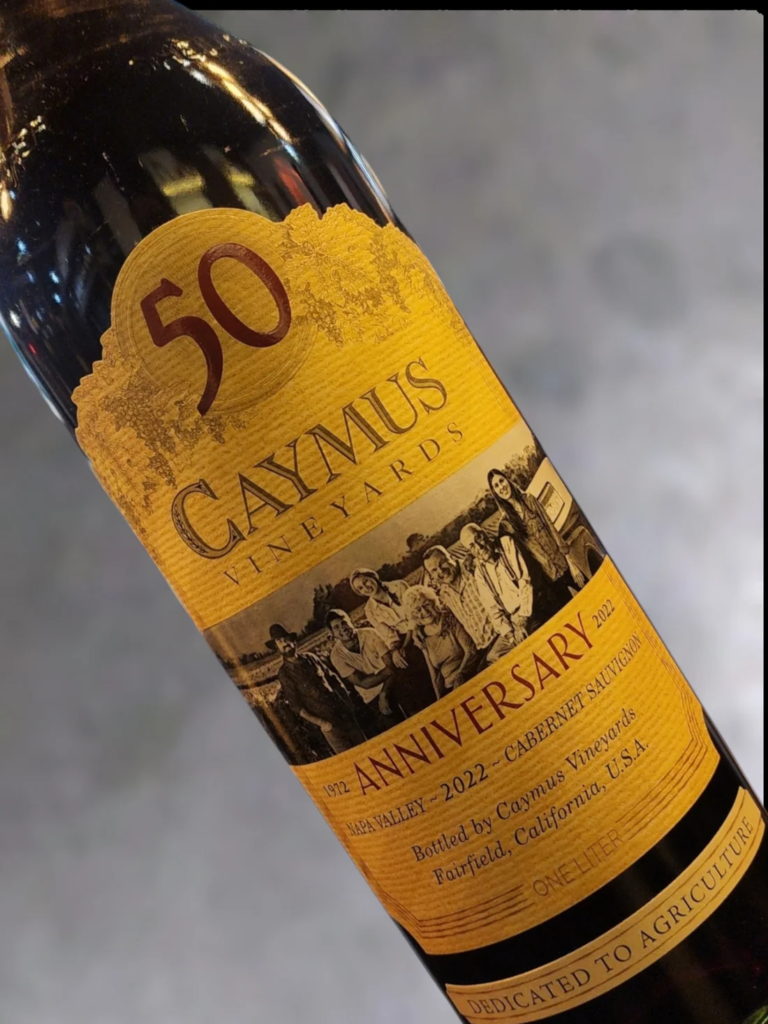
The 2022 release marks Caymus Vineyards’ 50th anniversary and carries a special commemorative label. Caymus describes the wine as rich and rounded, with soft-textured tannins, French oak influence and enough acidity to balance its ripe style.
This is the wine to use as a reference point. Taste it beside the 2019 Aperture or an older Cakebread Cabernet and ask yourself:
- Which wine feels fresher?
- Which has the longer finish?
- Can you taste more fruit, oak or earthy development?
- Which would you actually want with dinner?
That comparison is more valuable than chasing scores alone.
How do you find secret or unlisted festival pours?
Ask about library bottles before asking for the table’s “best wine.”
A library wine is an older bottle that the winery deliberately held back. It may sit under the table, behind the display or in a separate cooler until someone asks about it.
Use these exact questions:
- “Do you have an older vintage open?”
- “Did you bring anything that is not on the printed list?”
- “Which wine has the smallest production?”
- “Is there a bottle you are saving for later tonight?”
- “Can I compare two vintages of the same wine?”
Ask politely and show genuine interest. Winery representatives are far more likely to share a special pour with someone who wants to understand the wine than someone asking only for the most expensive bottle.
What is the best tasting order at the California Wine Festival?
Taste from lighter wines to heavier wines so the first bold Cabernet does not overpower everything that follows.
A practical order is:
- Sparkling wine
- Sauvignon Blanc and Chardonnay
- Pinot Noir
- Grenache and lighter red blends
- Syrah
- Cabernet Sauvignon
- Sweet wine or chocolate pairings
Use the provided spit buckets. The official festival FAQ confirms that guests receive broad tasting privileges, with water and spit buckets available throughout the event. A small tasting pour does not need to be swallowed to understand the wine.
Photograph every memorable label. After 15 or 20 wines, names and vintages begin to blur together. Add one short note to the photo, such as “bright Pinot,” “best with tri-tip” or “ask about library release.”
California Wine Festival Santa Barbara 2026 times and locations
| Event | Date and time | Location | Best for |
|---|---|---|---|
| Sunset Rare & Reserve Tasting | Friday, July 17, 6:30 to 9 p.m. | Plaza Del Sol, Hilton Santa Barbara Beachfront Resort, 633 E. Cabrillo Blvd. | Rare, reserve and older wines |
| Beachside Wine Festival | Saturday, July 18, general entry at 1 p.m., VIP at noon | Chase Palm Park, 236 E. Cabrillo Blvd. | Maximum winery and food variety |
One scheduling detail deserves attention: the main festival page lists Saturday’s ending time as 4:30 p.m., while other official and promotional listings show 4 p.m. or 4:15 p.m. Check the time printed on your ticket before traveling.
What should you wear to the Santa Barbara wine festival?
Wear sun protection on Saturday and bring a light layer for Friday evening.
The current forecast calls for pleasant coastal weather, with a Friday high near 76°F and a Saturday high near 77°F. Evening temperatures are expected to fall into the low 60s. Forecasts can change, so check conditions again before leaving.
Choose comfortable shoes. Both events involve standing and moving between tasting tables. Avoid long sleeves with loose cuffs, which have a habit of catching glasses on crowded tables.
What should you not bring?
Do not arrive with a backpack, children, pets or plans to drive after tasting.
The festival is strictly for guests aged 21 and older, including no infants. Bags are searched, backpacks are prohibited, and permitted bags are limited to small purses, totes and drawstring bags. The organizers recommend public transportation or a designated driver.
The Saturday venue is also located near Santa Barbara’s railway station, making a car-free trip practical for visitors arriving on the Pacific Surfliner.
Is the Sunset Rare & Reserve Tasting worth attending?
Yes, Friday is the better choice for collectors and anyone specifically seeking rare vintages.
Saturday provides more wineries, more food and a livelier waterfront atmosphere. Friday offers a tighter, more focused tasting environment where reserve and limited-production bottles are the main attraction.
The best strategy is simple: arrive on time, taste the priority wines first, ask about unlisted library bottles and return later for relaxed food pairings. Rare bottles are often poured in limited amounts. Waiting until the final hour can mean finding an empty bottle on the table.

