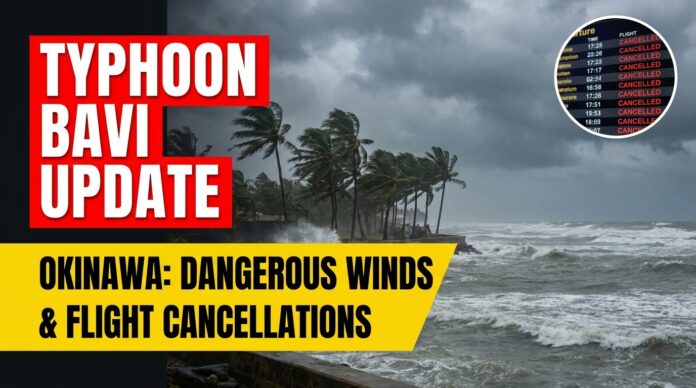
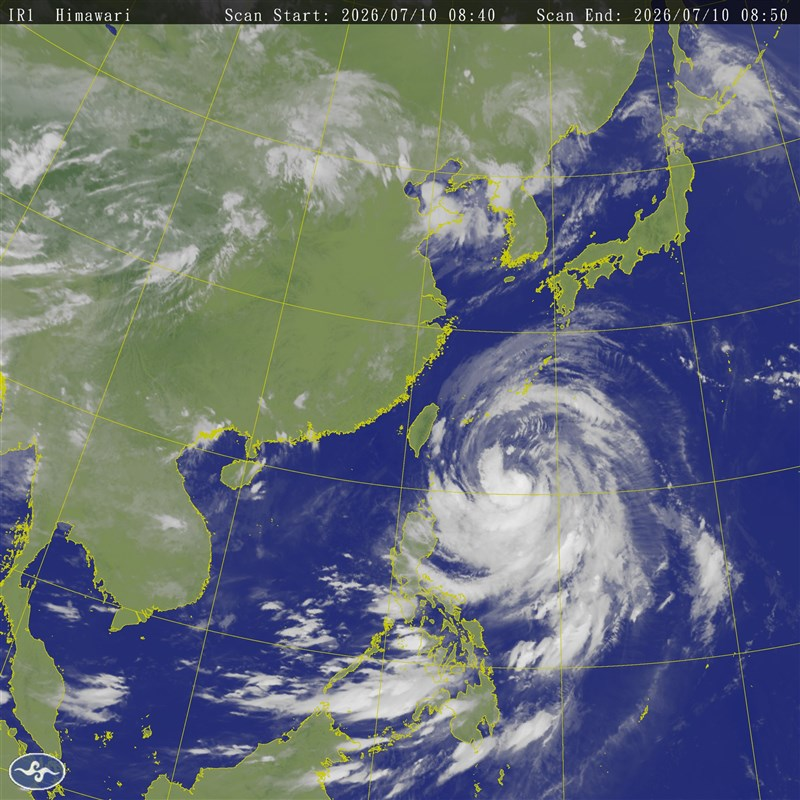
Typhoon Bavi is moving toward Japan’s southern Okinawa region, bringing a serious threat of destructive winds, heavy rain, high waves, landslides, and travel disruption from Friday into Saturday. The Japan Meteorological Agency says the storm is moving northwest and is expected to approach the Sakishima Islands through Saturday, with Okinawa’s island communities facing the highest risk from violent gusts and dangerous coastal conditions. JMA’s latest tropical cyclone information lists Bavi as a very strong typhoon, with a wide storm-warning area around the system.
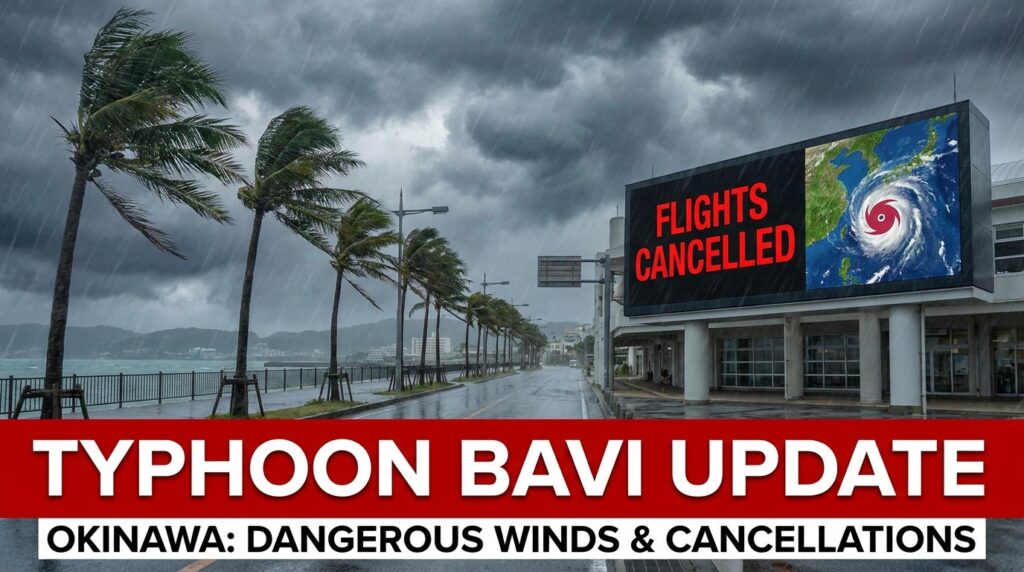
Typhoon Bavi latest update: Where is the storm heading now?
Typhoon Bavi is tracking toward the Sakishima Islands, a remote island chain in Okinawa Prefecture near Taiwan. Reuters reported that the storm was expected to pass very close to the Sakishima Islands early Saturday, with authorities warning of violent winds, torrential rain, landslides, and flooding.
For readers searching “Will Typhoon Bavi hit Okinawa?”, the clear answer is: Okinawa is already in the impact zone, and the Sakishima Islands are likely to face the strongest conditions. Even if the center does not pass directly over every island, the storm’s wind field, rain bands, and rough seas can still cause damage.
Also read – FAA Warns Weather Delays Could Hit Major U.S. Airports …
How strong will Typhoon Bavi be in Okinawa?
Bavi’s gusts are strong enough to damage buildings, knock down trees, and make outdoor movement unsafe. NHK reported that gusts could reach 180 kilometers per hour on Friday and 216 kilometers per hour on Saturday, which is powerful enough to potentially knock down houses. Reuters also reported sustained winds near 162 kilometers per hour as the typhoon approached Japan’s southwest.
| Risk factor | What residents and travelers should expect |
|---|---|
| Wind | Violent gusts that can break windows, damage roofs, and throw loose objects |
| Rain | Heavy rain that can trigger flash flooding and landslides |
| Sea conditions | High waves, rough coastal waters, and dangerous tides |
| Transport | Canceled flights, airport closures, ferry disruption, and road hazards |
| Power | Possible outages, especially in exposed island areas |
Which areas in Okinawa are most at risk from Typhoon Bavi?
The Sakishima Islands, including Ishigaki, Miyako, Tarama, and Yonaguni, are among the places travelers should watch most closely. JAL listed several Okinawa and Amami-region airports as affected by Typhoon Bavi for July 10 and 11, including Okinawa Naha, Kumejima, Miyako, Tarama, Ishigaki, and Yonaguni, along with islands in Kagoshima Prefecture such as Amamioshima, Tokunoshima, Okinoerabu, Yoron, Kitadaito, and Minamidaito.
For people searching “Is Ishigaki safe during Typhoon Bavi?”, the practical answer is: stay indoors once winds strengthen, avoid beaches and ferry terminals, and do not treat a lull as the storm being over. Typhoons can bring calm gaps before the wind returns from another direction.
Typhoon Bavi flight cancellations: What travelers need to know
Flights to and from Okinawa are already being disrupted, and passengers should check airline status pages before leaving for the airport. NHK reported that Japan Airlines canceled 59 flights for Friday, while All Nippon Airways canceled 104 flights, with most affected flights linked to Okinawa and Kagoshima prefectures. JAL’s own notice says flight delays, cancellations, or diversions may affect several airports on July 10 and 11 because of Typhoon Bavi.
Reuters later reported broader disruption, saying Japan Airlines had canceled more than 100 flights for Friday and Saturday, while ANA canceled more than 160 flights through Sunday, affecting roughly 40,000 passengers combined.
Also read – UK Airport eGate Rules Change: Children Can Now Skip Lines …
What should you do if your Okinawa flight is canceled?
Check your airline website first, not social media rumors. JAL says passengers may be able to change or refund tickets when disruption is expected because of bad weather, even before a cancellation is finalized.
Use this fast checklist:
- Check your booking directly on the airline website.
- Do not go to the airport unless your flight is confirmed.
- Look for free change or refund options under weather disruption rules.
- Keep hotel, taxi, and ferry bookings flexible.
- Save screenshots of cancellation notices for insurance claims.
Are Okinawa airports closed because of Typhoon Bavi?
Some airport operations are being restricted or closed as the storm approaches. JAL said domestic counters at Okinawa Naha Airport were closed all day on July 10, with check-in counters planned to reopen at 9:00 a.m. on July 11. JAL also listed Miyako, Tarama, Ishigaki, and Yonaguni airports as closed all day on July 10 and 11.
That matters for tourists because island airports are not like major city airports with endless backup options. When a typhoon shuts down an island airport, ferry services are often affected too, taxis become limited, and hotel rooms can fill quickly.
What should Okinawa residents do before the strongest winds arrive?
Prepare before Friday afternoon if you are in an exposed area, because last-minute outdoor movement can become dangerous quickly. Reuters reported residents on Ishigaki were taping windows, securing homes, and stocking up on supplies as Bavi approached.
Here is a practical home checklist:
- Bring balcony items indoors, including laundry poles, plant pots, sandals, chairs, and trash bins.
- Charge phones, power banks, and flashlights before winds peak.
- Fill bottles or a bathtub with water in case supply is interrupted.
- Keep shoes near the bed in case glass breaks during the night.
- Avoid parking under trees, signs, or weak structures.
- Move important documents into a waterproof bag.
A small but useful local habit during Okinawa storms is to tape or cover vulnerable windows and close curtains. If glass breaks, curtains can reduce flying fragments inside the room.
What should tourists in Okinawa avoid during Typhoon Bavi?
Tourists should avoid beaches, sea walls, cliffs, ferry terminals, rivers, and mountain roads until officials say conditions are safe. JMA and local authorities are warning people to stay alert for landslides, high waves, and tides.
Do not do these five things:
- Do not go to the beach for storm photos.
- Do not stand near sea walls during high waves.
- Do not drive through flooded roads.
- Do not depend on ferries during a typhoon window.
- Do not assume convenience stores will stay fully stocked.
For travelers searching “Can I travel to Okinawa during Typhoon Bavi?”, the honest answer is: delay non-essential travel until flights, ferries, and local advisories return to normal.
Also read – EU Warns Netherlands Over Rail Rules Favouring NS
Why Typhoon Bavi is a bigger travel problem than normal rain
Typhoon Bavi is not just a rainy-day inconvenience because island travel depends heavily on small airports, ferries, and exposed roads. Reuters reported that public beaches, coastal parks, and ferry terminals on Ishigaki appeared closed, while some tourists were forced to extend stays because ferry services were not operating.
This is where visitors often make a costly mistake. They book a tight return flight from Naha after island-hopping in Ishigaki or Miyako, then lose a day when ferries or local flights stop. During typhoon season, smart Okinawa travel planning means leaving a buffer day before international flights.
Bottom line: Typhoon Bavi is a serious Okinawa weather threat
Typhoon Bavi is expected to bring dangerous winds, heavy rain, rough seas, and major transport disruption to Okinawa from Friday into Saturday, with the Sakishima Islands facing the clearest risk. Travelers should check airline updates before going to the airport, avoid coastal areas, and follow JMA and local government warnings.
The most important advice is simple: stay indoors during peak winds, keep your phone charged, and do not chase storm footage. A typhoon can look exciting from a hotel window, but outside, loose signs, roof panels, glass, and waves can turn dangerous within seconds.

