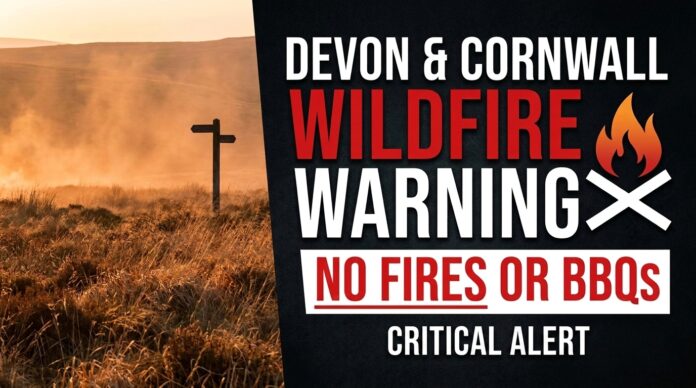
Visitors to forests, moors and woodlands across Devon and Cornwall should leave barbecues, fire pits and camping stoves at home as exceptionally dry ground keeps the region vulnerable to fast-spreading fires.
The most important update for travelers is that alert levels are changing. A red wildfire warning was issued for the recent weekend, while an amber South West heat-health alert ended at 21:00 on Sunday, July 12. As of Monday, July 13, the UK Health Security Agency has issued a yellow heat-health alert from 09:00 on Tuesday, July 14, until 21:00 on Friday, July 17.
Dry vegetation remains the immediate concern. The Met Office forecast indicates that South West England will stay hot, largely dry and sunny during the early part of the week, although some showers or thunderstorms may develop later.
Is There Still a Wildfire Risk in Devon and Cornwall?
Yes. Lower temperatures or a changed health-alert colour do not mean forests and moors are immediately safe from fire.
Vegetation can remain dry after the hottest part of a heatwave has passed. Wind can then carry flames and embers rapidly through grass, heather, gorse and woodland litter.
University of Exeter wildfire researchers warned before the weekend that their forecasting system showed its highest ignition risk since it was created, with Dartmoor and Devon heathlands among the most vulnerable areas.
The wider threat is not theoretical. Fire services across England and Wales recorded 342 wildfires between January 1 and July 6, 2026, according to figures published by the National Fire Chiefs Council.
Also read – Canada and Europe Wildfires Put Summer Travel Plans
Which Parts of South West England Face the Greatest Risk?
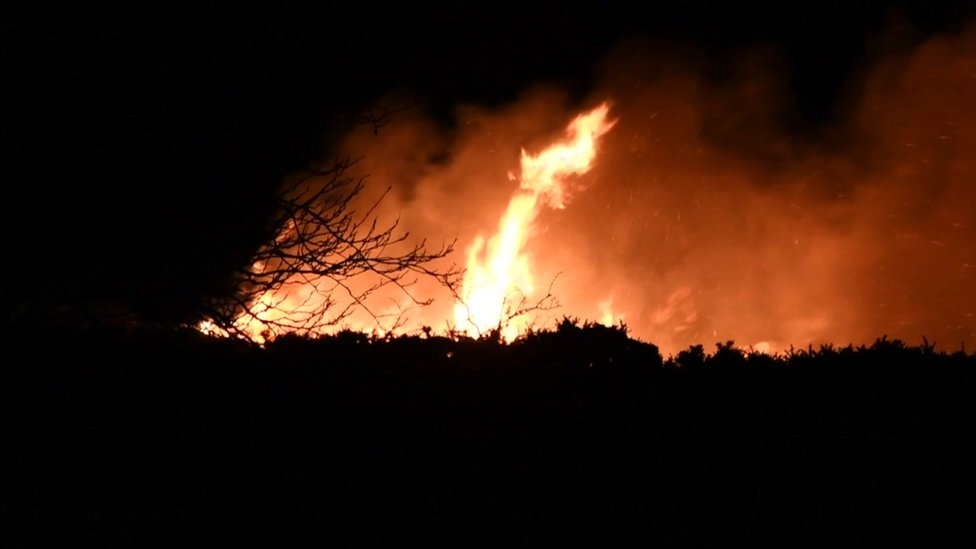
Moorland, heathland, grassland and forest areas are most vulnerable because they contain continuous stretches of dry fuel.
Locations requiring particular care include:
- Dartmoor National Park
- Bodmin Moor
- Forests and woodlands in Devon and Cornwall
- Dry heathland in East Devon
- Open countryside surrounding Exeter and Honiton
- Roadside verges, picnic sites and rural car parks
This does not mean every named place is closed or actively burning. It means visitors must check local signs and the official page for their exact destination before leaving home.
The Met Office Fire Severity Index measures how severe a fire could become if one starts. It does not report an active fire and should not be confused with a weather warning or a heat-health alert.
| Alert or notice | What it tells visitors | What it does not mean |
|---|---|---|
| Fire Severity Index | How severe a wildfire could become under current conditions | That a fire is already burning |
| Heat-health alert | Expected effects of hot weather on public health and services | That forests are automatically closed |
| Local warning sign | Site-specific rules, hazards or access restrictions | That the same rules apply at every location |
| Smoke or visible flames | A possible active incident requiring emergency reporting | That another visitor has already called for help |
Can Visitors Use a Disposable Barbecue in a Forest Car Park?
No. During heightened wildfire conditions, the safe choice is to take a cold picnic instead.
Forestry England’s current advice is to leave barbecues at home, remove all litter and call 999 after moving to safety if a fire is spotted.
A barbecue does not become harmless because it is placed on gravel or appears to have gone out. Hot coals can remain capable of igniting dry vegetation, while a sudden breeze can carry sparks beyond the car park.
Visitors should also avoid:
- Campfires and fire pits
- Camping stoves outside specifically permitted areas
- Sky lanterns
- Discarding cigarettes from vehicles
- Leaving glass bottles in direct sunlight
- Parking hot vehicles over long, dry grass
- Abandoning batteries or disposable vapes
The government’s official wildfire preparation guidance advises people not to light fires in parks, moorland, woodland or other open spaces and to use barbecues only in places where they are expressly permitted. During an exceptional local warning, leaving the barbecue at home is the safer decision.
Why Is a Small Campfire Dangerous on Bodmin Moor?
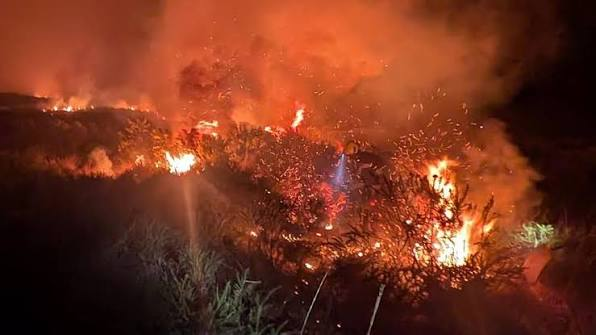
Dry peat can continue burning beneath the visible surface after a visitor believes the fire has been extinguished.
Bodmin Moor contains extensive peat areas. Local commoners have warned that a small campfire may appear cold on top while heat continues to travel through organic material below ground, potentially reappearing several metres away.
That hidden spread makes pouring one bottle of water over a campfire an unreliable safety measure. The correct action is not to start the fire.
Dartmoor has already experienced the environmental cost of peatland wildfire. A May 2025 fire burned approximately 420 hectares, including part of a peatland restoration site now being studied to understand its ecological recovery.
Have Fire Crews Already Responded to Incidents?
Yes. Devon and Somerset crews attended several fires in the open during the recent hot weekend.
The service reported incidents near Chudleigh, Paignton, Lifton and Chard. Its official incident log records an outdoor fire at Chudleigh at 05:07 on July 11, attended by crews from multiple stations.
The reported incidents should not be presented as barbecue-caused fires unless investigators confirm a cause. Their importance is that they show how stretched emergency resources can become when several countryside fires happen during the same dry period.
What Should You Do If You See Smoke or Fire?
Move away first, call 999 immediately and give firefighters a precise location. Do not attempt to fight a countryside fire yourself.
Follow these steps:
- Move to a safe location away from flames, vegetation and smoke.
- Call 999 and ask for the fire and rescue service.
- State the nearest road, trail, landmark or car park.
- Use the Ordnance Survey app or what3words when an address is unavailable.
- Describe the fire’s size, colour of smoke and direction of movement.
- Do not return for photographs, belongings or a parked vehicle.
- Do not assume another walker has already reported it.
The official government guidance also warns visitors not to travel toward an active wildfire, because additional vehicles and spectators can obstruct emergency access.
Should Travelers Cancel a Devon or Cornwall Countryside Visit?
A blanket cancellation is not currently required, but plans should be flexible and fire-free.
Before departure:
- Check the individual forest or national park website
- Read local access notices
- Choose a route with more than one exit
- Carry drinking water and a charged phone
- Download an offline map
- Avoid remote moorland during the hottest part of the day
- Tell someone your route and expected return time
- Replace cooked food with a cold picnic
Picture arriving at a trailhead and finding stronger wind, brittle grass and a new warning sign. That is the moment to change the route, not argue that the walk was already planned. A coastal town visit, museum or shaded heritage attraction is a better alternative than entering exposed moorland during worsening conditions.
What Is the Main Advice for South West Visitors?
Do not introduce a flame, spark or heat source into exceptionally dry countryside.
The region’s forests and moors remain enjoyable, but summer visitors must treat them differently during prolonged hot and dry weather. Take food that does not need cooking, remove every item of litter and report smoke early.
One disposable barbecue is not worth risking wildlife, peatland, homes or the firefighters sent to stop a preventable blaze.

