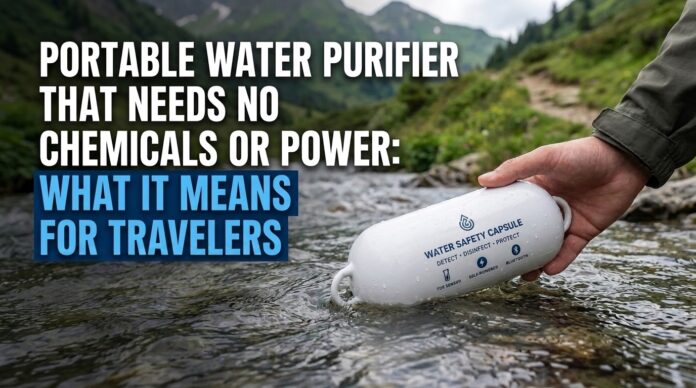
A new floating water-purification capsule can test and disinfect contaminated water without a battery, charger or added chemicals. However, travelers cannot buy it yet. The portable water purifier remains a research prototype, and its chemical-safety check is not comprehensive enough to prove that unknown water is safe to drink.
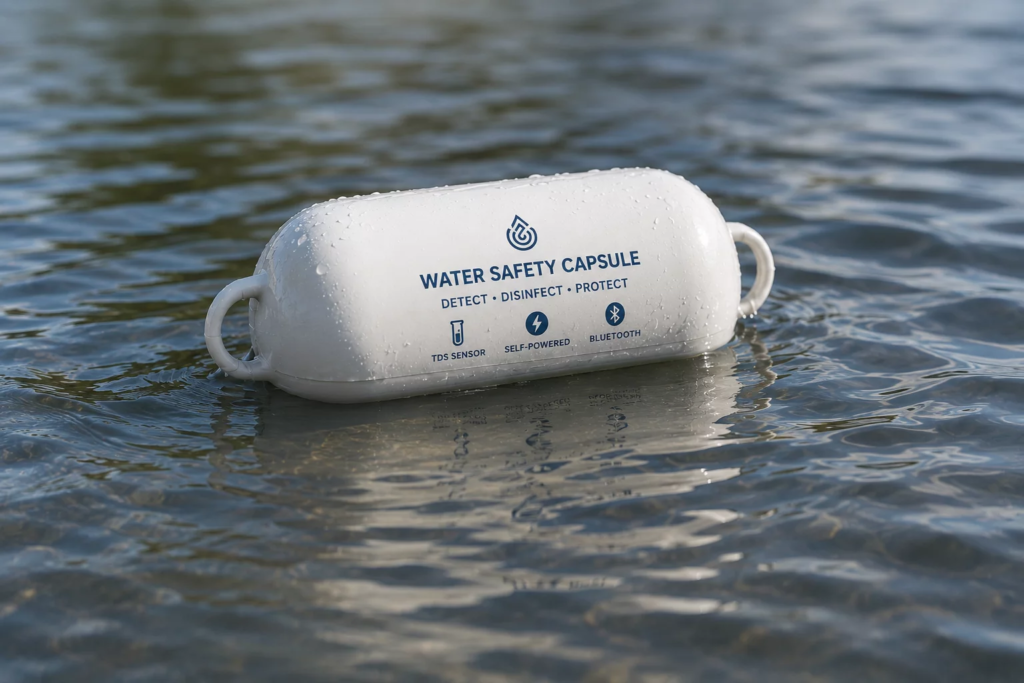
Published in Nature Water, the capsule uses a three-second hand shake to power its sensor. Movement from walking, wind or small waves then generates the electrical charge used to damage bacteria and viruses. Researchers estimate that the device could cost less than $25 to manufacture if developed at scale.
For travelers, the breakthrough is promising but the immediate advice remains unchanged: use sealed bottled water, boil uncertain water, or follow a proven filtration and disinfection process.
Can Travelers Buy the Self-Powered Water Purifier Now?
No retail version, release date or consumer price has been announced. The published research describes a prototype and an estimated manufacturing cost, not a product ready for outdoor shops or online orders.
| Key question | Direct answer |
|---|---|
| Is the purifier real? | Yes. Its performance was reported in a peer-reviewed study |
| Does it need electricity? | It needs movement, but no external battery, charger or power outlet |
| Does it use purification chemicals? | No chemical disinfectant is added |
| How quickly does it work? | Around 20 to 30 minutes for one liter under tested conditions |
| Can it remove toxic chemicals? | No. It only uses dissolved solids as a preliminary warning |
| Can travelers buy it? | Not currently. It remains a research prototype |
| Estimated manufacturing cost | Less than $25, according to the research team |
The researchers have filed a Korean patent application, but the published study does not provide a commercial launch plan, independent consumer certification or retail availability information.
Also read – I Used Google Discover to Find My Last 3 Trips
How Does the Portable Water Purifier Work Without a Battery?
The capsule creates its own electricity from two types of movement. One powers the water-quality test. The other powers microbial disinfection.
1. A three-second shake powers the water test
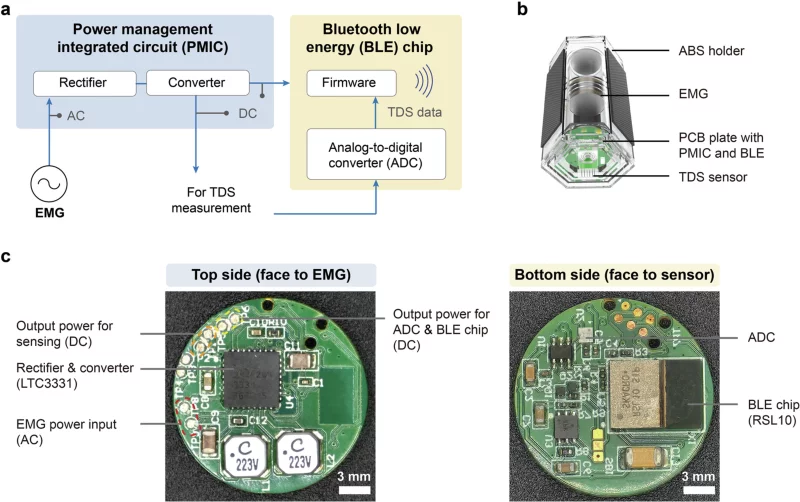
A moving magnet passes through a coil inside the capsule when the user shakes it. This produces enough electricity to operate a total dissolved solids sensor and send the reading through Bluetooth.
The sensor measures TDS, or total dissolved solids. This includes electrically charged substances such as salts, minerals and some pollutants dissolved in the water.
2. The capsule decides whether disinfection should begin
In the study, water with a TDS reading below 250 milligrams per liter was allowed to proceed to the microbial-treatment stage. Water above that level was flagged as unsuitable.
This is a screening step, not a full laboratory test. The capsule cannot identify exactly which substances are present.
3. Water movement creates a disinfecting electric field
Once floating, the capsule moves with ripples, wind or the motion of a carried bottle. Contact between the water and the capsule’s outer shell generates small electrostatic charges.
Tiny polypyrrole nanorods on the surface concentrate those charges into local electric fields. These fields create holes in microbial membranes and viral shells through a process called electroporation, which inactivates the organisms.
Also read – How to Set Price Alerts on Google Hotels to Find Cheap Deals
How Much Water Can the Floating Capsule Purify?
The prototype treated one liter of water in about 20 to 30 minutes during controlled testing.
Researchers reported the following results:
- E. coli and MS2 bacteriophage: inactivated within 20 minutes in one liter
- Bacillus subtilis: inactivated within 25 minutes
- One-liter tap, river and lake samples: treated within 30 minutes
- Four liters of river water: treated within 52 minutes
- Repeated use: performance was maintained across more than 120 treatment cycles
The study reported greater than a six-log reduction in microorganisms, equivalent to a reduction of more than 99.9999% under the tested conditions. That result is impressive, but it should not be interpreted as proof that the capsule works equally well in every river, tank, climate or contamination event.
Does a Low TDS Reading Mean Water Is Safe to Drink?
No. A low TDS reading cannot confirm that water is free from toxic chemicals or disease-causing organisms.
This is the most important detail for travelers. Water containing arsenic, pesticides or certain industrial pollutants could produce a reading that does not reveal the true risk. TDS also cannot tell the user which chemical is present or whether its concentration is dangerous.
The researchers themselves state that TDS provides only a preliminary indication and cannot replace comprehensive chemical analysis. They also warn that water with a high reading should not be considered drinkable simply because it has been disinfected.
The 250 mg/L trigger is a threshold used in this device’s study, not a universal drinking-water safety limit. For comparison, the U.S. Environmental Protection Agency’s TDS guideline is 500 mg/L, but that is a non-enforceable secondary standard mainly related to taste, odor and appearance, not a complete health guarantee.
Water the capsule should never be trusted to rescue
Travelers should choose another water source when contamination may involve:
- Fuel or oil
- Agricultural pesticides
- Industrial wastewater
- Heavy metals
- Radioactive material
- Seawater or very salty water
- Unknown liquids after flooding
The CDC’s emergency water guidance states that boiling or disinfecting cannot make water containing fuel, toxic chemicals or radioactive materials safe.
Also read – Genius Alternatives for Overcrowded Tourist Destinations …
Does the Purifier Really Work Without Power?
It works without external power, but movement is still its energy source. Calling it a “no-power purifier” is convenient shorthand, although “self-powered” is more accurate.
The device needs:
- A short, firm shake to operate its sensor and Bluetooth transmitter
- Continued gentle motion to generate the disinfection field
- A phone, watch or other interface to display the transmitted TDS information, as described by the researchers
That final point matters on remote trips. The capsule may power its own electronics, but the proposed user interface still assumes that another device is available and charged. A future retail design would benefit from a simple onboard red-or-green indicator that does not depend on a phone.
Why This Technology Matters After Earthquakes and Water Outages
The purifier’s strongest value may be in disasters where electricity, chemical supplies and safe water infrastructure fail at the same time.
The June 2026 earthquakes in Venezuela disrupted essential services and increased pressure on already strained water and sanitation systems. Events of this scale show why emergency teams need several types of decentralized equipment, including devices for drinking water, handwashing, showers and sanitation.
Japan’s WOTA BOX demonstrates a different approach. The suitcase-sized system recycles about 98% of used shower water, allowing approximately 100 people to shower using an initial 100 liters. Around 100 WOTA BOX shower units and 200 WOSH handwashing stations were deployed during the 2024 Noto Peninsula earthquake response.
However, WOTA BOX and the floating capsule solve different problems.
| Technology | Main purpose | External power | Chemical use | Drinking water? | Current status |
|---|---|---|---|---|---|
| Floating capsule | Test water and inactivate microbes | No | No added disinfectant | Intended for point-of-use water treatment | Research prototype |
| WOTA BOX | Recycle shower and hygiene water | Yes | Uses chlorine | No | Deployed disaster system |
| Traveler filter and disinfection | Treat individual drinking water | Usually no | Sometimes | Yes, when used correctly | Available now |
According to WOTA’s official specifications, its system uses six filters, ultraviolet treatment and chlorine. It requires a 100-volt AC supply, has a maximum power consumption of 700 watts and produces water for bathing rather than drinking.
This distinction is easy to miss. Portable does not always mean backpack-sized, battery-free or suitable for drinking.
What Should Travelers Use Until the Capsule Becomes Available?
Travelers should continue using established treatment methods rather than trying to recreate the experimental process.
The CDC recommends factory-sealed bottled water as the safest option for most travelers in places where tap-water quality is uncertain. Clear-looking water can still contain harmful bacteria, viruses and parasites.
For hiking, remote travel or an unexpected outage:
- Boil water first when possible. Bring clear water to a rolling boil for one minute. At elevations above 6,500 feet, boil it for three minutes.
- Filter cloudy water before treating it. Sediment can reduce the effectiveness of some disinfection methods.
- Combine filtration and disinfection. Many small hiking filters remove bacteria and parasites but do not reliably remove viruses.
- Use the correct filter for the risk. A basic microfilter is different from a purifier designed to address viruses.
- Find another source when chemical pollution is suspected. Boiling concentrates some pollutants as water evaporates.
The CDC describes boiling as the best method for killing waterborne germs. When boiling is impossible, its next preferred approach is filtering followed by disinfection.
A small packing habit that prevents contamination
Mark one bottle or water bag DIRTY before leaving home. Keep its cap, hose and threads away from the clean container.
This prevents a common field mistake: treating the water correctly and then contaminating it again by using the same cap, scoop or bottle opening.
What Would Make the Capsule Ready for Real Travelers?
A retail version would need more than strong laboratory results. Travelers require equipment that survives drops, mud, cold temperatures, irregular movement and hurried use in poor light.
Before relying on such a purifier, buyers should look for:
- Independent microbial testing
- Clear certification standards
- A stated product lifespan
- Instructions for muddy or highly mineralized water
- Cleaning and storage procedures
- Freeze-resistance information
- A warning system that works without a phone
- Evidence of performance outside controlled containers
- Clear guidance on contaminants it cannot remove
The current research proves that the core idea can work. It does not yet answer every question required for a dependable consumer travel product.
Is the Self-Powered Water Purifier a Breakthrough for Travelers?
Yes, but its importance is about what could come next, not what travelers should pack today.
Combining water assessment and microbial disinfection in one inexpensive, motion-powered capsule could remove several weak points found in current emergency equipment. There would be no battery to charge, no chemical tablets to replace and no separate electronic tester to carry.
The most valuable feature may not be the three-second shake. It is the possibility of a device that checks whether treatment should proceed before attempting to disinfect the water.
For now, travelers should regard it as a promising research development rather than a replacement for bottled water, boiling or certified purification equipment. The smart travel decision is simple: use proven methods today and watch this technology closely as it moves toward independent field testing and possible commercialization.

