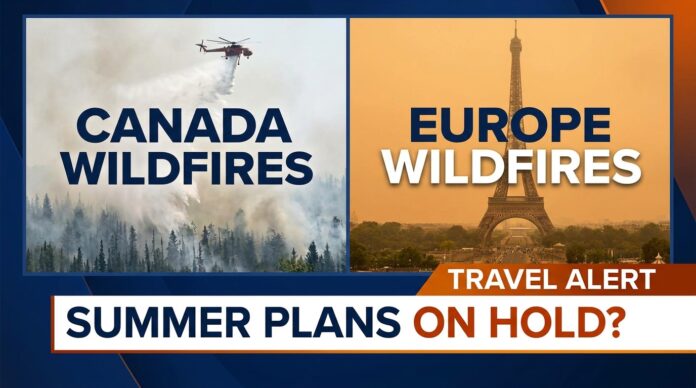
Canada and several European countries are facing a serious 2026 wildfire season, and travelers should treat wildfire checks like passport checks before leaving home. Canada reported 796 active wildfires nationally, including 60 out of control, while the EU’s wildfire data showed 155,569 hectares burned and 1,057 fires detected by July 8, 2026.
Is It Safe to Travel During the 2026 Wildfires?
Travel is not automatically unsafe everywhere, but it is risky in fire-prone areas where heat, smoke, road closures or evacuation orders can change plans fast. In Europe, the highest concern is across parts of France, Spain, Portugal, Greece, Italy and nearby Mediterranean regions, while Canada’s July fire danger is highest across the Northwest Territories, Nunavut, northern Manitoba and areas around Hudson Bay.
| Traveler question | Clear answer |
|---|---|
| Can wildfires cancel a trip? | Yes, if roads close, flights are disrupted, hotels evacuate or authorities restrict access. |
| Should I cancel now? | Check the exact town, not just the country. A beach city may be normal while a nearby forest road is closed. |
| What is the biggest mistake? | Ignoring local emergency orders. In Spain, officials said several victims died after fleeing against instructions. |
| Best first step? | Check official fire maps, local alerts, airline updates and travel insurance terms before departure. |
Also read –EU Parliament Approves Free Cabin Luggage & Delay …
Where Are Wildfires Disrupting Travel in Europe?
Southern and western Europe are under the sharpest travel pressure because heat, dry vegetation and strong winds are feeding fast-moving fires. The EU activated support for Portugal and France in July, sending aircraft, firefighters and vehicles through the Civil Protection Mechanism. France received four rescEU aircraft, while Portugal received 118 firefighters, 45 vehicles and three firefighting aircraft after requesting help.
Spain has become a major warning sign for travelers in 2026. Reuters reported that a wildfire near Los Gallardos in Almeria killed at least 12 people, left 23 missing, and burned about 3,200 hectares, with officials saying many victims were foreign nationals in a popular holiday area.
What Is Canada’s Wildfire Situation in 2026?
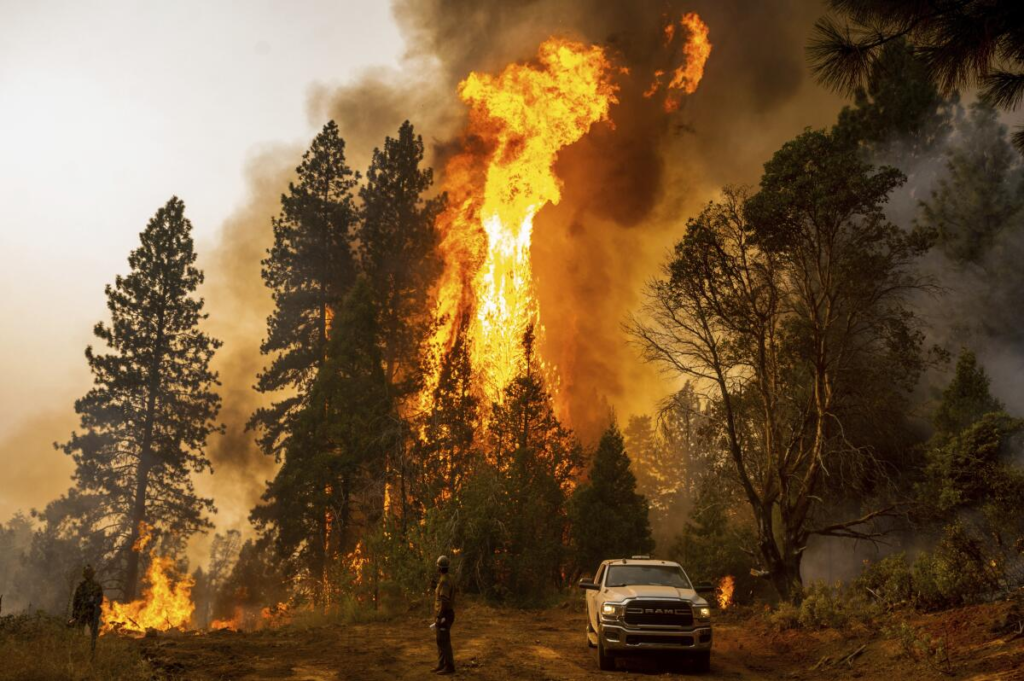
Canada’s wildfire risk is rising through summer even though the season started slower than the worst recent years. By July 9, Canada had recorded 3,137 fires and 1.4 million hectares burned this season. Forecasts point to above-average temperatures across much of the country from July through August, with dry conditions expected in places such as Manitoba and northwestern Ontario.
For travelers, that means the disruption may not only be a flame front. It can be smoke, highway closures, park access limits, local evacuation traffic, hotel shortages and delayed regional transport.
Also read – UK Airport eGate Rules Change: Children Can Now Skip Lines …
What Should Travelers Do Before Flying or Driving?
The smartest move is to build a 24-hour safety buffer into your trip. Do not arrive in a wildfire-prone region with no backup hotel, no offline map and no extra medication.
Before leaving:
- Check the exact destination fire risk, not only the country-level travel page.
- Call your hotel or host and ask about evacuation routes, smoke levels and road access.
- Save offline maps because cell service can fail in remote fire zones.
- Keep masks, water, power bank, medication and printed insurance details in your day bag.
- Register or monitor official alerts where available. Canada advises travelers to review advisories, verify insurance, prepare for delays and register travel when appropriate.
What Should Travelers Not Do During Wildfires?
Do not drive toward smoke for photos, light outdoor fires or ignore police instructions. Portugal warns that wildfires are dangerous and unpredictable, roads can close, evacuations may happen, and emergency services should be called on 112 if a fire is spotted.
Spain also warns that wildfires happen often in summer, including on the islands, and causing one is a criminal offence even if it is accidental. That means no careless cigarette ends, no forest barbecues and no glass bottles left behind in dry areas.
Bottom Line for Travelers
The 2026 wildfire travel rule is simple: check before you go, check again before you move, and follow local orders immediately. A country may remain open to tourists while one region becomes unsafe within hours. The traveler who knows the local alert number, alternate route and insurance limits is in a far better position than the traveler who only checks the weather app.

