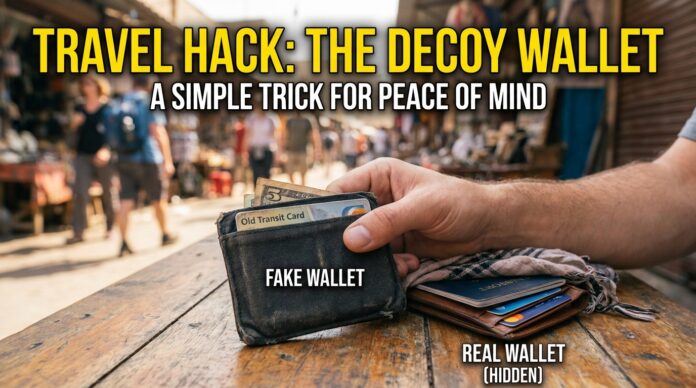
A fake wallet for travel is not about tricking people. It is about buying yourself a few seconds, protecting your real money, and avoiding a ruined trip if your pocket or bag gets targeted.
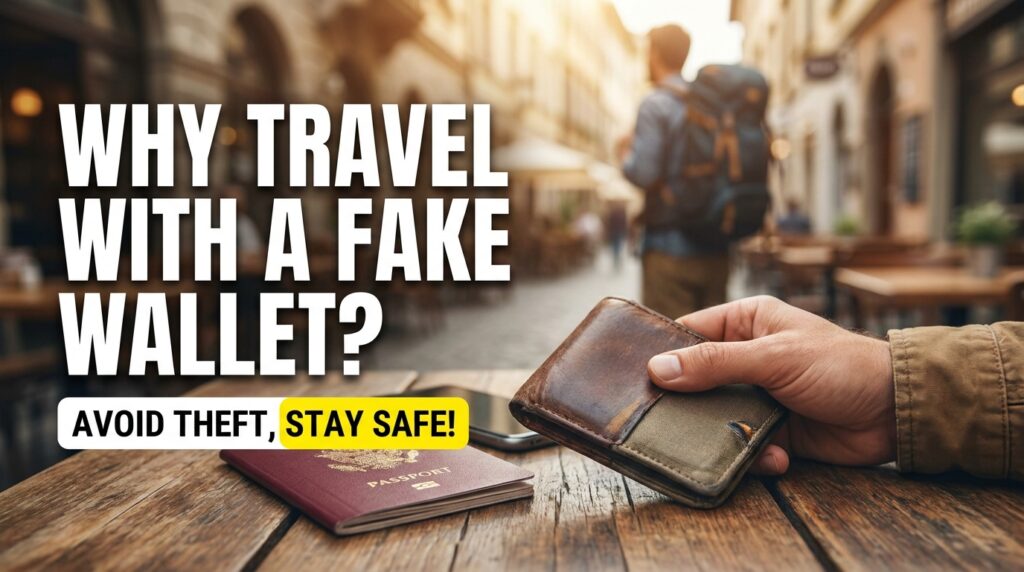
The idea is simple: carry a cheap “decoy wallet” with a small amount of cash and harmless cards, while your real cards, passport, and emergency money stay somewhere safer. Travel safety agencies warn that theft and pickpocketing can happen in busy public places, especially tourist areas, transport hubs, and crowded streets. Canada’s official travel guidance also recommends keeping money and cards in separate places, not all in one wallet.
What Is a Fake Wallet for Travel?
A fake wallet, also called a dummy wallet or decoy wallet, is a low-value wallet you carry in an easy-to-reach pocket.
It should look normal enough to satisfy a pickpocket or street thief, but it should not contain anything that can damage your life if stolen.
Put this inside:
| Put in the fake wallet | Do not put in the fake wallet |
|---|---|
| Small local cash for the day | Passport |
| Expired gift card with no balance | Real credit or debit card |
| Old hotel key card | Driver’s license |
| A few coins or small bills | Health insurance card |
| A cheap wallet you do not care about | Any card with personal data |
The key rule is this: your fake wallet should be believable, not valuable.
Why Carry a Decoy Wallet While Traveling?
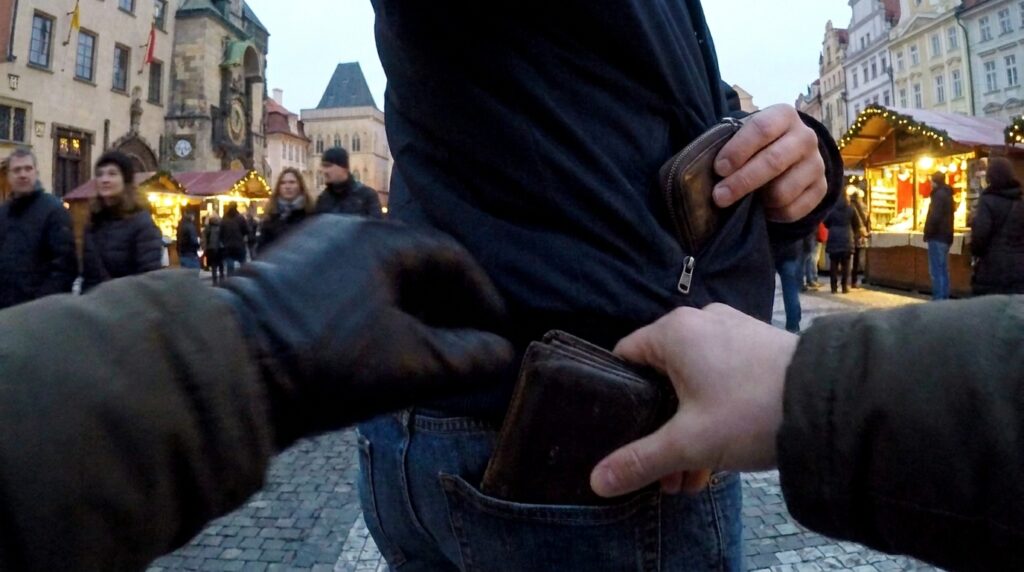
A decoy wallet helps because pickpockets want speed, not a long investigation. In crowded places, a thief often grabs what is easiest and disappears. If the wallet they get is your dummy wallet, your real cards and passport are still safe.
This matters most in places like:
- Metro stations and train platforms
- Night markets and street food lanes
- Busy tourist squares
- Bus terminals and airport queues
- Crowded beach towns
- Festivals and nightlife areas
The U.S. Embassy guidance for Paris has warned travelers about pickpockets in major tourist areas, and official U.S. travel safety material recommends staying alert in terminals, lobbies, and crowded places where thieves may operate.
Also read – 7 Secret Tricks to Save Money on Your FIFA World Cup Stay
Where Should You Keep Your Real Wallet?
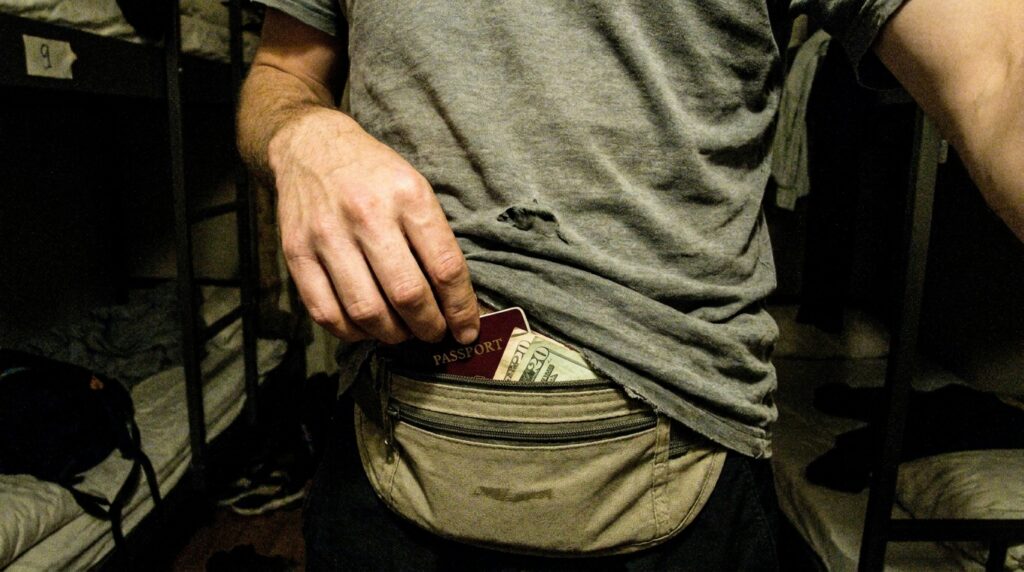
Your real wallet should stay close to your body, hidden, and separate from your phone. A money belt, hidden pouch, zipped inner pocket, or neck pouch is safer than a back pocket or open tote.
Rick Steves, a long-time travel expert, recommends using a money belt as hidden storage for important items and carrying only daily spending money where it is easy to reach.
A smart setup looks like this:
- Fake wallet: front pocket or bag pocket, with small cash.
- Daily cash: one small note in a separate pocket for quick purchases.
- Real cards: hidden pouch or hotel safe, depending on local safety.
- Passport: hidden on your body when required, or secured safely when not needed.
- Backup card: separate from every other card.
What Should You Never Put in a Fake Wallet?
Never put anything in a fake wallet that can create a bigger problem than losing cash.
Avoid:
- Real bank cards, even “just one”
- Passport copies with full personal details
- SIM card tools, spare keys, or hotel room numbers
- Work ID cards
- Notes with passwords or PINs
- Fake IDs or counterfeit-looking items
This point is important: a fake wallet should not contain fake legal documents. You are not creating a false identity. You are only carrying a low-value decoy.
Also read – 7 AI-Powered Travel Hacks to Slash Flight Costs Overnight
How Much Cash Should Be in a Fake Wallet?
Put enough cash to look normal, but not enough to hurt. For many trips, that means the local equivalent of $10 to $30, depending on the destination.
For example, in a city where street snacks, taxi tips, or metro tickets are cheap, a few small notes are enough. In a more expensive city, add one medium note so the wallet does not look empty.
Do not carry large amounts of cash. U.S. travel safety material specifically advises travelers not to carry large sums and to use reputable currency exchange services.
What If Your Real Wallet Is Stolen Abroad?
Act fast. The first hour matters most after a stolen wallet abroad.
Do this:
- Freeze or cancel cards immediately. The FTC says your protection depends partly on how quickly you report lost or stolen credit, ATM, or debit cards.
- Check banking apps for unknown charges. Report anything suspicious right away.
- Contact your travel insurer. Ask what proof they need.
- File a local police report if required. This often helps with insurance and passport replacement.
- Use your backup card or emergency cash. This is why it should be stored separately.
What If Your Passport Is Stolen Too?
Report a lost or stolen passport abroad immediately. The U.S. State Department says a reported passport is canceled and no longer valid for international travel, so travelers must apply for a replacement at a U.S. embassy or consulate if abroad.
Before your trip, save:
- A photo of your passport ID page in secure cloud storage
- A printed copy kept away from the passport
- Embassy or consulate contact details
- Travel insurance emergency number
- A backup card in a second location
The State Department’s STEP program can also send safety updates and help the nearest U.S. embassy contact you during an emergency.
A Real-Life Travel Trick: Use the “Taxi Test”
A fake wallet also helps with small cash control. Before entering a taxi or rideshare pickup area, keep one small note ready outside your wallet.
Why? You avoid opening your real wallet in public and showing cards, cash, or where you store money.
For taxis:
- Ask the fare before entering if there is no meter.
- Use official taxi stands or trusted ride apps.
- Confirm the driver and car match the app.
- Keep your main wallet hidden until you are indoors.
U.S. travel safety material advises using authorized taxis because unofficial ones can expose travelers to overcharging or worse.
Who Should Definitely Travel With a Fake Wallet?
A dummy wallet for travel is useful for almost everyone, but especially:
- Solo travelers
- First-time international travelers
- Backpackers staying in hostels
- Digital nomads carrying cards and devices
- Families managing multiple passports and bags
- Travelers visiting crowded cities or festivals
It is not a magic shield. It is a small layer in a bigger system: split your money, hide your essentials, carry copies, and stay aware.
Final Answer: Should You Travel With a Fake Wallet?
Yes, you should travel with a fake wallet if you are visiting crowded places, using public transport, or carrying cards and cash abroad.
The best fake wallet is simple: cheap wallet, small cash, harmless cards, no ID, no real bank cards, no passport. Keep your real valuables hidden and separated. That one habit can turn a theft from a trip-ending disaster into a minor inconvenience.

