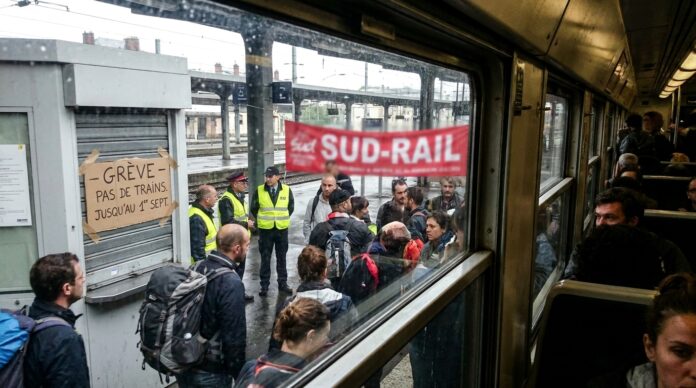
If you are traveling to France this summer, your biggest logistical hurdle is not the crowds—it is a massive, unpredictable wave of rolling rail strikes. The French rail union Sud-Rail has issued an open-ended strike notice against the national railway operator (SNCF) that remains active through September 1st, 2026.
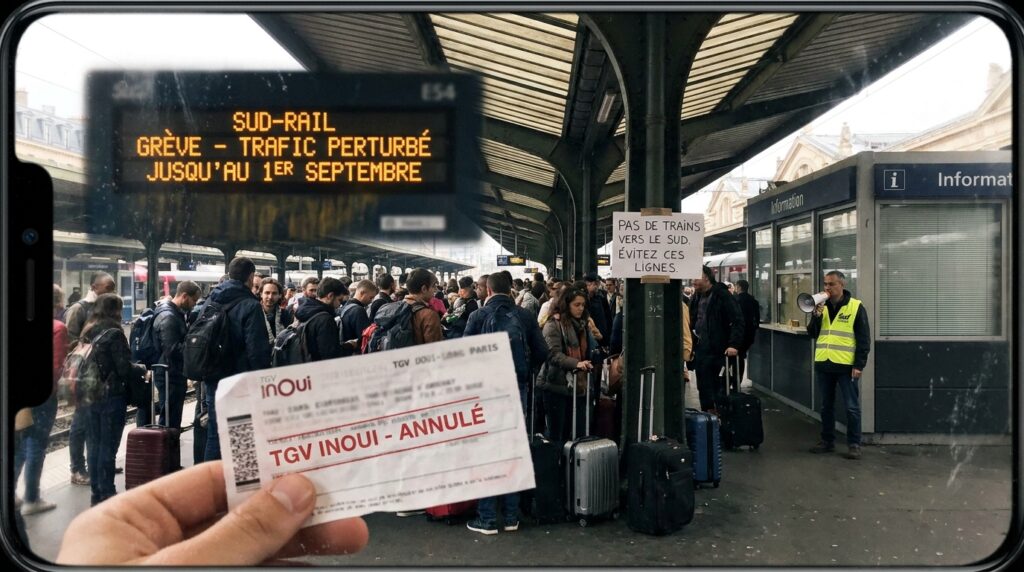
Unlike a traditional one-day national strike where you can simply avoid traveling on a specific Tuesday, this rolling notice allows workers to walk out with minimal warning. This tactic causes sudden, localized cancellations on high-speed TGVs and crucial airport transfer lines. Having been stranded at Gare du Nord during a sudden walkout myself, I can tell you firsthand that the chaos is real when you are not prepared.
Here is exactly why these strikes are happening, which specific routes you must avoid relying on, and how to protect your European summer travel plans.
Also read – Ontario Measles Alert: Vaccine Checklist for Travelers
Why Are French Rail Workers Striking This Summer?
The core dispute centers entirely on corporate restructuring and wages. SNCF CEO Jean Castex is currently breaking the national rail operator into specialized regional subsidiaries to compete for local transit contracts.
Sud-Rail argues this “subsidiarisation” strips away essential worker protections. While SNCF has offered a 15-month “social safety net” to guarantee benefits for transferred staff, union representatives view this as a temporary band-aid. After 15 months, working conditions and contracts will vary wildly depending on the region.
Combined with demands for inflation-adjusted wage increases, the union is utilizing the peak summer tourist season to exert maximum financial pressure on the government and SNCF management.
By using an open-ended “rolling” strike tactic instead of a single nationwide walkout, the union can legally authorize localized, short-notice strikes anytime between now and September. This keeps the network constantly off-balance and prevents SNCF from pre-organizing volunteer replacement drivers.
Which Train Routes and Airport Links Are at Highest Risk?
Not all trains are equally affected, but international tourists rely heavily on the exact routes taking the hardest hits. If you have an itinerary involving these routes, you need a backup plan immediately.
- Charles de Gaulle (CDG) TGV Airport Link: CDG’s Terminal 2 features a dedicated TGV station allowing tourists to bypass Paris entirely and travel straight to cities like Lyon, Bordeaux, or Strasbourg. Because it runs directly on SNCF infrastructure, it is a primary strike target.
- The RER B Line (CDG to Paris): This commuter train connects the airport to Gare du Nord and central Paris. Here is the hidden trap most tourists do not know: the line is split operationally. SNCF operates the airport half, while RATP (the Paris transit authority) operates the city half, requiring a driver swap at Gare du Nord. A Sud-Rail strike can completely shut down the airport segment, even if the Paris metro is running perfectly.
- Cross-Border International Services (Eurostar & Thalys): While Eurostar (connecting London to Paris) and Thalys are technically separate entities, they run on French railway infrastructure. We are already seeing Eurostar proactively cancel dozens of services out of St Pancras International to avoid having trains stranded in France due to sudden signal box closures or mixed-crew walkouts.
| Train Service | Typical Tourist Route | Summer Strike Disruption Risk |
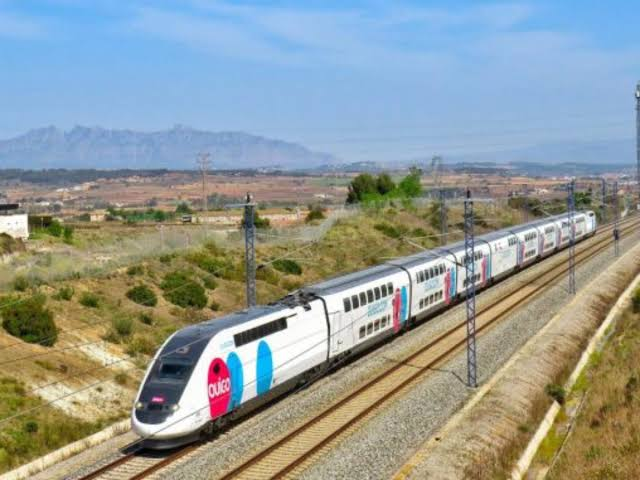
| TGV INOUI & OUIGO | High-speed links between Paris and major cities | High (Subject to rolling daily cancellations) |
| RER B (Northern Segment) | CDG Airport into Central Paris (Gare du Nord) | High (Highly susceptible to sudden delays) |
| Intercités | Regional city-to-city travel across France | High (Operating at roughly 50% capacity) |
| Eurostar | London to Paris / Paris to Amsterdam | Moderate (Knock-on infrastructure effects) |
| RATP Metro | Underground travel strictly within Paris city limits | Low (Operated by a separate transit authority) |
Also read – I Tried Skiplagging in 2026 & Airline Did This When They …
What to Do (and What Not to Do) If Your Train is Cancelled
Because these are short-notice rolling strikes, SNCF typically finalizes its daily transport plan just 24 to 48 hours in advance. You cannot rely on a schedule you printed a month ago.
What to Do:
- Check the SNCF app exactly at 5:00 PM. At 5:00 PM the day before any given travel date, SNCF publishes the official revised timetable for the following day. If your specific train number is missing from the updated schedule, it has been cancelled.
- Claim your full refund instantly. Under European rail passenger rights, if your train is canceled due to industrial action, you are legally entitled to a 100% refund or a free ticket exchange. SNCF has confirmed this applies even if you purchased a strict, non-refundable basic fare.
- Use official channels for live data. Apps like Trainline or Omio are excellent for buying tickets, but their live-update feeds often lag behind the official operator. Always cross-reference your train directly on the official SNCF traffic update page to get the most accurate, to-the-minute data.
What Not to Do:
- Do not book tight same-day flight connections. If you are flying into Paris from overseas and have a TGV booked two hours later to the South of France, a localized strike will destroy your itinerary. Book a hotel in Paris for your first night to buffer against transport delays.
- Do not wait in the physical station queue. If a massive cancellation happens while you are at Gare de Lyon, the customer service desk queue will stretch for hours. Use your phone to immediately rebook or request a refund via the SNCF app while you find a cafe to sit in.
- Do not rely on the RER B for tight airport departures. If you are flying out of CDG, avoid the RER B rail link entirely this summer. Pre-book an official Parisian taxi (which operates on flat-rate fares to the airport) or a private transfer service to ensure you actually reach your terminal on time.
By understanding the mechanics of how a rolling strike operates, you can build a flexible itinerary that keeps you moving, while unaware tourists are left stranded at the ticket counter.

