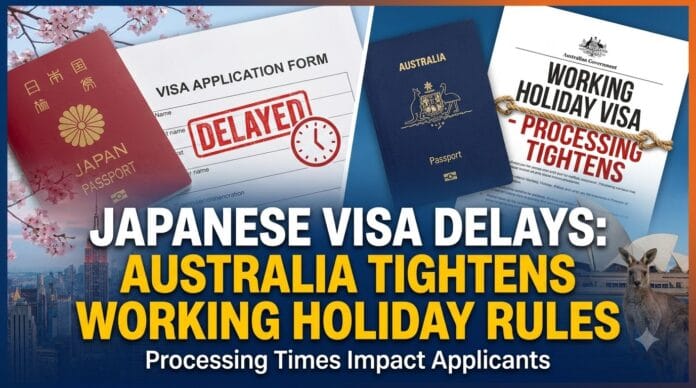
Japanese applicants planning an Australian working holiday should apply early and avoid paying for non-refundable flights until their visa is granted. Australia’s Department of Home Affairs confirmed on August 7, 2026 that it is receiving a high volume of Working Holiday visa applications, meaning some Subclass 417 applications are taking longer than usual to finalise.
For Japanese travelers, that changes the planning strategy. The biggest risk is no longer just missing a preferred departure date—it is committing money to flights, housing or a job before the visa decision arrives.
Are Japanese Australia Working Holiday Visas Really Delayed?
Yes, longer processing is officially confirmed, but there is no official statement saying Japanese applicants alone are being singled out for tougher checks. Home Affairs says both Subclass 417 and Subclass 462 applications are affected by high application volumes and that every application is assessed individually.
That distinction is important.
| Confirmed by Australia | Do not assume |
|---|---|
| Working Holiday applications are taking longer | Every Japanese application faces special scrutiny |
| Applications are assessed individually | Everyone will wait the same number of days |
| More information may be requested | A longer wait means refusal |
| Travel should wait until visa grant | A flight date will speed up a decision |
The headline may be “tighter processing,” but for applicants the practical message is simpler: expect less predictable approval timing.
Also read – Australia Slows Processing for Working Holiday Subclass 417 Visas Amid Tighter Vetting
How Long Does an Australia Subclass 417 Visa Take in 2026?
There is no reliable fixed number of days for an individual applicant. Australia’s official processing tool is based on recently decided cases and explicitly says the estimate does not guarantee when your own application will be finalised.
The broader Working Holiday Maker category showed a June 2026 median processing figure of less than one day, but Home Affairs warns that this combined figure covers both Subclass 417 and 462 and that individual subclass timelines vary.
That explains an experience many applicants find confusing: one person may receive a grant quickly while another remains pending for weeks.

Should Japanese Applicants Book Flights Before Visa Approval?
No. Home Affairs directly advises applicants not to book travel until they have received written confirmation that the visa has been granted.
Imagine a Tokyo applicant who expects to start a hospitality job in Melbourne on October 1. They book a September 27 flight, pay a hostel deposit and tell the employer their arrival date. If the visa remains pending, three separate commitments suddenly become a problem.
A safer order is:
- Submit the complete visa application.
- Monitor ImmiAccount frequently.
- Respond quickly to document requests.
- Wait for the written grant notice.
- Book flights and lock in a job start date afterward.
This approach may feel less exciting than buying a ticket immediately, but it protects the part of your travel budget you cannot easily replace.
Who Qualifies for Australia’s Subclass 417 Visa From Japan?
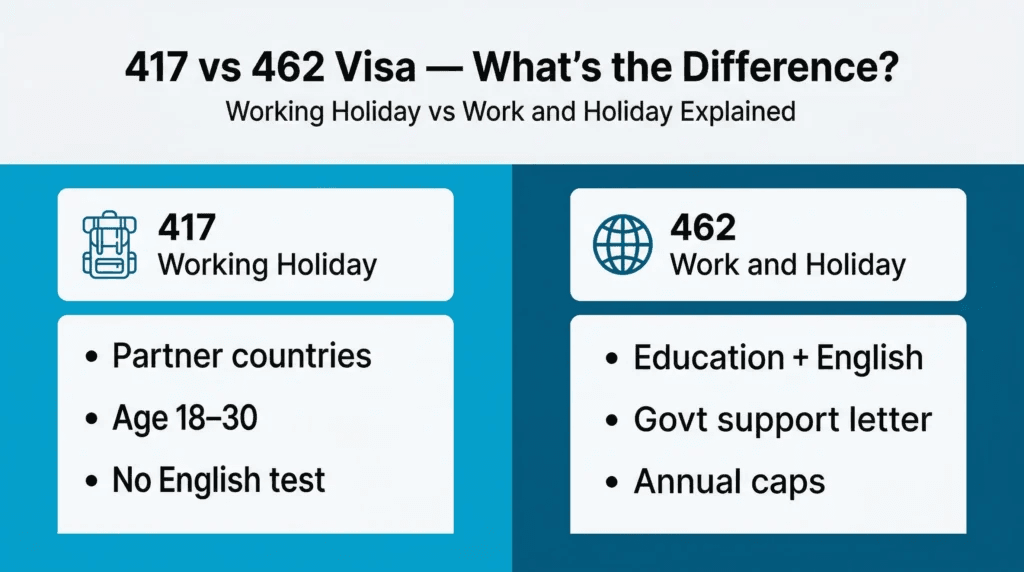
Japanese passport holders remain eligible for the Working Holiday visa pathway. Australia’s first Subclass 417 visa is intended for eligible young adults who want an extended holiday while being able to work to support their trip. The standard Subclass 417 age range is 18 to 30, although Australia allows higher age limits for certain other nationalities.
The Japan–Australia working holiday relationship is also unusually established: Japan’s Ministry of Foreign Affairs says the bilateral program began in 1980, making Australia Japan’s first working holiday partner.
What Can Delay a Japanese Subclass 417 Application?
Missing or inconsistent information can extend processing beyond the usual estimate. Home Affairs notes that applications can take longer when information needs to be checked or when further evidence is required.
Before submitting, check these small details carefully:
- Passport number and expiry date
- Exact spelling of your name
- Previous Australian visa history
- Requested health or character information
- Supporting documents requested in the application
- An email address you actually monitor
Home Affairs also advises applicants to upload documents through ImmiAccount rather than emailing them separately.
What Should You Do if Your 417 Visa Is Still Pending?
Check ImmiAccount before contacting multiple unofficial agents or submitting duplicate evidence. Home Affairs says applicants can use the account to check status, upload new information and respond to requests.
Most importantly, do not interpret silence as a refusal. Pending means no final decision has been issued.
For Japanese travelers planning Australia in late 2026, the smartest adjustment is straightforward: build the trip around the visa grant date rather than forcing the visa into a fixed travel date.
That single change can protect your airfare, job offer and first weeks in Australia.

