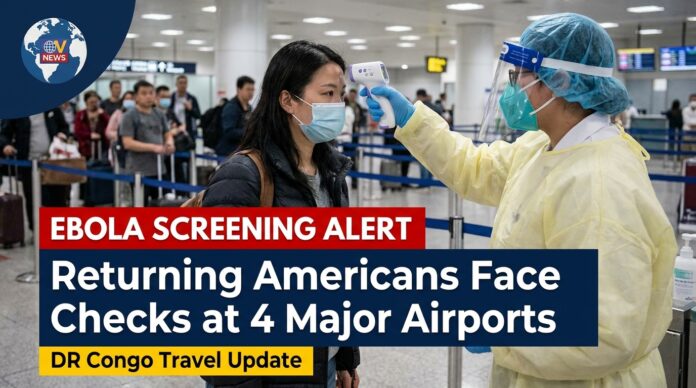
Americans who have recently visited the Democratic Republic of the Congo can return to the United States, but they must enter through one of four designated airports, complete enhanced Ebola screening and monitor their health for 21 days.
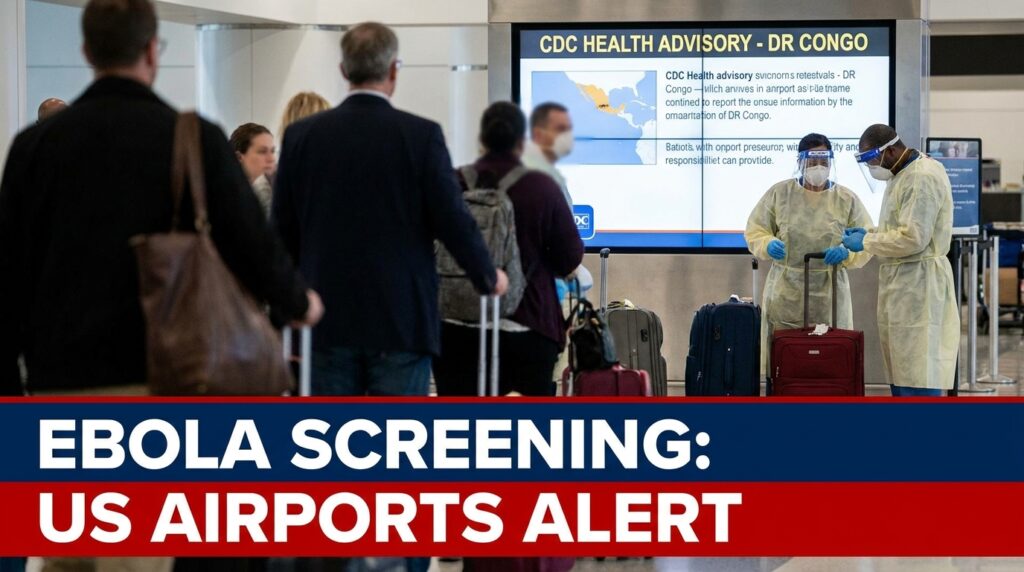
The rules apply to U.S. citizens and U.S. nationals who were present in the Democratic Republic of the Congo, Uganda or South Sudan during the 21 days before arriving in the United States. Airlines may change an affected passenger’s itinerary so the first U.S. arrival takes place at an approved screening airport.
One important clarification: the outbreak involves the Democratic Republic of the Congo, commonly called the DRC or DR Congo. It does not refer to the neighboring Republic of the Congo.
What Are the New U.S. Entry Rules for Travelers From DR Congo?
U.S. citizens and nationals are allowed to enter, but they cannot simply choose any U.S. arrival airport.
Travelers who have been in the DRC, Uganda or South Sudan during the previous 21 days can be rerouted to one of these airports:
| Designated U.S. airport | Airport code | Location |
|---|---|---|
| Washington Dulles International Airport | IAD | Virginia, near Washington, D.C. |
| Hartsfield-Jackson Atlanta International Airport | ATL | Atlanta, Georgia |
| George Bush Intercontinental Airport | IAH | Houston, Texas |
| John F. Kennedy International Airport | JFK | New York City |
Airlines are expected to contact affected passengers and adjust their bookings when necessary. Travelers should still contact the airline before departure, particularly when a ticket was booked before the screening rules were introduced.
Also read – CDC Issues Fresh Ebola Travel Rules for Returning Travelers
A practical example
A passenger flying from Kinshasa to Europe and then to Chicago may not be permitted to make Chicago the first U.S. entry point. The airline could reroute the passenger through JFK, Atlanta, Houston or Washington Dulles for screening before the final domestic connection.
The smart move is to avoid a tight connection after reaching the United States. Screening times can vary, and the CDC does not reimburse passengers for missed flights, hotels or other costs caused by rerouting. Refunds and travel credits depend on the airline, insurer or booking provider.
What Happens During Ebola Screening at the Airport?
Most travelers without symptoms can continue to their final destination after completing screening.
At the designated airport, a traveler may be:
- Escorted to a separate public health screening area.
- Asked to complete a short questionnaire about recent travel, activities and symptoms.
- Checked for fever using a thermometer that does not touch the skin.
- Observed by CDC staff for visible signs of illness.
- Enrolled in automated CDC text messages covering the 21-day monitoring period.
- Referred for an additional assessment when their activities suggest a possible exposure.
Contact details may also be shared with a state or local health department for follow-up.
Screening is not the same as quarantine. A traveler who has no symptoms will usually be allowed to collect their luggage, make an onward connection and continue home.
A traveler with fever or another possible Ebola symptom will receive an additional evaluation. When officials believe Ebola is possible, the traveler can be transported to a hospital for isolation, testing and medical care.
Do Green Card Holders Face the Same Ebola Travel Rules?
No. Lawful permanent residents should not assume their Green Card provides the same exemption as U.S. citizenship.
Under the CDC order updated on July 13, 2026, certain non-U.S. citizens who were in the DRC, Uganda or South Sudan within the previous 21 days are temporarily prohibited from entering the United States. The affected group includes U.S. lawful permanent residents, commonly known as Green Card holders.
The order does not prevent the entry of:
- U.S. citizens
- U.S. nationals
- Certain U.S. government and military personnel
- People granted a qualifying humanitarian, law-enforcement or approved mitigation exception
The July 13 order is scheduled to remain effective for 30 days, although public health orders can be updated as the outbreak changes. Green Card holders and other non-citizens should obtain current advice from their airline and the relevant U.S. authorities before attempting to travel.
Also read – Is It Safe to Book Flights During the 2026 Ebola Outbreak?
Does an Airport Transit Through Congo, Uganda or South Sudan Count?
Possibly. The Department of Homeland Security decides whether a transit counts as presence in an affected country.
This matters for passengers who:
- Changed planes at an airport in one of the three countries.
- Remained inside the international transit area.
- Stayed on an aircraft while it stopped in an affected country.
- Passed through the country for only a few hours.
There is no safe assumption that “I never left the airport” automatically removes the screening requirement. When the government determines that a passenger must be screened, the airline may automatically rebook the itinerary or contact the traveler with a new route.
Keep boarding passes and the full itinerary available. A simple screenshot showing flight numbers, transit airports and travel dates can make it easier to answer questions accurately.
What Must Travelers Do for 21 Days After Leaving DR Congo?
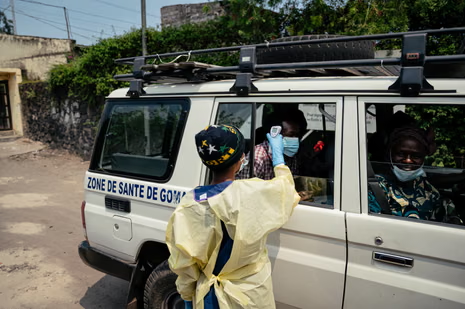
Travelers who visited the DRC or Uganda must monitor their health for 21 days and take their temperature every day.
The 21-day period begins on the day after leaving the relevant country. Travelers should also take their temperature again whenever they feel unwell.
Symptoms to watch for include:
- Fever of 100.4°F or 38°C or higher
- Feeling feverish
- Headache or body aches
- Unusual weakness or tiredness
- Sore throat
- Rash
- Diarrhea
- Vomiting
- Stomach pain
- Unexplained bruising or bleeding, which normally occurs later in the illness
A state or local health department may check in during the monitoring period and provide additional instructions based on where the traveler went and what they did there.
A useful post-travel kit
Keep these items together for the full monitoring period:
- A working digital thermometer
- The telephone number of the local health department
- Travel dates and locations visited
- Details of any hospitals, clinics, funerals or outbreak-response sites entered
- Airline and travel-insurance contact information
- A short daily temperature record
This is not a formal packing requirement, but it prevents confusion when a public health official asks for specific dates or exposure details.
Can Travelers Fly or Take a Cruise During the Monitoring Period?
The CDC recommends remaining in the United States and avoiding international flights and cruises during the 21-day monitoring period.
Anyone planning domestic or international travel should tell the health department first. Another country, cruise operator or destination authority may impose its own entry conditions, even when the traveler has no symptoms. Traveling internationally during the monitoring period may also trigger another round of U.S. airport screening upon return.
Domestic travel is not described as an automatic blanket ban for every symptom-free traveler. However, health officials may issue individual instructions based on possible exposure. Follow those instructions rather than relying on general online advice.
What Should You Do If Ebola Symptoms Begin After Returning Home?
Separate yourself from other people, stop traveling and call the local health department immediately.
Do not head to an airport. Do not arrive unannounced at a clinic or emergency department unless there is an immediate life-threatening emergency.
When calling, clearly say:
“I recently returned from the Democratic Republic of the Congo, Uganda or South Sudan, and I have developed possible Ebola symptoms.”
Give the exact date you left the country, your temperature and any possible exposure to sick people, healthcare facilities, funerals, blood or other body fluids.
Calling before arriving gives the healthcare facility time to select the safest entrance, prepare staff and coordinate with public health authorities. Travel should resume only after clearance from a doctor or health official.
Can Ebola Spread Between Passengers on an Airplane?
Ebola does not spread through the air in the way measles or influenza can.
Infection normally occurs through direct contact with the blood or other body fluids of a person who is sick with Ebola, or through contaminated objects. A person is contagious only after symptoms begin. Simply passing someone in an airport or sitting in the same public space does not by itself transmit Ebola.
That does not make airport screening unnecessary. A person can become infected and travel before symptoms appear, which is why health monitoring continues for 21 days after departure.
Why Were the DR Congo Return Rules Introduced?
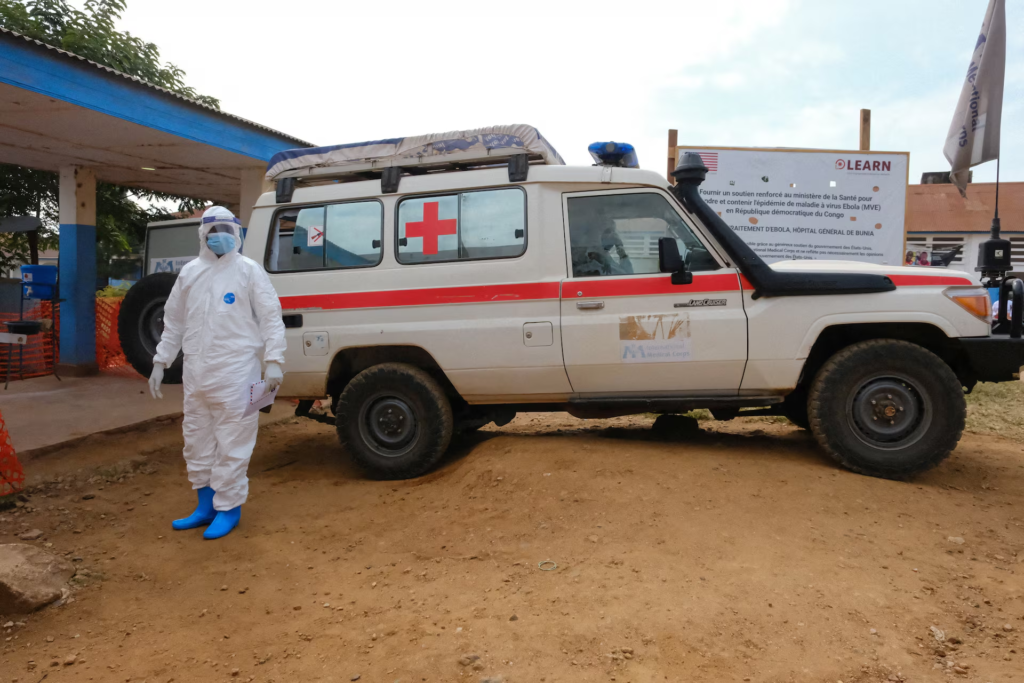
The outbreak has expanded quickly across several provinces and has also produced travel-linked cases outside the DRC.
The CDC reported on July 13 that cases had been confirmed in Haut-Uele, Ituri, North Kivu, South Kivu and Tshopo provinces. It described the event as the DRC’s 17th recorded Ebola outbreak and the third-largest Ebola outbreak on record. No outbreak-linked cases had been confirmed in the United States, and the CDC continued to describe the overall risk to the American public as low.
In its July 3 update, the World Health Organization reported 1,460 confirmed cases and 452 deaths in the DRC as of July 1. Uganda had reported 20 confirmed cases and two confirmed deaths as of July 2. A medical doctor returning to France from the DRC was also confirmed with Bundibugyo virus disease in June.
The figures are date-specific and can rise as surveillance and testing continue.
Should Americans Travel to the Democratic Republic of the Congo Now?
The U.S. Department of State currently lists the entire DRC at Level 4: Do Not Travel.
The advisory covers more than Ebola. It also identifies crime, civil unrest, terrorism, kidnapping and limited access to dependable medical or consular support. U.S. officials may have extremely limited ability to assist citizens outside Kinshasa, particularly in eastern provinces.
The CDC separately recommends avoiding nonessential travel to affected DRC provinces and taking enhanced precautions elsewhere in the country. Anyone whose trip cannot be postponed should consider medical evacuation coverage, enroll in the Smart Traveler Enrollment Program and maintain a clear emergency communication plan.
Before Flying Home: A Five-Step Checklist
Confirm the return route before leaving for the airport.
- Tell the airline about recent travel to the DRC, Uganda or South Sudan if the itinerary has not already been changed.
- Confirm that the first U.S. arrival is IAD, ATL, IAH or JFK.
- Leave extra time before the onward connection and avoid non-refundable same-day arrangements when possible.
- Keep a thermometer in the carry-on bag, along with a written record of travel dates and locations.
- Save official guidance offline in case mobile data or airport Wi-Fi is unavailable.
Travelers abroad who need consular help can contact the U.S. Department of State at +1-202-501-4444. Calls from the United States and Canada can be made to +1-888-407-4747.
The Bottom Line for Americans Returning From DR Congo
U.S. citizens and nationals can return from the Democratic Republic of the Congo, but they must be prepared for rerouting, enhanced screening and 21 days of health monitoring.
The most common avoidable mistake will be assuming that an existing ticket remains valid because the passenger has no symptoms. The rules depend on recent travel history, not just how a person feels on departure day.
Contact the airline before going to the airport, preserve a flexible connection window and keep monitoring instructions close after returning home. Most symptom-free passengers will continue their journeys after screening, but every traveler should know exactly whom to call if fever or illness develops.

